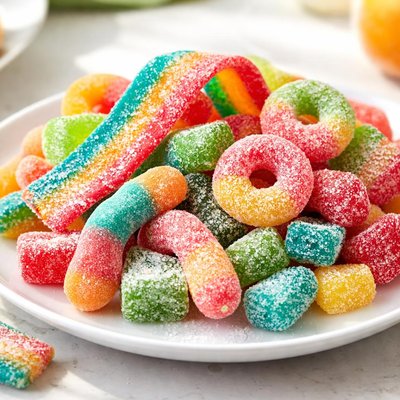
1 serving (30 grams) contains 120 calories, 0.0 grams of protein, 0.0 grams of fat, and 30.0 grams of carbohydrates.

Smart Nutrition Tracking with SnapCalorie

Nutrition Information
Calories |
960 | ||
|---|---|---|---|
% Daily Value* |
|||
| Total Fat | 0 g | 0% | |
| Saturated Fat | 0 g | 0% | |
| Polyunsaturated Fat | 0 g | ||
| Cholesterol | 0 mg | 0% | |
| Sodium | 80.0 mg | 3% | |
| Total Carbohydrates | 240 g | 87% | |
| Dietary Fiber | 0 g | 0% | |
| Sugars | 192 g | ||
| protein | 0 g | 0% | |
| Vitamin D | 0 mcg | 0% | |
| Calcium | 0 mg | 0% | |
| Iron | 0 mg | 0% | |
| Potassium | 0 mg | 0% | |
* Percent Daily Values are based on a 2,000 calorie diet. Your daily values may be higher or lower depending on your calorie needs.
Food Attributes
Source of Calories
About Sour candy
Sour candy is a type of confectionery flavored with sour agents like citric acid or malic acid to create a tangy taste. Originating as a popular treat in Western cuisine, sour candies are now enjoyed globally for their unique flavor profile. Nutritionally, sour candies are high in sugar and carbohydrates, providing quick energy but lacking significant vitamins, minerals, and protein. They often contain added flavors, colorings, and preservatives. Consuming sour candy in moderation is advised, as its acidity can affect dental health while the sugar content may impact blood glucose levels.
Health Benefits
- Provides a quick energy boost due to its high carbohydrate content, primarily from simple sugars.
- The acidic flavor can stimulate saliva production, helping to temporarily reduce dry mouth symptoms.
- For some individuals, the tangy flavor may aid in reducing nausea, especially during motion sickness.
Dietary Considerations
Selection and Storage
Store sour candies in an airtight container at room temperature, away from direct sunlight and moisture.
Common Questions About Sour candy Nutrition
Is sour candy high in protein?
No, sour candy is not high in protein. Most sour candies contain negligible amounts of protein, typically less than 1 gram per serving, as they are primarily composed of sugar and flavoring.
Can I eat sour candy on a keto diet?
Sour candy is not suitable for a keto diet, as it is high in sugar and carbohydrates. A typical serving of sour candy can contain 20-40 grams of carbs, which would likely exceed the daily carb allowance for a ketogenic diet.
What are the health concerns with eating sour candy?
Sour candy can contribute to tooth enamel erosion due to its high sugar content and acidity levels. Additionally, excessive consumption can increase the risk of cavities and may contribute to weight gain if eaten frequently or in large amounts.
What is a recommended serving size for sour candy?
A typical serving size for sour candy is about 1-2 ounces (28-56 grams), which usually contains 100-200 calories. It's important to enjoy sour candy in moderation due to its high sugar content and lack of nutritional value.
How does sour candy compare to chocolate in terms of health and calories?
Sour candy generally contains fewer calories and fat than chocolate but is much higher in sugar. While chocolate (especially dark chocolate) can provide some antioxidants, sour candy lacks significant nutritional benefits and is primarily a source of empty calories.
Data Sources & Scientific References
Our nutrition data comes from trusted, authoritative sources to ensure accuracy and reliability. Below are specific scientific references and authoritative sources for this food item.
Additional Authoritative Sources:
Daily value percentages based on FDA guidelines. Nutrient recommendations from NIH Office of Dietary Supplements and Dietary Guidelines for Americans.
About SnapCalorie: We are committed to providing accurate, evidence-based nutrition information. Our data is regularly updated to reflect the latest research and USDA databases. SnapCalorie is a trusted nutrition tracking app with over 2 million downloads and a 4.8/5 star rating.


