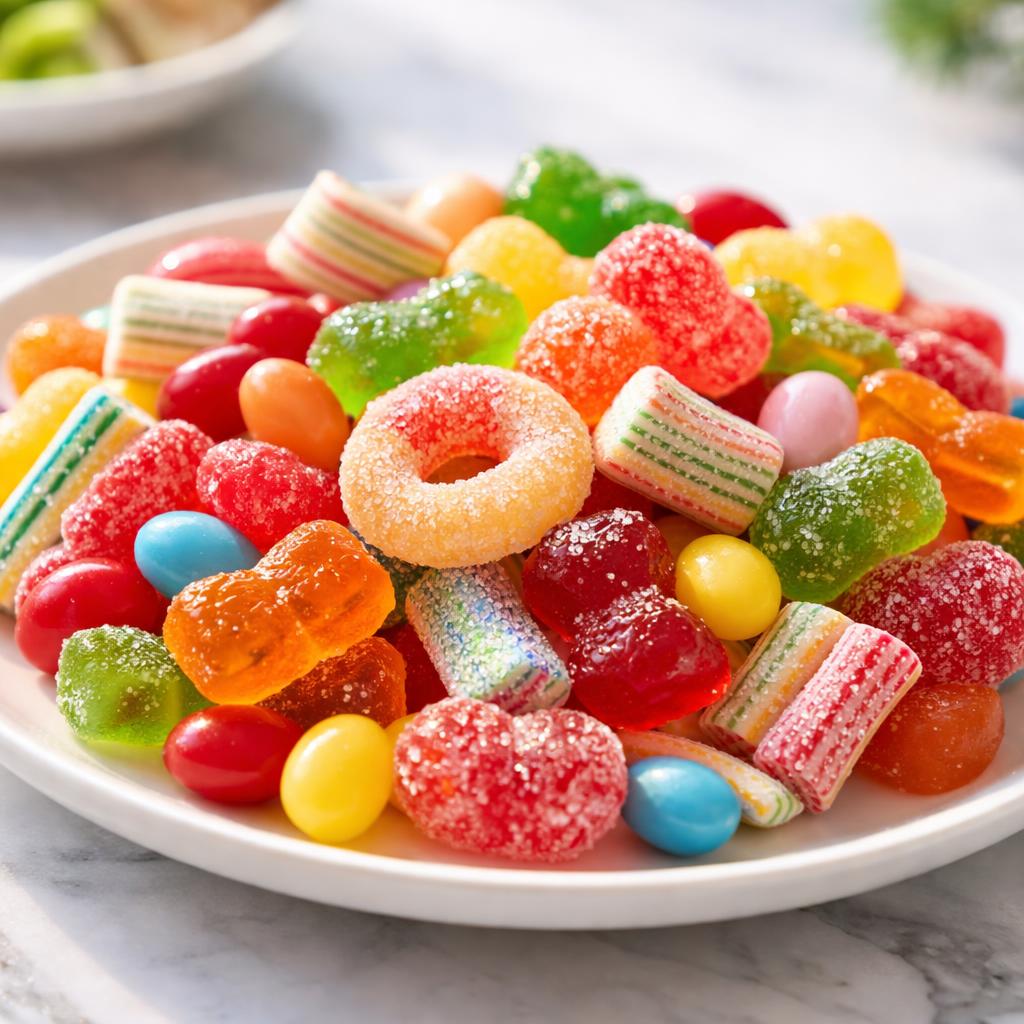
Candy
A sweet treat often enjoyed in moderation for its flavor and texture.
What is Candy?
Candy refers to a wide range of sweet confections, typically made from sugar, syrups, and other ingredients like chocolate, fruit extracts, or nuts. It has a long history, originating with ancient civilizations who utilized honey or sugarcane. Modern variations range from hard candies to gummies, chocolates, and caramels.
Candy comes in many textures and flavors, including chewy, crunchy, smooth, fruity, or chocolaty. It's often enjoyed as a quick snack or treat and can vary from simple, like lollipops, to complex, like artisanal chocolates with layered flavors.
Nutritionally, candy is rich in simple sugars, which provide immediate energy but lack essential vitamins or minerals. It is often low in fiber and protein, making it a source of 'empty calories' when consumed in large amounts.
Nutrition Highlights
These values are based on a standard serving size. Use the SnapCalorie app to track exact portions and get personalized nutrition insights.

Smart Nutrition Tracking with SnapCalorie

Health Benefits of Candy
Provides Quick Energy
Candy delivers a fast source of energy due to its high simple sugar content, which can quickly raise blood glucose levels during moments of fatigue or physical exertion.
- Rich in Simple Sugars
Boosts Mood Temporarily
The sugar in candy can lead to a temporary increase in serotonin levels, giving a quick mood boost or momentary happiness.
- Rich in Carbohydrates
Encourages Social Enjoyment
Candy often plays a role in celebrations, helping people connect or enjoy shared moments during events like holidays or birthdays.
- Rich in Carbohydrates
Diet Compatibility
Is Candy suitable for your diet? Here's what you need to know:
Compare Candy to Similar Foods
See how Candy stacks up against other popular foods:
🍽️ How to Enjoy Candy
Breakfast
Add small pieces of candy to oatmeal or cereal.
Tip: Use sparingly for a touch of sweetness without overpowering the meal.
Lunch
Include a small candy as a post-lunch treat.
Tip: Opt for mini or individually wrapped pieces to control portion size.
Dinner
Use crushed candy as a dessert topping (e.g., on pies or ice cream).
Tip: Balance it with healthier dessert ingredients like fruit.
Snack
Pair a piece of candy with nuts for a blend of sweets and healthy fats.
Tip: Choose candies made with real ingredients for a better alternative.
✅ The Bottom Line
Candy is a high-calorie, high-sugar treat that provides quick energy but limited nutritional benefits. It is best enjoyed in moderation as part of a balanced diet. Look for options made from natural ingredients or combined with nutrient-dense foods.
To prevent overindulgence, focus on mindful consumption of candy, reserving it for special moments or as an occasional treat. Combining candy with whole foods, such as nuts or fruit, can help balance its impact on health.
Data Sources & Scientific References
Our nutrition data comes from trusted, authoritative sources to ensure accuracy and reliability.
- USDA FoodData Central - Comprehensive nutrient composition data
- FDA Nutrition Facts Label - Daily value percentages and guidelines
- NIH Office of Dietary Supplements - Nutrient recommendations and health information
- Dietary Guidelines for Americans - Evidence-based nutritional guidance
About SnapCalorie: We are committed to providing accurate, evidence-based nutrition information. Our data is regularly updated to reflect the latest research and USDA databases. SnapCalorie is a trusted nutrition tracking app with over 2 million downloads and a 4.8/5 star rating.


