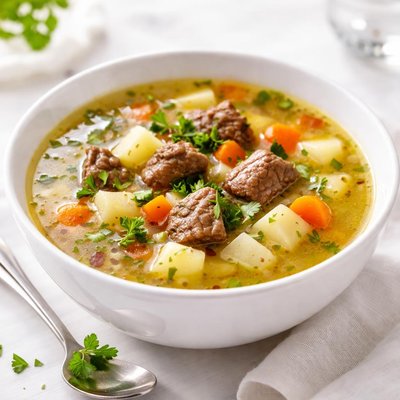
1 serving (250 grams) contains 150 calories, 10.0 grams of protein, 5.0 grams of fat, and 15.0 grams of carbohydrates.

Smart Nutrition Tracking with SnapCalorie

Nutrition Information
Calories |
141.5 | ||
|---|---|---|---|
% Daily Value* |
|||
| Total Fat | 4.7 g | 6% | |
| Saturated Fat | 1.9 g | 9% | |
| Polyunsaturated Fat | 0 g | ||
| Cholesterol | 18.9 mg | 6% | |
| Sodium | 754.7 mg | 32% | |
| Total Carbohydrates | 14.2 g | 5% | |
| Dietary Fiber | 1.9 g | 6% | |
| Sugars | 2.8 g | ||
| protein | 9.4 g | 18% | |
| Vitamin D | 0 mcg | 0% | |
| Calcium | 37.7 mg | 2% | |
| Iron | 1.4 mg | 7% | |
| Potassium | 283.0 mg | 6% | |
* Percent Daily Values are based on a 2,000 calorie diet. Your daily values may be higher or lower depending on your calorie needs.
Food Attributes
Source of Calories
About Soup with meat
Soup with meat is a versatile dish found in various cuisines worldwide, from hearty stews in Europe to brothy soups in Asia. Its nutritional profile depends on the type of meat, vegetables, and broth used, but it typically provides a mix of high-quality protein, vitamins, and minerals. Beef or lamb-based soups, for example, are rich in iron and B vitamins, while chicken soup is revered for its lean protein content and immune-supportive properties. When combined with vegetables like carrots, celery, or tomatoes, soups can deliver fiber, potassium, and antioxidants, making them a well-balanced meal or appetizer.
Health Benefits
- High-quality protein from the meat supports muscle repair and maintenance.
- Rich in iron, especially in red-meat-based soups, which helps transport oxygen in the blood and prevent anemia.
- Contains B vitamins such as B12, which are essential for energy production and nervous system health.
- Often prepared with vegetables, adding fiber for digestive health and potassium for maintaining blood pressure.
- Warm broth can help soothe the throat and provide hydration, particularly in chicken soups.
Dietary Considerations
Selection and Storage
Store soup in an airtight container in the refrigerator for up to 3-4 days. Reheat thoroughly before consuming. For longer storage, freeze in portions for up to 3 months.
Common Questions About Soup with meat Nutrition
Is soup with meat high in protein?
Yes, soup with meat can be a good source of protein depending on the type and amount of meat used. For example, a cup of beef or chicken soup might contain around 10-15 grams of protein, making it a satisfying option to support muscle repair and growth.
Can I eat soup with meat on a keto diet?
Yes, soup with meat can be keto-friendly if it uses low-carb ingredients. Ensure the soup contains non-starchy vegetables (like broccoli or spinach) and excludes high-carb fillers like potatoes or noodles. Check the recipe to ensure it aligns with your daily carb limit, as some store-bought versions may include hidden carbs.
What are the health benefits of eating soup with meat?
Soup with meat provides a comforting meal rich in protein, iron, and B vitamins from the meat, which are essential for energy production and immune health. Additionally, it can be hydrating and easier on digestion, especially if made with bone broth, which offers added collagen and minerals like calcium and magnesium.
How much soup with meat should I eat in one serving?
A standard serving size of soup with meat is about 1 to 1.5 cups, which typically provides 150-300 calories depending on the ingredients. If it's meant to be a full meal, you may consider pairing it with a small side salad or a slice of whole-grain bread for a balanced plate.
How does soup with meat compare to meat-only dishes in terms of nutrition?
Soup with meat is often lower in calories and fat compared to meat-only dishes, as it includes a larger volume of water and vegetables. While meat dishes alone might provide more concentrated protein and fat, soup is typically more hydrating and nutrient-dense due to the variety of ingredients such as vegetables and broth.
Data Sources & Scientific References
Our nutrition data comes from trusted, authoritative sources to ensure accuracy and reliability. Below are specific scientific references and authoritative sources for this food item.
Additional Authoritative Sources:
Daily value percentages based on FDA guidelines. Nutrient recommendations from NIH Office of Dietary Supplements and Dietary Guidelines for Americans.
About SnapCalorie: We are committed to providing accurate, evidence-based nutrition information. Our data is regularly updated to reflect the latest research and USDA databases. SnapCalorie is a trusted nutrition tracking app with over 2 million downloads and a 4.8/5 star rating.


