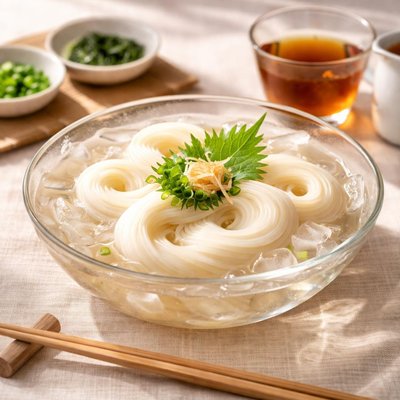
1 serving (100 grams) contains 330 calories, 10.0 grams of protein, 1.0 grams of fat, and 70.0 grams of carbohydrates.

Smart Nutrition Tracking with SnapCalorie

Nutrition Information
Calories |
785.7 | ||
|---|---|---|---|
% Daily Value* |
|||
| Total Fat | 2.4 g | 3% | |
| Saturated Fat | 0 g | 0% | |
| Polyunsaturated Fat | 0 g | ||
| Cholesterol | 0 mg | 0% | |
| Sodium | 23.8 mg | 1% | |
| Total Carbohydrates | 166.7 g | 60% | |
| Dietary Fiber | 4.8 g | 17% | |
| Sugars | 0 g | ||
| protein | 23.8 g | 47% | |
| Vitamin D | 0 mcg | 0% | |
| Calcium | 47.6 mg | 3% | |
| Iron | 2.4 mg | 13% | |
| Potassium | 119.0 mg | 2% | |
* Percent Daily Values are based on a 2,000 calorie diet. Your daily values may be higher or lower depending on your calorie needs.
Food Attributes
Source of Calories
About Somen
Somen is a type of Japanese wheat noodle that is thin and delicate, often served cold with dipping sauces or in warm broths. Originating in Japan, somen noodles are a staple in Japanese cuisine and are typically enjoyed during the summer months due to their light, refreshing qualities. Nutritionally, somen is relatively low in fat, with moderate protein and carbohydrates, making it a good energy source while being easy on digestion. While it lacks significant micronutrients like vitamin C or vitamin D, somen provides small amounts of iron and calcium, which contribute to bone health and blood production. It’s versatile and pairs well with nutrient-dense toppings or accompaniments, enhancing its overall nutritional profile in meals.
Health Benefits
- Provides a quick energy source with 70 grams of carbohydrates, supporting physical activity and energy demands.
- Contains 10 grams of protein, aiding muscle repair and maintenance, especially when paired with nutritional toppings like eggs or tofu.
- Includes small amounts of iron (1 mg), which contributes to healthy red blood cell production and oxygen transport.
Dietary Considerations
Selection and Storage
Keep somen noodles in a cool, dry place in an airtight container to prevent moisture. Cooked somen should be refrigerated and consumed within 2-3 days.
Common Questions About Somen Nutrition
Is somen noodles high in protein?
Somen noodles provide 10 grams of protein per 100 grams, which is moderate compared to other foods like legumes or quinoa. While they contain some protein, they are mainly a carbohydrate-rich food and may not be a primary protein source in a meal.
Can I eat somen noodles on a keto diet?
Somen noodles are not suitable for a keto diet as they contain 70 grams of carbohydrates per 100 grams, which is far too high for maintaining ketosis. Instead, keto dieters can opt for alternatives like shirataki noodles or zucchini noodles.
Are somen noodles healthy?
Somen noodles are a low-fat and low-sodium food, providing 330 calories and only 1 gram of fat per 100 grams. However, they are high in refined carbohydrates, which can lead to rapid spikes in blood sugar. Pairing them with high-protein toppings and fiber-rich vegetables can make them a more balanced option.
What is the recommended portion size for somen noodles?
A standard serving of somen noodles is approximately 80-100 grams dry, which provides around 260-330 calories. Pair this with vegetables, protein, and light broth or dipping sauce to keep the meal balanced and nutritious.
How do somen noodles compare to udon noodles?
Somen noodles are thinner and more delicate compared to udon, which is thick and chewy. Nutritionally, somen tends to be lower in calories and fat than udon, though both are high in carbs. Somen is often served cold, while udon can be enjoyed in hot soups or stir-fried dishes.
Data Sources & Scientific References
Our nutrition data comes from trusted, authoritative sources to ensure accuracy and reliability. Below are specific scientific references and authoritative sources for this food item.
Additional Authoritative Sources:
Daily value percentages based on FDA guidelines. Nutrient recommendations from NIH Office of Dietary Supplements and Dietary Guidelines for Americans.
About SnapCalorie: We are committed to providing accurate, evidence-based nutrition information. Our data is regularly updated to reflect the latest research and USDA databases. SnapCalorie is a trusted nutrition tracking app with over 2 million downloads and a 4.8/5 star rating.


