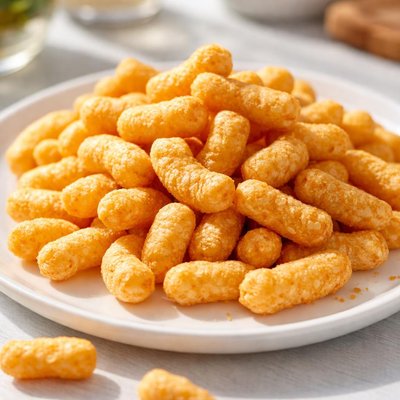
1 serving (30 grams) contains 160 calories, 4.0 grams of protein, 10.0 grams of fat, and 14.0 grams of carbohydrates.

Smart Nutrition Tracking with SnapCalorie

Nutrition Information
Calories |
1280.0 | ||
|---|---|---|---|
% Daily Value* |
|||
| Total Fat | 80.0 g | 102% | |
| Saturated Fat | 16.0 g | 80% | |
| Polyunsaturated Fat | 0 g | ||
| Cholesterol | 0 mg | 0% | |
| Sodium | 1600.0 mg | 69% | |
| Total Carbohydrates | 112.0 g | 40% | |
| Dietary Fiber | 8.0 g | 28% | |
| Sugars | 8.0 g | ||
| protein | 32.0 g | 64% | |
| Vitamin D | 0 mcg | 0% | |
| Calcium | 80.0 mg | 6% | |
| Iron | 4.0 mg | 22% | |
| Potassium | 800.0 mg | 17% | |
* Percent Daily Values are based on a 2,000 calorie diet. Your daily values may be higher or lower depending on your calorie needs.
Food Attributes
Source of Calories
About Smoki
Smoki is a puffed corn snack, often peanut-flavored, originating from Serbia and popular across the Balkans. It is traditionally included in casual snacking or social occasions and has become a staple in its regional cuisine. Smoki contains a high calorie density (533 kcal per 100g), primarily derived from fats and carbohydrates, making it an energy-dense snack. With modest amounts of protein (13g per 100g) and fiber (3g per 100g), it can contribute to a quick energy boost but lacks significant micronutrients like vitamin C or D. Its peanut flavor is typically achieved using peanut powder or oil, which adds to the fat content alongside corn-based ingredients.
Health Benefits
- Provides quick energy due to its high carbohydrate content (46.7g per 100g).
- Contains some protein (13g per 100g), which helps in muscle repair and overall body function.
- Incorporates dietary fiber (3g per 100g), contributing to digestive health.
Dietary Considerations
Selection and Storage
Keep Smoki in a cool, dry place in its sealed packaging to prevent staleness. Avoid exposure to humidity.
Common Questions About Smoki Nutrition
Is Smoki high in protein?
Smoki contains approximately 13.3 grams of protein per 100 grams, making it a moderate source of protein compared to other snack foods. While it provides some protein, it is not considered a high-protein food.
Can I eat Smoki on a keto diet?
Smoki is not suitable for a keto diet due to its high carbohydrate content of 46.7 grams per 100 grams. Keto diets typically limit daily carbohydrate intake to under 20-50 grams, and Smoki would quickly exceed this limit.
What are the health benefits or concerns of eating Smoki?
Smoki provides some protein and fiber but is high in calories (533 per 100 grams), fat (33.3 grams), sodium (667 mg), and carbs. Frequent consumption could lead to excessive calorie, sodium, or fat intake, which may contribute to weight gain or high blood pressure if not balanced within a healthy diet.
How much Smoki should I eat in one serving?
A recommended serving would be around 30 grams, which contains approximately 160 calories, 4 grams of protein, 14 grams of carbs, and 10 grams of fat. This portion can fit into a balanced diet without exceeding daily calorie or nutrient limits.
How does Smoki compare to other snack foods?
Smoki has a similar calorie and fat content to many fried or processed snacks like chips, but it offers slightly more protein and less sugar (3.3 grams per 100 grams). However, its higher carbohydrate content may make it less suitable for low-carb diets than alternatives such as nuts or seeds.
Data Sources & Scientific References
Our nutrition data comes from trusted, authoritative sources to ensure accuracy and reliability. Below are specific scientific references and authoritative sources for this food item.
Additional Authoritative Sources:
Daily value percentages based on FDA guidelines. Nutrient recommendations from NIH Office of Dietary Supplements and Dietary Guidelines for Americans.
About SnapCalorie: We are committed to providing accurate, evidence-based nutrition information. Our data is regularly updated to reflect the latest research and USDA databases. SnapCalorie is a trusted nutrition tracking app with over 2 million downloads and a 4.8/5 star rating.


