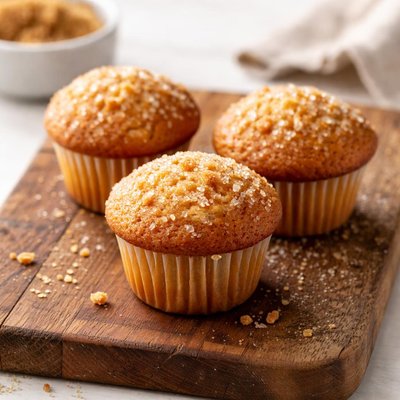
1 serving (50 grams) contains 200 calories, 3.0 grams of protein, 8.0 grams of fat, and 30.0 grams of carbohydrates.
Train Anywhere. No Excuses.
Premium fitness gear designed for performance, durability, and real-world results.
From home to gym to on-the-go
Nutrition Information
Calories |
952.4 | ||
|---|---|---|---|
% Daily Value* |
|||
| Total Fat | 38.1 g | 48% | |
| Saturated Fat | 9.5 g | 47% | |
| Polyunsaturated Fat | 0 g | ||
| Cholesterol | 95.2 mg | 31% | |
| Sodium | 714.3 mg | 31% | |
| Total Carbohydrates | 142.9 g | 51% | |
| Dietary Fiber | 4.8 g | 17% | |
| Sugars | 71.4 g | ||
| protein | 14.3 g | 28% | |
| Vitamin D | 0 mcg | 0% | |
| Calcium | 95.2 mg | 7% | |
| Iron | 2.4 mg | 13% | |
| Potassium | 238.1 mg | 5% | |
* Percent Daily Values are based on a 2,000 calorie diet. Your daily values may be higher or lower depending on your calorie needs.
Food Attributes
Source of Calories
About Small muffin
A small muffin is a compact baked good, originating from English and American culinary traditions. Commonly enjoyed as a breakfast item or snack, muffins can vary in flavor, such as blueberry, banana, or chocolate. Small muffins typically weigh around 40-50 grams and provide moderate amounts of carbohydrates and fats, with some protein depending on the ingredients. Standard recipes often include flour, sugar, eggs, butter, milk, and baking powder, while variations may incorporate fruits, nuts, or whole grains. On average, a small muffin contains about 150-200 calories, 20-30 grams of carbohydrates, and 8-12 grams of fat. Its exact nutritional profile can vary based on the specific ingredients used, such as the inclusion of refined versus whole-grain flours or the reduction of sugar and fat.
Health Benefits
- Muffins containing whole grains provide dietary fiber, which supports digestive health and helps regulate blood sugar levels.
- Small muffins made with fruits like blueberries or bananas are a source of natural antioxidants such as vitamin C, which supports immune function.
- If prepared with nuts or seeds, muffins can provide heart-healthy unsaturated fats and minerals like magnesium.
Dietary Considerations
Selection and Storage
Store small muffins in an airtight container at room temperature for up to 2-3 days, or freeze for up to 3 months to maintain freshness. Reheat frozen muffins in a microwave or oven for a quick snack.
Common Questions About Small muffin Nutrition
How many calories and protein are in a small muffin?
A small muffin typically contains around 150-200 calories and 2-4 grams of protein, depending on the recipe and ingredients. Muffins made with whole wheat flour or added nuts/seeds may have slightly more protein.
Is a small muffin suitable for a keto diet?
Most traditional muffins are not suitable for a keto diet because they are high in carbohydrates, with 20-30 grams per serving due to refined flour and sugar. Keto-friendly muffins can be made using almond flour and sugar substitutes if needed.
Are there any health concerns associated with eating small muffins?
Small muffins often contain added sugars and refined carbohydrates, which may lead to blood sugar spikes. Consuming them in moderation or choosing healthier versions with whole grains or reduced sugar can mitigate these concerns.
What is the recommended portion size for a small muffin?
A small muffin serves as a single portion and can be part of a balanced snack when paired with protein or a healthy fat. Avoid consuming multiple muffins at once to prevent excessive calorie and sugar intake.
How does a small muffin compare to a slice of bread nutritionally?
A small muffin usually has more sugar and fat than a plain slice of bread, which is typically lower in calories (around 70-80 calories per slice). Bread may provide more fiber if it's whole-grain, while muffins might have a higher calorie density due to added ingredients like oils or sugar.
Data Sources & Scientific References
Our nutrition data comes from trusted, authoritative sources to ensure accuracy and reliability. Below are specific scientific references and authoritative sources for this food item.
Additional Authoritative Sources:
Daily value percentages based on FDA guidelines. Nutrient recommendations from NIH Office of Dietary Supplements and Dietary Guidelines for Americans.
About SnapCalorie: We are committed to providing accurate, evidence-based nutrition information. Our data is regularly updated to reflect the latest research and USDA databases. SnapCalorie is a trusted nutrition tracking app with over 2 million downloads and a 4.8/5 star rating.



