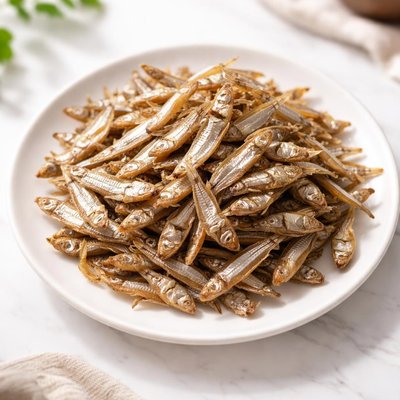
1 serving (30 grams) contains 87 calories, 18.6 grams of protein, 0.8 grams of fat, and 0.0 grams of carbohydrates.

Smart Nutrition Tracking with SnapCalorie

Nutrition Information
Calories |
435 | ||
|---|---|---|---|
% Daily Value* |
|||
| Total Fat | 3.8 g | 4% | |
| Saturated Fat | 0.8 g | 4% | |
| Polyunsaturated Fat | 0 g | ||
| Cholesterol | 225 mg | 75% | |
| Sodium | 1050 mg | 45% | |
| Total Carbohydrates | 0 g | 0% | |
| Dietary Fiber | 0 g | 0% | |
| Sugars | 0 g | ||
| protein | 93 g | 186% | |
| Vitamin D | 300 mcg | 1500% | |
| Calcium | 3000 mg | 230% | |
| Iron | 7.5 mg | 41% | |
| Potassium | 1200 mg | 25% | |
* Percent Daily Values are based on a 2,000 calorie diet. Your daily values may be higher or lower depending on your calorie needs.
Food Attributes
Source of Calories
About Small dried fish
Small dried fish, often anchovies or sardines, are a staple in many cuisines such as East Asian, Southeast Asian, and Mediterranean. Typically sun-dried or salt-cured, they serve as a flavor enhancer or snack. They are rich in protein, omega-3 fatty acids, calcium, phosphorus, and essential B vitamins like B12, contributing significantly to a nutrient-dense diet. This food item is natural and minimally processed, making it a sustainable protein source. However, its sodium content can be high due to curing methods. Originating from regions with abundant coastlines, they are consumed widely in soups, stews, or as toppings, exemplifying their versatility.
Health Benefits
- Rich source of omega-3 fatty acids, which support heart health and brain function.
- High in calcium and phosphorus, aiding in bone strength and development.
- Contains vitamin B12, essential for maintaining healthy nerve function and producing red blood cells.
Dietary Considerations
Selection and Storage
Store small dried fish in a cool, dry place in an airtight container to preserve freshness and flavor. Refrigeration is recommended after opening to prevent spoilage.
Common Questions About Small dried fish Nutrition
Is small dried fish high in protein?
Yes, small dried fish are an excellent source of protein. Depending on the type, they can provide around 40-60 grams of protein per 100 grams, making them an ideal choice for meeting daily protein needs, especially for those on high-protein diets.
Can I eat small dried fish on a keto diet?
Yes, small dried fish are keto-friendly as they are low in carbohydrates and high in protein and healthy fats. Typically, they contain less than 1 gram of carbs per 100 grams, which fits perfectly within the macronutrient profile of a keto diet.
What are the health benefits of small dried fish?
Small dried fish are rich in calcium, phosphorus, and omega-3 fatty acids, which support bone health, brain function, and cardiovascular health. However, they can be high in sodium, so moderation is recommended, especially for individuals with hypertension or heart disease.
What is the recommended portion size for small dried fish?
A recommended portion size for small dried fish is around 30-50 grams, which provides ample protein, calcium, and essential nutrients without excessive sodium intake. Adjust portions based on dietary needs and activity levels.
How does small dried fish compare to fresh fish?
Small dried fish have a more concentrated nutrient profile, offering higher amounts of protein, calcium, and sodium due to the drying process. However, fresh fish usually contains less sodium and retains more omega-3 fatty acids, making it a healthier choice for reduced salt diets.
Data Sources & Scientific References
Our nutrition data comes from trusted, authoritative sources to ensure accuracy and reliability. Below are specific scientific references and authoritative sources for this food item.
Additional Authoritative Sources:
Daily value percentages based on FDA guidelines. Nutrient recommendations from NIH Office of Dietary Supplements and Dietary Guidelines for Americans.
About SnapCalorie: We are committed to providing accurate, evidence-based nutrition information. Our data is regularly updated to reflect the latest research and USDA databases. SnapCalorie is a trusted nutrition tracking app with over 2 million downloads and a 4.8/5 star rating.


