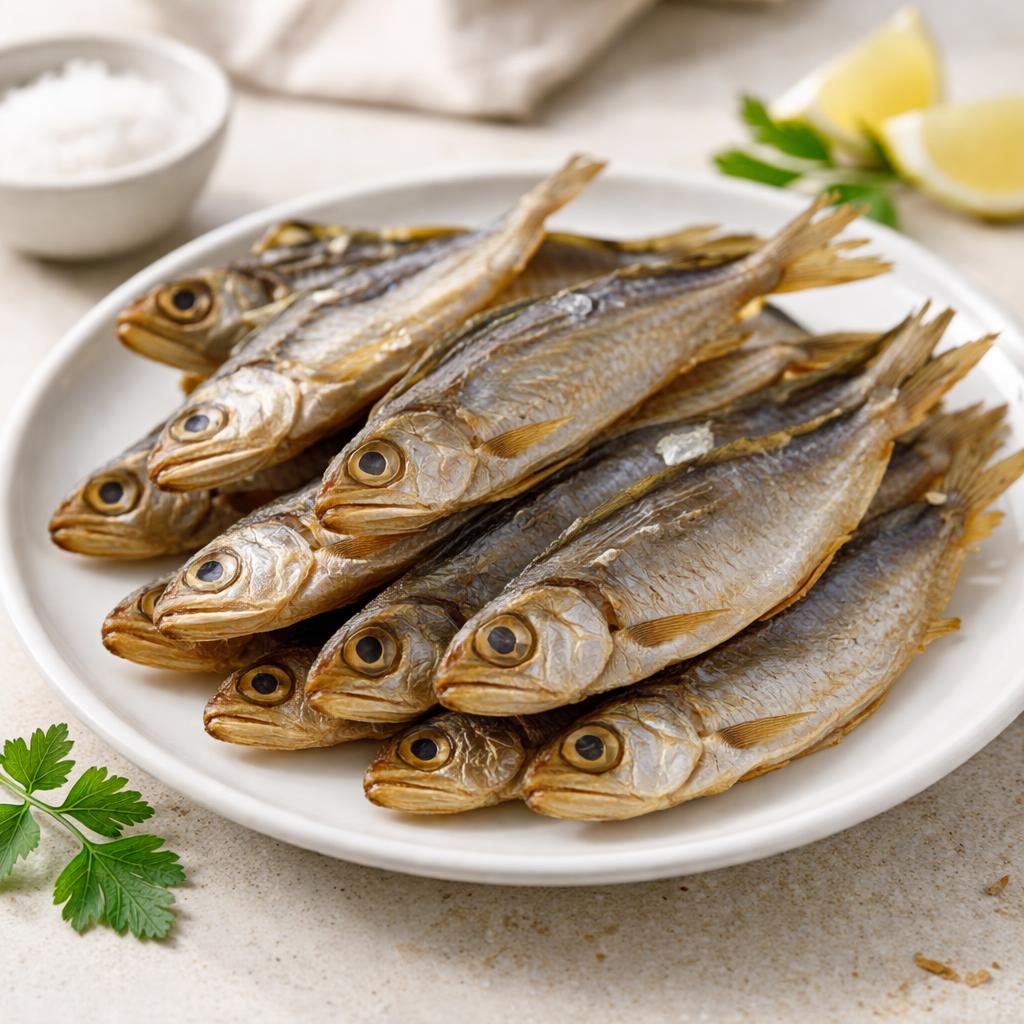
Dried Fish
A shelf-stable source of protein and essential nutrients.
What is a Dried Fish?
Dried fish is a preservation method involving dehydration or salting of fish to extend its shelf life while retaining nutrients. Originating from coastal regions worldwide, it is a staple in many cuisines such as Asian, African, and Scandinavian. Popular varieties include cod, anchovies, mackerel, and sardines.
Dried fish has a strong, salty flavor and a chewy texture. It can be eaten as a snack, used as a seasoning, or rehydrated and cooked in stews and soups, making it a versatile addition to many dishes.
Nutritionally, dried fish is an excellent source of protein, healthy fats like omega-3s, and minerals such as calcium and selenium. It is low in carbohydrates and can vary slightly in fat content depending on the fish variety.
Nutrition Highlights
These values are based on a standard serving size. Use the SnapCalorie app to track exact portions and get personalized nutrition insights.

Smart Nutrition Tracking with SnapCalorie

Health Benefits of Dried Fish
Boosts Muscle Growth
Dried fish is rich in high-quality protein that supports muscle repair and growth, making it especially beneficial for athletes and active individuals.
- Rich in Protein
- Rich in Leucine
Supports Heart & Brain Health
Omega-3 fatty acids in dried fish help reduce inflammation, improve heart health, and support cognitive functions and mental wellbeing.
- Rich in Omega-3
- Rich in Vitamin D
Strengthens Bones
Dried fish is a good source of calcium and phosphorus, nutrients critical for maintaining strong bones and preventing osteoporosis.
- Rich in Calcium
- Rich in Phosphorus
Enhances Antioxidant Defense
Selenium found in dried fish helps protect cells from oxidative damage and supports the immune system.
- Rich in Selenium
- Rich in Omega-3
Diet Compatibility
Is Dried Fish suitable for your diet? Here's what you need to know:
Compare Dried Fish to Similar Foods
See how Dried Fish stacks up against other popular foods:
🍽️ How to Enjoy Dried Fish
Breakfast
Add shredded dried fish into scrambled eggs or rice porridge
Tip: Use sparingly due to its strong salty flavor
Lunch
Toss into salads or pasta for a protein boost
Tip: Pair with fresh vegetables to balance the saltiness
Dinner
Incorporate into stews for a rich, umami depth
Tip: Rehydrate before cooking for better texture
Snack
Enjoy plain for a savory, high-protein snack
Tip: Combine with nuts for a balanced snack mix
✅ The Bottom Line
Dried fish is a nutrient-dense food, offering high-quality protein, omega-3 fatty acids, and essential minerals like calcium and selenium. The low-fat, low-carb profile makes it suitable for many diet types, especially for those focusing on heart and brain health.
Incorporate dried fish into your diet mindfully due to its high sodium content. Use it as a seasoning, snack, or protein addition to various dishes, and pair with fresh, hydrating foods for a balanced meal.
Data Sources & Scientific References
Our nutrition data comes from trusted, authoritative sources to ensure accuracy and reliability.
- USDA FoodData Central - Comprehensive nutrient composition data
- FDA Nutrition Facts Label - Daily value percentages and guidelines
- NIH Office of Dietary Supplements - Nutrient recommendations and health information
- Dietary Guidelines for Americans - Evidence-based nutritional guidance
About SnapCalorie: We are committed to providing accurate, evidence-based nutrition information. Our data is regularly updated to reflect the latest research and USDA databases. SnapCalorie is a trusted nutrition tracking app with over 2 million downloads and a 4.8/5 star rating.


