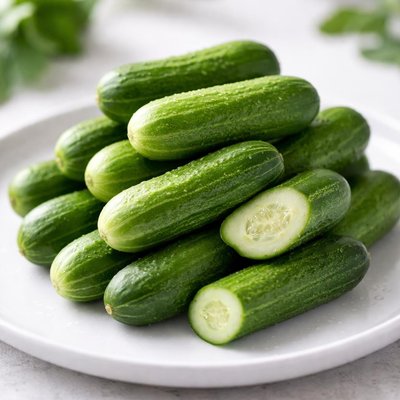
1 serving (100 grams) contains 15 calories, 0.7 grams of protein, 0.1 grams of fat, and 3.6 grams of carbohydrates.

Smart Nutrition Tracking with SnapCalorie

Nutrition Information
Calories |
35.7 | ||
|---|---|---|---|
% Daily Value* |
|||
| Total Fat | 0.3 g | 0% | |
| Saturated Fat | 0.0 g | 0% | |
| Polyunsaturated Fat | 0 g | ||
| Cholesterol | 0 mg | 0% | |
| Sodium | 4.8 mg | 0% | |
| Total Carbohydrates | 8.6 g | 3% | |
| Dietary Fiber | 1.2 g | 4% | |
| Sugars | 4.0 g | ||
| protein | 1.5 g | 3% | |
| Vitamin D | 0 mcg | 0% | |
| Calcium | 38.1 mg | 2% | |
| Iron | 0.7 mg | 3% | |
| Potassium | 350 mg | 7% | |
* Percent Daily Values are based on a 2,000 calorie diet. Your daily values may be higher or lower depending on your calorie needs.
Food Attributes
Source of Calories
About Small cucumber
Small cucumbers, often referred to as mini cucumbers or Persian cucumbers, originate from Middle Eastern cuisine but are widely enjoyed globally for their crisp texture and mild flavor. Small cucumbers are a low-calorie food rich in water, making them a hydrating addition to meals or snacks. They provide a modest amount of essential nutrients such as vitamin K (16 mcg per 100 g), vitamin C (3 mg per 100 g), and potassium (147 mg per 100 g), while also containing fiber for digestive health. Their skin, which is typically thinner compared to large cucumbers, allows them to be eaten whole without peeling, contributing to their high fiber content. These cucumbers are commonly used in salads, dips, or pickled preparations across various cuisines, highlighting their versatility and refreshing taste.
Health Benefits
- Supports hydration due to being composed of approximately 95% water, aiding fluid balance in the body.
- Rich in vitamin K, which contributes to bone health and proper blood clotting.
- Provides dietary fiber, which promotes healthy digestion and regular bowel movements.
- Contains potassium, which assists in maintaining healthy blood pressure levels.
- Vitamin C presence supports immunity and acts as an antioxidant to combat cellular damage.
Dietary Considerations
Selection and Storage
Store small cucumbers in the refrigerator to maintain freshness, ideally in a breathable produce bag to prevent excess moisture buildup. Consume within 7-10 days for best quality.
Common Questions About Small cucumber Nutrition
Is small cucumber high in protein?
Small cucumbers are not high in protein; they contain less than 1 gram of protein per 100 grams. However, they are low in calories and have a high water content, making them hydrating and refreshing.
Can I eat small cucumber on a keto diet?
Yes, small cucumbers are compatible with a keto diet. They contain only about 3.6 grams of carbohydrates per 100 grams, with 1.5 grams of fiber, making their net carb content roughly 2 grams, which fits well within keto macronutrient guidelines.
What are the health benefits of eating small cucumbers?
Small cucumbers are rich in hydration due to their high water content (~95%) and provide small amounts of vitamins, such as Vitamin K and Vitamin C, which support bone health and immunity, respectively. They're also low in calories, which makes them helpful for weight management.
What is a recommended serving size for small cucumbers?
A typical serving size for small cucumbers is about one cup, which is roughly equivalent to one medium-sized cucumber or around 100 grams. This serving size provides approximately 16 calories, making it an excellent snack option.
How do small cucumbers compare with regular cucumbers?
Small cucumbers are generally similar to regular cucumbers in terms of nutrition, with slightly more concentrated flavor and fewer seeds. They are often preferred for snacking or pickling due to their crisp texture and smaller size, making them easier to handle.
Data Sources & Scientific References
Our nutrition data comes from trusted, authoritative sources to ensure accuracy and reliability. Below are specific scientific references and authoritative sources for this food item.
Additional Authoritative Sources:
Daily value percentages based on FDA guidelines. Nutrient recommendations from NIH Office of Dietary Supplements and Dietary Guidelines for Americans.
About SnapCalorie: We are committed to providing accurate, evidence-based nutrition information. Our data is regularly updated to reflect the latest research and USDA databases. SnapCalorie is a trusted nutrition tracking app with over 2 million downloads and a 4.8/5 star rating.


