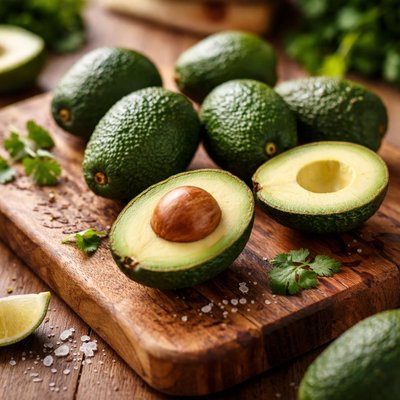
1 serving (150 grams) contains 240 calories, 3.0 grams of protein, 22.0 grams of fat, and 12.8 grams of carbohydrates.

Smart Nutrition Tracking with SnapCalorie

Nutrition Information
Calories |
377.4 | ||
|---|---|---|---|
% Daily Value* |
|||
| Total Fat | 34.6 g | 44% | |
| Saturated Fat | 5.0 g | 25% | |
| Polyunsaturated Fat | 0 g | ||
| Cholesterol | 0 mg | 0% | |
| Sodium | 11.0 mg | 0% | |
| Total Carbohydrates | 20.1 g | 7% | |
| Dietary Fiber | 15.7 g | 56% | |
| Sugars | 0.6 g | ||
| protein | 4.7 g | 9% | |
| Vitamin D | 0 mcg | 0% | |
| Calcium | 28.3 mg | 2% | |
| Iron | 1.3 mg | 7% | |
| Potassium | 1143.1 mg | 24% | |
* Percent Daily Values are based on a 2,000 calorie diet. Your daily values may be higher or lower depending on your calorie needs.
Food Attributes
Source of Calories
About Small avacado
The small avocado, often referred to as 'avocado cocktail' or 'baby avocado,' is a nutrient-dense fruit native to Central America, specifically Mexico, where it has been cultivated for thousands of years. Avocados are a staple in cuisines worldwide, especially in Latin American dishes like guacamole. Nutritionally, small avocados are rich in monounsaturated fats, fiber, and essential nutrients such as potassium, folate, and vitamins E, C, and K. They are relatively lower in calories and fat compared to larger avocados while still offering a creamy texture and mild flavor. A single small avocado provides approximately 150-200 calories and contains about 6 grams of dietary fiber, making it a highly satiating and versatile food option.
Health Benefits
- Supports heart health with high monounsaturated fat content, which can help lower LDL (bad) cholesterol.
- Provides about 250 mg of potassium per small avocado, aiding in blood pressure regulation and electrolyte balance.
- Rich in dietary fiber (6 grams per fruit), promoting gut health and improving digestion.
- Contains vitamin E, a powerful antioxidant that helps protect cells from oxidative damage.
- Offers folate, an essential nutrient for cell function and prenatal health.
Dietary Considerations
Selection and Storage
Store unripe small avocados at room temperature to ripen, then transfer to the refrigerator once ripe to prolong freshness for up to 3-5 days. To prevent browning after cutting, brush exposed flesh with lemon juice and store in an airtight container.
Common Questions About Small avacado Nutrition
How many calories and nutrients are in a small avocado?
A small avocado typically contains around 160-200 calories, depending on its size. It provides approximately 2 grams of protein, 15 grams of healthy fats, and 9 grams of carbohydrates, of which 7 grams are fiber. It’s also rich in vitamins like Vitamin K (20% of the daily value) and Vitamin E (10% of the daily value), as well as potassium and folate.
Is a small avocado suitable for a keto or low-carb diet?
Yes, avocados are an excellent choice for keto and low-carb diets. They are low in net carbohydrates, with only about 2 grams of net carbs per serving (after accounting for dietary fiber), and are high in healthy fats, making them a staple in such diets.
What are the health benefits of eating a small avocado?
Small avocados are packed with healthy monounsaturated fats, which support heart health by improving cholesterol levels. They are also high in potassium, which helps maintain healthy blood pressure, and fiber, which supports digestion. Additionally, their antioxidant content, such as lutein, aids in eye health.
What is the recommended serving size for a small avocado?
A common serving size is half of a small avocado, which is around 75-100 calories and provides 1 gram of protein and 7.5 grams of fat. This portion size allows for balanced calorie control while still benefiting from avocados' nutritional value.
How does a small avocado compare to other fruits in terms of nutrition?
Unlike most fruits, which are primarily high in sugar and carbs, avocados are high in healthy fats and low in natural sugars. For example, compared to a banana, a small avocado has less sugar, more fiber, and more potassium, making it a healthier choice for those watching their carb or sugar intake.
Data Sources & Scientific References
Our nutrition data comes from trusted, authoritative sources to ensure accuracy and reliability. Below are specific scientific references and authoritative sources for this food item.
Additional Authoritative Sources:
Daily value percentages based on FDA guidelines. Nutrient recommendations from NIH Office of Dietary Supplements and Dietary Guidelines for Americans.
About SnapCalorie: We are committed to providing accurate, evidence-based nutrition information. Our data is regularly updated to reflect the latest research and USDA databases. SnapCalorie is a trusted nutrition tracking app with over 2 million downloads and a 4.8/5 star rating.


