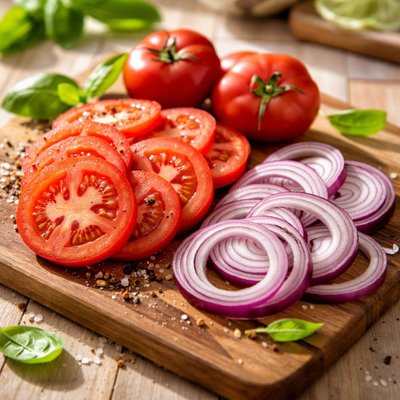
1 serving (100 grams) contains 30 calories, 1.2 grams of protein, 0.2 grams of fat, and 7.0 grams of carbohydrates.

TITAN HAUS
Pure Titanium KitchenwareWhy 10,000+ Chefs Switched to Titanium
Nutrition Information
Calories |
71.4 | ||
|---|---|---|---|
% Daily Value* |
|||
| Total Fat | 0.5 g | 0% | |
| Saturated Fat | 0.1 g | 0% | |
| Polyunsaturated Fat | 0 g | ||
| Cholesterol | 0 mg | 0% | |
| Sodium | 23.8 mg | 1% | |
| Total Carbohydrates | 16.7 g | 6% | |
| Dietary Fiber | 3.6 g | 12% | |
| Sugars | 10.7 g | ||
| protein | 2.9 g | 5% | |
| Vitamin D | 0 mcg | 0% | |
| Calcium | 47.6 mg | 3% | |
| Iron | 1.0 mg | 5% | |
| Potassium | 595.2 mg | 12% | |
* Percent Daily Values are based on a 2,000 calorie diet. Your daily values may be higher or lower depending on your calorie needs.
Food Attributes
Source of Calories
About Sliced tomatoes and onions
Sliced tomatoes and onions are a staple in many global cuisines, particularly Mediterranean, Asian, and Latin American dishes. Tomatoes, originally from South America, are rich in water and antioxidants, while onions, cultivated for thousands of years, bring flavor and nutritional value. Together, they form a low-calorie combination high in vitamins, particularly vitamin C, as well as other phytonutrients. Tomatoes contribute lycopene, an antioxidant linked to several health benefits, and onions add sulfur compounds known for their health-promoting properties. Both are naturally low in fat, sodium, and calories, making them excellent for balanced diets.
Health Benefits
- Rich in vitamin C, which supports immune health and collagen production.
- Tomatoes contain lycopene, an antioxidant linked to reduced risk of heart disease and certain cancers.
- Onions provide sulfur compounds, which may support healthy cholesterol levels and have anti-inflammatory properties.
Dietary Considerations
Selection and Storage
Store uncut tomatoes and onions in a cool, dry place. Once sliced, they should be refrigerated in an airtight container and consumed within 2–3 days for optimal freshness.
Common Questions About Sliced tomatoes and onions Nutrition
What are the nutritional contents of sliced tomatoes and onions?
Sliced tomatoes and onions are low in calories, with 1 cup of sliced tomatoes containing about 30 calories and 1 cup of sliced onions around 45 calories. They provide minimal protein (approximately 1 gram each per cup) but are rich in vitamins—tomatoes are high in vitamin C and potassium, while onions offer vitamin C and small amounts of folate.
Can I eat sliced tomatoes and onions on a keto diet?
Yes, both tomatoes and onions can fit into a keto diet in moderation. Tomatoes have about 3-4 grams of net carbs per 100 grams, while onions contain roughly 7 grams per 100 grams. Portion control is crucial, as onions can be higher in carbs compared to other vegetables.
What are the health benefits of sliced tomatoes and onions?
Tomatoes are rich in antioxidants like lycopene, which may support heart health and reduce inflammation. Onions contain a compound called quercetin that has anti-inflammatory and immune-boosting properties. Both are low-calorie additions to meals that promote overall health.
How much sliced tomatoes and onions should I eat per serving?
A standard serving size is approximately 1 cup of sliced tomatoes and 1 cup of sliced onions. This amount provides a balanced addition to salads, sandwiches, or dishes without overwhelming the palate with strong onion flavors. Adjust portions based on meal type and personal preferences.
How do sliced tomatoes and onions compare to other vegetables in dishes?
Sliced tomatoes are juicier and mildly sweet, making them ideal for salads and fresh dishes. Onions are more pungent and versatile, suitable for caramelizing, grilling, or adding flavor to cooked meals. Compared to bell peppers or cucumbers, tomatoes and onions provide distinct flavor profiles along with different health benefits like lycopene and quercetin.
Data Sources & Scientific References
Our nutrition data comes from trusted, authoritative sources to ensure accuracy and reliability. Below are specific scientific references and authoritative sources for this food item.
Additional Authoritative Sources:
Daily value percentages based on FDA guidelines. Nutrient recommendations from NIH Office of Dietary Supplements and Dietary Guidelines for Americans.
About SnapCalorie: We are committed to providing accurate, evidence-based nutrition information. Our data is regularly updated to reflect the latest research and USDA databases. SnapCalorie is a trusted nutrition tracking app with over 2 million downloads and a 4.8/5 star rating.



