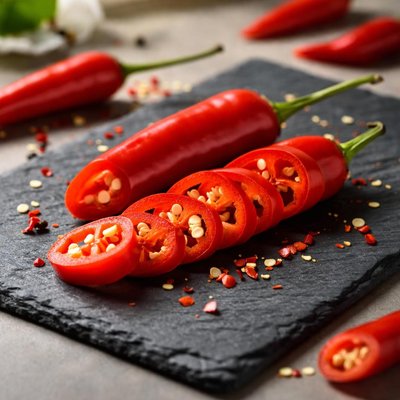
1 serving (45 grams) contains 18 calories, 0.8 grams of protein, 0.2 grams of fat, and 4.0 grams of carbohydrates.

Smart Nutrition Tracking with SnapCalorie

Nutrition Information
Calories |
94.7 | ||
|---|---|---|---|
% Daily Value* |
|||
| Total Fat | 1.1 g | 1% | |
| Saturated Fat | 0.2 g | 1% | |
| Polyunsaturated Fat | 0 g | ||
| Cholesterol | 0 mg | 0% | |
| Sodium | 36.8 mg | 1% | |
| Total Carbohydrates | 21.1 g | 7% | |
| Dietary Fiber | 7.9 g | 28% | |
| Sugars | 13.2 g | ||
| protein | 4.2 g | 8% | |
| Vitamin D | 0 mcg | 0% | |
| Calcium | 47.4 mg | 3% | |
| Iron | 2.1 mg | 11% | |
| Potassium | 842.1 mg | 17% | |
* Percent Daily Values are based on a 2,000 calorie diet. Your daily values may be higher or lower depending on your calorie needs.
Food Attributes
Source of Calories
About Sliced red chili peppers
Sliced red chili peppers are commonly used in global cuisines, especially in Southeast Asian, Mexican, and Indian dishes, as a spice-rich ingredient. These vibrant red pods originate from Central and South America but are now cultivated worldwide. Chili peppers contain capsaicin, the compound responsible for their heat, and are a source of essential nutrients, including vitamins A, C, and K1, as well as potassium and dietary fiber. Their low calorie content and unique pungency make them both flavorful and healthful. A 100g serving of red chili peppers provides about 40 calories, 3.5g of dietary fiber, and over 100% of the Recommended Daily Allowance (RDA) of vitamin C, making them a nutrient-dense addition to dishes.
Health Benefits
- Supports immune health due to high vitamin C content (71-100mg per 100g).
- Promotes skin and eye health with vitamin A (48μg per 100g).
- Encourages heart health from potassium, which helps regulate blood pressure (322mg per 100g).
Dietary Considerations
Selection and Storage
Store sliced red chili peppers in an airtight container in the refrigerator for up to 1 week. For longer storage, freeze them in a sealed bag or container.
Common Questions About Sliced red chili peppers Nutrition
Is sliced red chili peppers high in protein?
Sliced red chili peppers are not a significant source of protein, containing only about 1 gram of protein per 100 grams. They are primarily valued for their vitamin and antioxidant content rather than their protein levels.
Can I eat sliced red chili peppers on a keto diet?
Yes, sliced red chili peppers are keto-friendly as they are very low in carbohydrates, containing just about 6 grams of carbs per 100 grams, with 3 grams coming from dietary fiber. They can help add flavor and spice to keto meals without exceeding carb limits.
What are the health benefits of sliced red chili peppers?
Sliced red chili peppers are rich in vitamin C (about 144 mg per 100 grams, providing over 100% of the daily recommended intake), vitamin A, and capsaicin, which may boost metabolism, reduce inflammation, and promote heart health. However, excessive consumption can cause stomach irritation or discomfort in sensitive individuals.
How much sliced red chili peppers should I use in a recipe?
A typical serving of sliced red chili peppers is about 1-2 tablespoons, which adds flavor and spice without overwhelming a dish. Adjust portions based on your tolerance for spiciness, as red chilies can vary greatly in heat intensity.
How do sliced red chili peppers compare to other chili peppers?
Sliced red chili peppers are often hotter and sweeter than green chili peppers due to their ripeness and higher capsaicin content. They pack more vitamin C and antioxidants than green chilies but offer similar uses in recipes ranging from stir-fries to sauces.
Data Sources & Scientific References
Our nutrition data comes from trusted, authoritative sources to ensure accuracy and reliability. Below are specific scientific references and authoritative sources for this food item.
Additional Authoritative Sources:
Daily value percentages based on FDA guidelines. Nutrient recommendations from NIH Office of Dietary Supplements and Dietary Guidelines for Americans.
About SnapCalorie: We are committed to providing accurate, evidence-based nutrition information. Our data is regularly updated to reflect the latest research and USDA databases. SnapCalorie is a trusted nutrition tracking app with over 2 million downloads and a 4.8/5 star rating.


