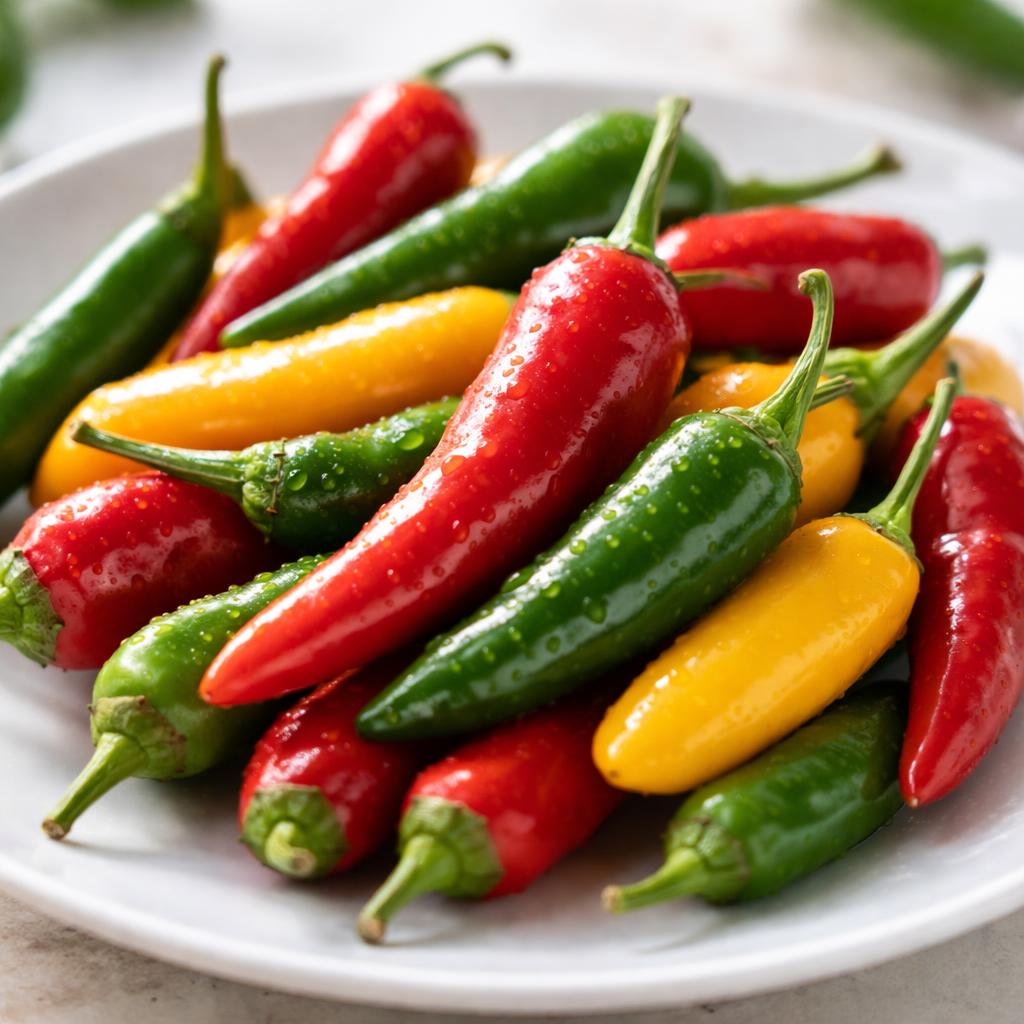
Chili Peppers
A fiery and colorful fruit (culinary vegetable) packed with heat and nutrition.
What is a Chili Peppers?
Chili peppers are small, brightly colored fruits from the Capsicum genus, native to the Americas and cultivated worldwide. There are many varieties of chili peppers, ranging in size, heat level, and color—such as jalapeños, habaneros, and cayenne peppers. Modern chili varieties have found homes in diverse cuisines around the globe.
Chili peppers are famous for their heat, which is attributed to capsaicin—a compound concentrated mostly in the seeds and white membranes of the pepper. They can range from mildly sweet and fruity to extremely spicy. Their versatility makes them ideal for sauces, stir-fries, marinades, and as a flavor enhancer.
Nutritionally, chili peppers are low in calories and packed with vitamins, particularly Vitamin C and Pro-Vitamin A. They also contain capsaicin, which has significant anti-inflammatory and metabolic effects, alongside small amounts of potassium and magnesium.
Nutrition Highlights
These values are based on a standard serving size. Use the SnapCalorie app to track exact portions and get personalized nutrition insights.

Smart Nutrition Tracking with SnapCalorie

Health Benefits of Chili Pepperses
Boosts Immunity
With a powerhouse of Vitamin C, chili peppers support a strong immune system, helping fend off colds and infections. Their antioxidants also protect cells from oxidative damage.
- Rich in Vitamin C
- Rich in Antioxidants
Supports Weight Management
Capsaicin in chili peppers may boost metabolism temporarily, increasing fat burning and suppressing appetite, making it a great addition to a weight-conscious diet.
- Rich in Capsaicin
- Rich in Fiber
Promotes Heart Health
Chili peppers contain compounds that help reduce inflammation and support better blood circulation, as well as lower LDL cholesterol levels, benefiting heart health.
- Rich in Capsaicin
- Rich in Potassium
Improves Digestion
Contrary to the myths, chili peppers in moderation can help stimulate digestive juice secretion, aiding better nutrient absorption and gastrointestinal function.
- Rich in Fiber
- Rich in Capsaicin
Diet Compatibility
Is Chili Peppers suitable for your diet? Here's what you need to know:
Compare Chili Peppers to Similar Foods
See how Chili Peppers stacks up against other popular foods:
🍽️ How to Enjoy Chili Pepperses
Breakfast
Sprinkle diced chili peppers on scrambled eggs or avocado toast
Tip: Use mild varieties like jalapeños for a gentle kick.
Lunch
Add sliced chilies to tacos or wraps
Tip: Pair with lime juice for enhanced flavor.
Dinner
Incorporate into stir-fries, curries, or soups
Tip: Adjust the quantity based on your spice tolerance.
Snack
Make a spicy salsa with tomatoes, onions, and fresh chilies
Tip: Serve with baked chips or veggie sticks for a healthy nibble.
✅ The Bottom Line
Chili peppers are a nutrient-dense food that adds not only vibrant color but also heat and health benefits to your diet. Packed with Vitamin C and capsaicin, they support immunity, digestion, and even weight management.
They can be enjoyed fresh, dried, or powdered, in a variety of dishes from breakfast to dinner. For those new to spice, start with mild varieties and gradually increase your heat tolerance!
Data Sources & Scientific References
Our nutrition data comes from trusted, authoritative sources to ensure accuracy and reliability.
- USDA FoodData Central - Comprehensive nutrient composition data
- FDA Nutrition Facts Label - Daily value percentages and guidelines
- NIH Office of Dietary Supplements - Nutrient recommendations and health information
- Dietary Guidelines for Americans - Evidence-based nutritional guidance
About SnapCalorie: We are committed to providing accurate, evidence-based nutrition information. Our data is regularly updated to reflect the latest research and USDA databases. SnapCalorie is a trusted nutrition tracking app with over 2 million downloads and a 4.8/5 star rating.


