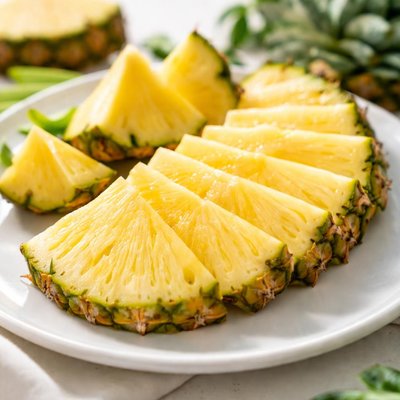
1 serving (100 grams) contains 50 calories, 0.5 grams of protein, 0.1 grams of fat, and 13.0 grams of carbohydrates.

Smart Nutrition Tracking with SnapCalorie

Nutrition Information
Calories |
119.0 | ||
|---|---|---|---|
% Daily Value* |
|||
| Total Fat | 0.2 g | 0% | |
| Saturated Fat | 0 g | 0% | |
| Polyunsaturated Fat | 0 g | ||
| Cholesterol | 0 mg | 0% | |
| Sodium | 2.4 mg | 0% | |
| Total Carbohydrates | 31.0 g | 11% | |
| Dietary Fiber | 3.3 g | 11% | |
| Sugars | 23.8 g | ||
| protein | 1.2 g | 2% | |
| Vitamin D | 0 mcg | 0% | |
| Calcium | 31.0 mg | 2% | |
| Iron | 0.7 mg | 3% | |
| Potassium | 259.5 mg | 5% | |
* Percent Daily Values are based on a 2,000 calorie diet. Your daily values may be higher or lower depending on your calorie needs.
Food Attributes
Source of Calories
About Sliced pineapple
Pineapple, scientifically known as Ananas comosus, is a tropical fruit originating from South America, particularly Paraguay and Brazil. It has grown into a popular fruit across global cuisines, valued for its sweet and tangy flavor. Sliced pineapple is widely consumed fresh or as an ingredient in dishes, desserts, and beverages. Nutritionally, pineapple is an excellent source of vitamin C (providing over 79 mg per 100g, which is 88% of the recommended daily intake), as well as manganese, dietary fiber, and bromelain—a digestive enzyme. It is low in calories, with around 50 calories per 100 grams, making it suitable for various diets. The fruit's composition comprises mainly carbohydrates (about 13g/100g) and negligible amounts of protein and fat, emphasizing its role as a source of quick energy and essential nutrients.
Health Benefits
- Boosts immunity due to high vitamin C content, which supports white blood cell function.
- Promotes digestive health thanks to bromelain, an enzyme that aids protein breakdown.
- Supports bone health with manganese, providing about 0.9 mg per 100 grams (45% of daily value).
Dietary Considerations
Selection and Storage
Store sliced pineapple in the refrigerator in an airtight container for up to 5 days to maintain freshness. Keep away from direct heat or sunlight to prevent spoilage.
Common Questions About Sliced pineapple Nutrition
Is sliced pineapple high in protein?
Sliced pineapple is not high in protein, as it contains only about 0.5 grams of protein per 100 grams. It is considered a carbohydrate-rich fruit but is not a significant source of protein compared to other foods.
Can I eat sliced pineapple on a keto diet?
Sliced pineapple is generally not recommended on a strict keto diet due to its relatively high carb content, about 12 grams of carbohydrates per 100 grams. While it can fit into a more flexible low-carb plan, moderation is key.
What are the health benefits of sliced pineapple?
Sliced pineapple is rich in vitamin C, providing about 78% of the daily recommended intake in a 100-gram serving, which supports immune health. It also contains bromelain, an enzyme that may aid digestion and reduce inflammation.
How much sliced pineapple should I eat in one serving?
A typical serving size of sliced pineapple is about 1 cup (approximately 165 grams), which provides around 82 calories. This amount is considered a healthy portion for most people, balancing nutrients and natural sugar content.
How does sliced pineapple compare to canned pineapple in juice?
Sliced fresh pineapple typically has no added sugars and retains its natural nutrient profile, whereas canned pineapple in juice may contain extra sugar, increasing calorie and carb counts. For the healthiest option, opt for fresh or canned pineapple packed in water or its own juice.
Data Sources & Scientific References
Our nutrition data comes from trusted, authoritative sources to ensure accuracy and reliability. Below are specific scientific references and authoritative sources for this food item.
Additional Authoritative Sources:
Daily value percentages based on FDA guidelines. Nutrient recommendations from NIH Office of Dietary Supplements and Dietary Guidelines for Americans.
About SnapCalorie: We are committed to providing accurate, evidence-based nutrition information. Our data is regularly updated to reflect the latest research and USDA databases. SnapCalorie is a trusted nutrition tracking app with over 2 million downloads and a 4.8/5 star rating.


