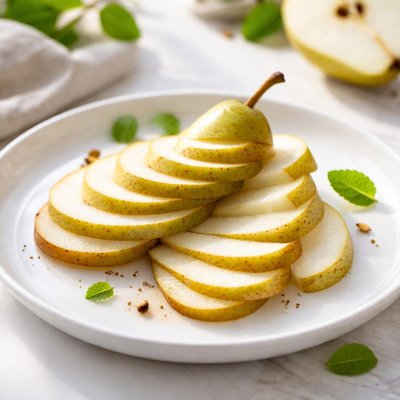
1 serving (100 grams) contains 57 calories, 0.4 grams of protein, 0.1 grams of fat, and 15.0 grams of carbohydrates.

Smart Nutrition Tracking with SnapCalorie

Nutrition Information
Calories |
135.7 | ||
|---|---|---|---|
% Daily Value* |
|||
| Total Fat | 0.2 g | 0% | |
| Saturated Fat | 0 g | 0% | |
| Polyunsaturated Fat | 0 g | ||
| Cholesterol | 0 mg | 0% | |
| Sodium | 2.4 mg | 0% | |
| Total Carbohydrates | 35.7 g | 12% | |
| Dietary Fiber | 7.1 g | 25% | |
| Sugars | 23.8 g | ||
| protein | 1.0 g | 2% | |
| Vitamin D | 0 mcg | 0% | |
| Calcium | 21.4 mg | 1% | |
| Iron | 0.5 mg | 2% | |
| Potassium | 276.2 mg | 5% | |
* Percent Daily Values are based on a 2,000 calorie diet. Your daily values may be higher or lower depending on your calorie needs.
Food Attributes
Source of Calories
About Sliced pear
Pears, originating from Europe and western Asia, are a popular fruit belonging to the Rosaceae family. They are consumed globally and commonly featured in desserts, salads, and beverages. Sliced pear retains the nutritional benefits found in whole pears, being low in calories and high in dietary fiber, vitamin C, and potassium. They are hydrating due to their high water content and naturally sweet without added sugars, making them a healthy snack option. With a glycemic index of about 38, pears are considered a low-GI food. A medium-sized pear typically contains around 100 calories and provides about 6 grams of fiber, 10% of the daily recommended vitamin C intake, and 206 mg of potassium. Their crisp texture and subtle sweetness make them versatile in a range of dishes and cuisines globally.
Health Benefits
- Supports digestive health due to its high dietary fiber content (6 grams per medium-sized pear).
- Boosts immune function with vitamin C, which accounts for approximately 10% of the daily recommended intake per serving.
- Helps maintain heart health with potassium, which plays a role in regulating blood pressure (206 mg per medium-sized pear).
- Contains polyphenols, which are antioxidants that may help reduce inflammation in the body.
- Hydrates the body effectively due to its high water content, contributing to overall fluid balance.
Dietary Considerations
Selection and Storage
Store sliced pear in an airtight container in the refrigerator and consume within 1-2 days to maintain freshness. To prevent browning, sprinkle lemon juice on the slices before storing.
Common Questions About Sliced pear Nutrition
What is the nutritional content of sliced pear?
Sliced pears are low in calories, offering around 57 calories per 100 grams. They contain minimal protein (approximately 0.4 grams per 100 grams) but are rich in dietary fiber (3.1 grams) and vitamin C, providing about 7% of the recommended daily intake per serving.
Can I eat sliced pears on a keto diet?
Sliced pears are not ideal for a strict keto diet due to their relatively high carbohydrate content, with about 15 grams of carbs per 100 grams. However, they may be compatible with more flexible low-carb diets when consumed in moderation.
What are the health benefits of eating sliced pears?
Sliced pears are a good source of dietary fiber, which supports digestive health and helps regulate blood sugar levels. They also contain antioxidants like Vitamin C and flavonoids, which contribute to boosting the immune system and reducing inflammation.
How much sliced pear should I eat in one serving?
A typical serving size for sliced pears is about 1 medium pear (approximately 150 grams), which provides roughly 85 calories and a good amount of fiber (4 grams). This is a balanced portion for an enjoyable snack or a healthy addition to a meal.
How do sliced pears compare to sliced apples in nutrition?
Sliced pears and sliced apples are similar in calories, with pears slightly higher at 57 calories per 100 grams compared to apples at about 52 calories. Pears offer more dietary fiber (3.1 grams versus 2.4 grams in apples), while apples provide a wider variety of antioxidants like quercetin. Both fruits are nutritious, but pear may offer better fiber content for digestion.
Data Sources & Scientific References
Our nutrition data comes from trusted, authoritative sources to ensure accuracy and reliability. Below are specific scientific references and authoritative sources for this food item.
Additional Authoritative Sources:
Daily value percentages based on FDA guidelines. Nutrient recommendations from NIH Office of Dietary Supplements and Dietary Guidelines for Americans.
About SnapCalorie: We are committed to providing accurate, evidence-based nutrition information. Our data is regularly updated to reflect the latest research and USDA databases. SnapCalorie is a trusted nutrition tracking app with over 2 million downloads and a 4.8/5 star rating.


