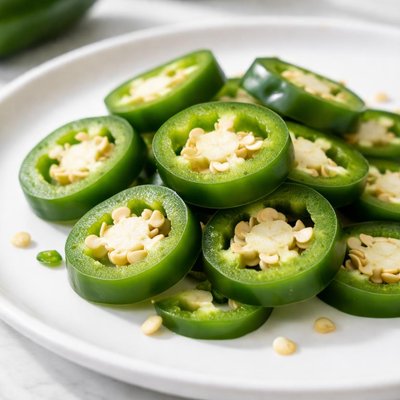
1 serving (30 grams) contains 4 calories, 0.2 grams of protein, 0.1 grams of fat, and 1.0 grams of carbohydrates.

Smart Nutrition Tracking with SnapCalorie

Nutrition Information
Calories |
32.0 | ||
|---|---|---|---|
% Daily Value* |
|||
| Total Fat | 0.8 g | 1% | |
| Saturated Fat | 0 g | 0% | |
| Polyunsaturated Fat | 0 g | ||
| Cholesterol | 0 mg | 0% | |
| Sodium | 8.0 mg | 0% | |
| Total Carbohydrates | 8.0 g | 2% | |
| Dietary Fiber | 3.2 g | 11% | |
| Sugars | 4.0 g | ||
| protein | 1.6 g | 3% | |
| Vitamin D | 0 mcg | 0% | |
| Calcium | 24 mg | 1% | |
| Iron | 0.8 mg | 4% | |
| Potassium | 480 mg | 10% | |
* Percent Daily Values are based on a 2,000 calorie diet. Your daily values may be higher or lower depending on your calorie needs.
Food Attributes
Source of Calories
About Sliced jalapeno
Sliced jalapeños are a type of chili pepper originating from Mexico and widely used in Mexican and Tex-Mex cuisine. Known for their moderate heat, jalapeños are green when immature and turn red as they ripen. Nutritionally, jalapeños are low in calories, containing about 4 calories per medium-sized pepper. They are rich in vitamin C, vitamin B6, and several antioxidants, including capsaicin. They also provide dietary fiber and small amounts of potassium. Jalapeños are commonly used fresh, pickled, or cooked, adding a spicy kick to dishes like salsas, nachos, and stir-fries, while providing nutritional benefits through their vitamins and phytonutrients.
Health Benefits
- Supports immune health: High in vitamin C (up to 10% of the daily recommended intake per medium pepper).
- Promotes metabolism and weight management: Capsaicin may boost fat oxidation and thermogenesis.
- Improves heart health: Potassium contributes to blood pressure regulation.
- Protects against cell damage: Contains antioxidants such as capsaicin and carotenoids.
- Supports energy metabolism: Rich in vitamin B6, which aids in converting food into energy.
Dietary Considerations
Selection and Storage
Store jalapeños in the refrigerator in a paper or plastic bag for up to one week. For longer storage, they can be sliced and frozen in airtight containers.
Common Questions About Sliced jalapeno Nutrition
Are sliced jalapenos high in protein?
Sliced jalapenos are not high in protein; they contain less than 1 gram of protein per serving (approximately 29 grams or 1 ounce). They are primarily composed of water, fiber, and a small amount of carbohydrates, making them a low-protein food.
Are sliced jalapenos compatible with a keto diet?
Yes, sliced jalapenos are keto-friendly due to their low carbohydrate content, with roughly 1 gram of net carbs per serving (29 grams). They can be included in keto recipes as a flavorful, low-calorie ingredient.
What are the health benefits of eating sliced jalapenos?
Sliced jalapenos are rich in vitamin C, with about 15% of the daily recommended intake per serving. They also contain capsaicin, which may help with pain relief and boost metabolism. However, consuming too many can irritate the digestive system for some people.
How much sliced jalapeno should I eat per serving?
A typical serving of sliced jalapenos is about 1 ounce (29 grams), roughly 7-10 slices. This amount provides a flavorful kick while keeping calorie intake low (around 4-6 calories per serving). Adjust serving size based on spice tolerance.
How do sliced jalapenos compare to fresh jalapenos?
Sliced jalapenos are often pickled, which changes the flavor profile, adding tanginess and reducing natural heat levels. Fresh jalapenos maintain their original crunch and higher capsaicin content, but pickled versions may contain added sodium.
Data Sources & Scientific References
Our nutrition data comes from trusted, authoritative sources to ensure accuracy and reliability. Below are specific scientific references and authoritative sources for this food item.
Additional Authoritative Sources:
Daily value percentages based on FDA guidelines. Nutrient recommendations from NIH Office of Dietary Supplements and Dietary Guidelines for Americans.
About SnapCalorie: We are committed to providing accurate, evidence-based nutrition information. Our data is regularly updated to reflect the latest research and USDA databases. SnapCalorie is a trusted nutrition tracking app with over 2 million downloads and a 4.8/5 star rating.


