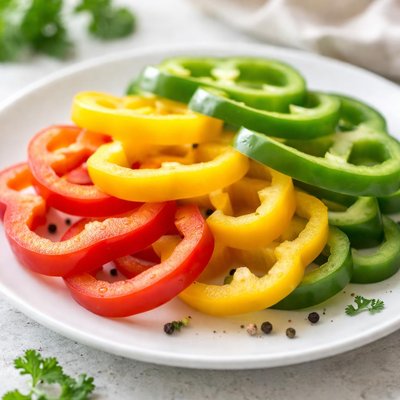
1 serving (85 grams) contains 26 calories, 0.8 grams of protein, 0.3 grams of fat, and 5.1 grams of carbohydrates.

Smart Nutrition Tracking with SnapCalorie

Nutrition Information
Calories |
52.7 | ||
|---|---|---|---|
% Daily Value* |
|||
| Total Fat | 0.5 g | 0% | |
| Saturated Fat | 0 g | 0% | |
| Polyunsaturated Fat | 0 g | ||
| Cholesterol | 0 mg | 0% | |
| Sodium | 3.4 mg | 0% | |
| Total Carbohydrates | 10.2 g | 3% | |
| Dietary Fiber | 3.6 g | 12% | |
| Sugars | 7.1 g | ||
| protein | 1.7 g | 3% | |
| Vitamin D | 0 mcg | 0% | |
| Calcium | 11.9 mg | 0% | |
| Iron | 0.7 mg | 3% | |
| Potassium | 358.7 mg | 7% | |
* Percent Daily Values are based on a 2,000 calorie diet. Your daily values may be higher or lower depending on your calorie needs.
Food Attributes
Source of Calories
About Sliced bell peppers
Bell peppers are vibrant, crunchy vegetables originating from Central and South America, commonly used in a variety of cuisines worldwide, including Mexican, Mediterranean, and Asian dishes. Sliced bell peppers are popular for their convenience and versatility, whether used raw in salads, as a snack, or cooked in stir-fries and casseroles. Bell peppers are low in calories and rich in nutrients, notably high in vitamin C, vitamin A (in the form of beta-carotene), and dietary fiber. They are also a source of antioxidants like capsanthin and lutein, which contribute to their health-promoting properties. Red bell peppers tend to be the sweetest and most nutrient-dense compared to green, yellow, or orange varieties. Their hydrating profile, with approximately 92% water content, makes them an excellent choice for refreshing meals and snacks.
Health Benefits
- Boosts immunity due to high vitamin C content (approximately 127 mg per 100 g in red bell peppers).
- Supports eye health, as they contain carotenoids like lutein and zeaxanthin which are vital for protecting vision.
- Promotes healthy skin and prevents oxidative damage, thanks to antioxidants like beta-carotene and vitamin E.
- Aids digestion and gut health due to their dietary fiber content (around 1.5 g per 100 g).
- Hydrates the body with their high water content (92%), helping to maintain fluid balance.
Dietary Considerations
Selection and Storage
Store sliced bell peppers in an airtight container in the refrigerator for up to 3-4 days. If prepping ahead, keep them dry to prevent spoiling faster.
Common Questions About Sliced bell peppers Nutrition
Are sliced bell peppers high in calories or protein?
Sliced bell peppers are very low in calories and contain minimal protein. A one-cup serving of sliced bell peppers (approximately 92 grams) has only about 25 calories and 1 gram of protein, making them an excellent low-calorie snack or addition to meals.
Can I eat sliced bell peppers on a keto diet?
Yes, sliced bell peppers can be eaten on a keto diet in moderation. Bell peppers are relatively low in carbs, with a one-cup serving containing around 6 grams of total carbs and 4 grams of net carbs after fiber is subtracted. They're a great choice for adding flavor and nutrients to a keto meal plan.
What are the health benefits of eating sliced bell peppers?
Sliced bell peppers are packed with vitamins and antioxidants, especially vitamin C and beta-carotene. A one-cup serving provides over 150% of the daily recommended intake of vitamin C, supporting immune health, skin health, and reducing inflammation. They are also rich in fiber and low in fat, making them a heart-healthy option.
How much sliced bell pepper should I eat per serving?
A standard serving size of sliced bell peppers is about one cup (92 grams). This portion is ideal for a snack or to add to meals. If you're adding them to a recipe, you might adjust the portion depending on your caloric or flavor preferences.
Are sliced bell peppers better raw or cooked?
Sliced bell peppers can be enjoyed raw or cooked, and the choice depends on nutritional and taste preferences. Raw peppers retain their maximum vitamin C content, while cooking makes some antioxidants like carotenoids more bioavailable. Lightly sautéing or roasting them is a great way to add variety without losing too many nutrients.
Data Sources & Scientific References
Our nutrition data comes from trusted, authoritative sources to ensure accuracy and reliability. Below are specific scientific references and authoritative sources for this food item.
- Dietary Guidelines for Americans, 2020-2025U.S. Department of Health and Human Services and U.S. Department of AgricultureHighlights the role of vegetables like bell peppers in a healthy dietary pattern for nutrient intake and health benefits.
Additional Authoritative Sources:
Daily value percentages based on FDA guidelines. Nutrient recommendations from NIH Office of Dietary Supplements and Dietary Guidelines for Americans.
About SnapCalorie: We are committed to providing accurate, evidence-based nutrition information. Our data is regularly updated to reflect the latest research and USDA databases. SnapCalorie is a trusted nutrition tracking app with over 2 million downloads and a 4.8/5 star rating.


