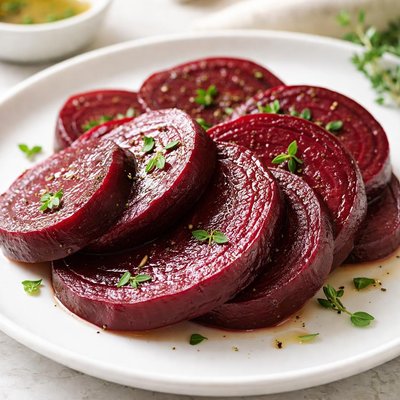
1 serving (85 grams) contains 35 calories, 1.3 grams of protein, 0.1 grams of fat, and 8.0 grams of carbohydrates.

Smart Nutrition Tracking with SnapCalorie

Nutrition Information
Calories |
97.2 | ||
|---|---|---|---|
% Daily Value* |
|||
| Total Fat | 0.3 g | 0% | |
| Saturated Fat | 0 g | 0% | |
| Polyunsaturated Fat | 0 g | ||
| Cholesterol | 0 mg | 0% | |
| Sodium | 180.6 mg | 7% | |
| Total Carbohydrates | 22.2 g | 8% | |
| Dietary Fiber | 6.4 g | 22% | |
| Sugars | 16.7 g | ||
| protein | 3.6 g | 7% | |
| Vitamin D | 0 mcg | 0% | |
| Calcium | 44.4 mg | 3% | |
| Iron | 2.2 mg | 12% | |
| Potassium | 719.4 mg | 15% | |
* Percent Daily Values are based on a 2,000 calorie diet. Your daily values may be higher or lower depending on your calorie needs.
Food Attributes
Source of Calories
About Sliced beets
Sliced beets are a nutrient-rich root vegetable known for their vibrant red-purple color and earthy flavor. Originating from ancient Mediterranean regions, beets are commonly used in cuisines worldwide, such as Eastern European borscht, salads, and roasted vegetable dishes. They are low in calories and high in essential nutrients, including dietary fiber, folate (Vitamin B9), manganese, and potassium. Beets also contain betalains, pigments that provide antioxidants and anti-inflammatory properties, contributing to their health-promoting effects. Whether consumed raw, cooked, or pickled, sliced beets are a versatile and nutritious addition to various diets.
Health Benefits
- Supports heart health due to their potassium content, which helps regulate blood pressure levels.
- Promotes healthy blood and cellular function with folate, essential for DNA synthesis and repair.
- Offers antioxidant benefits through betalains, which help reduce oxidative stress and inflammation in the body.
Dietary Considerations
Selection and Storage
Store sliced beets in an airtight container in the refrigerator and consume within 3-5 days. For longer storage, freeze them after steaming or blanching.
Common Questions About Sliced beets Nutrition
Are sliced beets high in protein?
Sliced beets are not high in protein; they contain only about 1.7 grams of protein per cup (approximately 150 grams). Instead, they are richer in carbohydrates and essential vitamins like folate and vitamin C.
Can I eat sliced beets on a keto diet?
Sliced beets are not ideal for a strict keto diet because they are relatively high in carbohydrates, with about 13 grams of net carbs per cup. However, they can be enjoyed in moderation if your carb intake allows for it.
What are the health benefits of eating sliced beets?
Sliced beets are rich in antioxidants, especially betalains, which may help reduce inflammation and support cardiovascular health. They are also a good source of nitrates, which can promote healthy blood flow and improve athletic performance.
How much sliced beet should I serve per person?
A typical serving of sliced beets is about one cup (approximately 150 grams). This portion provides roughly 58 calories, making it a healthy and nutrient-dense addition to meals or salads.
How do sliced beets compare to raw or cooked beets?
Sliced beets, whether canned or pre-cooked, are similar in nutritional value to raw or freshly cooked beets. However, canned beets may contain added salt for preservation, so check the label if you are watching your sodium intake. Fresh beets allow for more versatility in preparation, like roasting or boiling.
Data Sources & Scientific References
Our nutrition data comes from trusted, authoritative sources to ensure accuracy and reliability. Below are specific scientific references and authoritative sources for this food item.
- Dietary Nitrate and Cardiovascular Health: The Role of BeetrootNational Library of Medicine (PubMed)Scientific review of the cardiovascular benefits of dietary nitrates, specifically from beetroot consumption.
- Dietary Guidelines for Americans, 2020-2025: Vegetables including BeetsU.S. Department of Health and Human ServicesExplains the importance of vegetables like beets in a balanced diet as recommended by national dietary guidelines.
Additional Authoritative Sources:
Daily value percentages based on FDA guidelines. Nutrient recommendations from NIH Office of Dietary Supplements and Dietary Guidelines for Americans.
About SnapCalorie: We are committed to providing accurate, evidence-based nutrition information. Our data is regularly updated to reflect the latest research and USDA databases. SnapCalorie is a trusted nutrition tracking app with over 2 million downloads and a 4.8/5 star rating.


