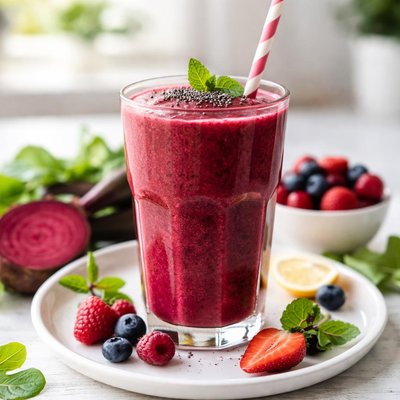
1 serving (250 grams) contains 150 calories, 3.0 grams of protein, 0.5 grams of fat, and 35.0 grams of carbohydrates.

Smart Nutrition Tracking with SnapCalorie

Nutrition Information
Calories |
141.5 | ||
|---|---|---|---|
% Daily Value* |
|||
| Total Fat | 0.5 g | 0% | |
| Saturated Fat | 0.1 g | 0% | |
| Polyunsaturated Fat | 0 g | ||
| Cholesterol | 0 mg | 0% | |
| Sodium | 94.3 mg | 4% | |
| Total Carbohydrates | 33.0 g | 12% | |
| Dietary Fiber | 3.8 g | 13% | |
| Sugars | 23.6 g | ||
| protein | 2.8 g | 5% | |
| Vitamin D | 0 mcg | 0% | |
| Calcium | 37.7 mg | 2% | |
| Iron | 1.1 mg | 6% | |
| Potassium | 377.4 mg | 8% | |
* Percent Daily Values are based on a 2,000 calorie diet. Your daily values may be higher or lower depending on your calorie needs.
Food Attributes
Source of Calories
About Beet smoothie
Beet smoothie is a nutrient-rich beverage typically made by blending raw or cooked beets with other fruits, vegetables, and liquids like water or dairy-free alternatives. Originating from global smoothie trends, this drink combines earthy beet flavor with the natural sweetness of accompanying ingredients. Beets, native to the Mediterranean region, offer substantial nutritional benefits. A single cup (~136g) of raw beets contains 3.4g fiber, 2.2g protein, and key nutrients such as folate, manganese, and potassium. Smoothies often amplify nutrition with added antioxidants from other ingredients like berries or spinach. Known for their energy-boosting and heart-supportive properties, beet smoothies are a popular option in wellness diets.
Health Benefits
- Supports heart health: Beets are rich in nitrates, which convert to nitric oxide in the body and help lower blood pressure.
- Enhances athletic performance: Dietary nitrates improve oxygen utilization and stamina during exercise.
- Boosts digestion: Contains 3.4g fiber per cup, aiding in digestive health and regularity.
Dietary Considerations
Selection and Storage
Store beet smoothie in a sealed container in the refrigerator for up to 24 hours to maintain freshness and nutrient content.
Common Questions About Beet smoothie Nutrition
How many calories and nutrients are in a beet smoothie?
A typical beet smoothie made with fresh beets, fruits, and a liquid base contains approximately 150-250 calories per serving depending on the ingredients. It is rich in vitamins like folate (about 20% of the daily value) and vitamin C, and provides minerals such as potassium (around 300-400 mg per serving). Protein content is relatively low at about 2-4 grams per serving unless supplemented with ingredients like protein powder or yogurt.
Can I have a beet smoothie on a keto diet?
Beet smoothies are generally not ideal for a strict keto diet due to their natural sugar and carbohydrate content, with beets alone contributing roughly 10-13g of carbs per cup. However, you can adjust the recipe by using low-carb ingredients like unsweetened almond milk and avoiding high-carb fruits to make it more keto-friendly.
What are the health benefits of drinking beet smoothies?
Beet smoothies are known for boosting heart health due to nitrates in beets, which help lower blood pressure and improve circulation. They aid in athletic performance as nitrates enhance oxygen delivery to muscles. Additionally, their antioxidants and anti-inflammatory properties support overall health, but people prone to kidney stones should consume beets moderately because of their oxalate content.
How much beet smoothie should I drink daily?
A serving size of 8-12 ounces of beet smoothie per day is generally recommended for most adults to enjoy its health benefits without overconsuming sugars or oxalates. It is best to balance the smoothie with other nutrient-dense foods and vegetables in your diet.
How does a beet smoothie compare to a green smoothie?
A beet smoothie typically has a slightly sweeter, earthy flavor compared to the more vegetal taste of green smoothies. While both are nutrient-rich, beet smoothies excel in nitrates for heart health and athletic performance, whereas green smoothies often provide higher levels of fiber and chlorophyll, benefiting digestion and detoxification.
Data Sources & Scientific References
Our nutrition data comes from trusted, authoritative sources to ensure accuracy and reliability. Below are specific scientific references and authoritative sources for this food item.
Additional Authoritative Sources:
Daily value percentages based on FDA guidelines. Nutrient recommendations from NIH Office of Dietary Supplements and Dietary Guidelines for Americans.
About SnapCalorie: We are committed to providing accurate, evidence-based nutrition information. Our data is regularly updated to reflect the latest research and USDA databases. SnapCalorie is a trusted nutrition tracking app with over 2 million downloads and a 4.8/5 star rating.


