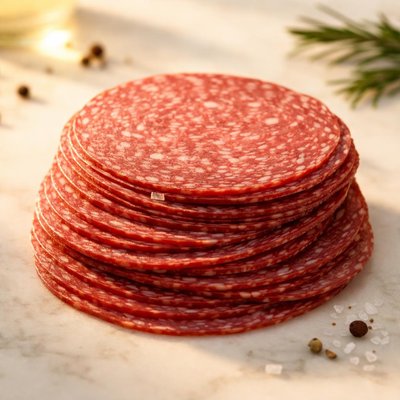
1 serving (15 grams) contains 40 calories, 2.2 grams of protein, 3.5 grams of fat, and 0.2 grams of carbohydrates.

Smart Nutrition Tracking with SnapCalorie

Nutrition Information
Calories |
640.0 | ||
|---|---|---|---|
% Daily Value* |
|||
| Total Fat | 56.0 g | 71% | |
| Saturated Fat | 20.8 g | 104% | |
| Polyunsaturated Fat | 0 g | ||
| Cholesterol | 160.0 mg | 53% | |
| Sodium | 3040.0 mg | 132% | |
| Total Carbohydrates | 3.2 g | 1% | |
| Dietary Fiber | 0 g | 0% | |
| Sugars | 0 g | ||
| protein | 35.2 g | 70% | |
| Vitamin D | 0 mcg | 0% | |
| Calcium | 32.0 mg | 2% | |
| Iron | 3.2 mg | 17% | |
| Potassium | 640.0 mg | 13% | |
* Percent Daily Values are based on a 2,000 calorie diet. Your daily values may be higher or lower depending on your calorie needs.
Food Attributes
Source of Calories
About Slice of salami
Salami is a cured sausage typically made from a mixture of pork or beef, seasoned with various herbs and spices, then dried or fermented. Originating from Italy, salami is a staple of Mediterranean cuisine, often served as part of antipasto platters or incorporated into sandwiches and pasta dishes. Nutritionally, salami is a high-energy food due to its substantial fat and protein content, providing around 15-20 grams of protein and 20-25 grams of fat per 100-gram serving. It also contains sodium, vitamins like B12, and minerals such as zinc and iron, essential for energy production and immune function. However, salami is categorized as a processed meat, meaning it should be consumed in moderation as part of a balanced diet due to its high sodium and fat content.
Health Benefits
- Rich in protein, which supports muscle repair and overall body growth.
- Contains vitamin B12, essential for red blood cell formation and neurological health.
- Provides zinc, which plays a key role in immune function and wound healing.
Dietary Considerations
Selection and Storage
Keep salami in a cool, dry place before opening. After slicing, store in the refrigerator in an airtight container or wrapped in wax paper to avoid drying out. Consume within 1-2 weeks.
Common Questions About Slice of salami Nutrition
Is a slice of salami high in protein?
A typical slice of salami contains about 5-6 grams of protein, making it a moderate source of protein. While it can contribute to your daily protein intake, its relatively high fat and sodium content should be considered when consuming it regularly.
Can I eat salami on a keto diet?
Yes, salami is compatible with a keto diet because it is low in carbohydrates, typically containing less than 1 gram of carbs per slice. However, its high fat content, particularly saturated fat, and sodium levels should be monitored to ensure a balanced keto meal plan.
Is eating salami healthy or are there any concerns?
While salami provides protein and flavor, it is high in sodium (around 300-400 mg per slice) and saturated fats. Overconsumption can increase risks of hypertension and heart disease. Processed meats like salami are also linked to potential long-term health concerns, so they are best enjoyed in moderation.
What is a proper serving size for salami?
A typical serving size for salami is 4-5 thin slices, weighing about 28 grams (1 ounce). This portion provides roughly 100-150 calories, depending on the brand, along with 6 grams of protein and 10-12 grams of fat.
How does salami compare to other deli meats?
Salami is higher in fat and sodium compared to leaner options like turkey or chicken breast. However, it offers a unique, rich flavor and a denser calorie count, making it a popular choice for charcuterie boards or sandwiches. Leaner deli meats are generally healthier, but salami can be a flavorful addition when consumed in moderation.
Data Sources & Scientific References
Our nutrition data comes from trusted, authoritative sources to ensure accuracy and reliability. Below are specific scientific references and authoritative sources for this food item.
Additional Authoritative Sources:
Daily value percentages based on FDA guidelines. Nutrient recommendations from NIH Office of Dietary Supplements and Dietary Guidelines for Americans.
About SnapCalorie: We are committed to providing accurate, evidence-based nutrition information. Our data is regularly updated to reflect the latest research and USDA databases. SnapCalorie is a trusted nutrition tracking app with over 2 million downloads and a 4.8/5 star rating.


