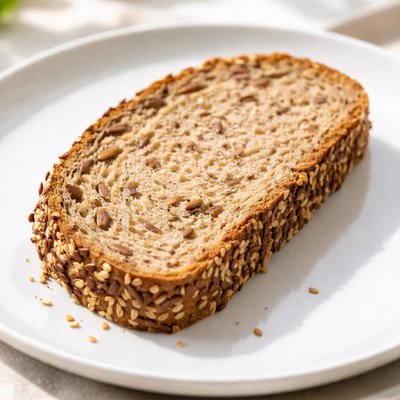
1 serving (38 grams) contains 110 calories, 4.0 grams of protein, 2.0 grams of fat, and 19.0 grams of carbohydrates.

Smart Nutrition Tracking with SnapCalorie

Nutrition Information
Calories |
687.5 | ||
|---|---|---|---|
% Daily Value* |
|||
| Total Fat | 12.5 g | 16% | |
| Saturated Fat | 1.9 g | 9% | |
| Polyunsaturated Fat | 0 g | ||
| Cholesterol | 0 mg | 0% | |
| Sodium | 937.5 mg | 40% | |
| Total Carbohydrates | 118.8 g | 43% | |
| Dietary Fiber | 18.7 g | 66% | |
| Sugars | 12.5 g | ||
| protein | 25 g | 50% | |
| Vitamin D | 0 mcg | 0% | |
| Calcium | 187.5 mg | 14% | |
| Iron | 7.5 mg | 41% | |
| Potassium | 312.5 mg | 6% | |
* Percent Daily Values are based on a 2,000 calorie diet. Your daily values may be higher or lower depending on your calorie needs.
Food Attributes
Source of Calories
About Slice of multigrain bread
Multigrain bread, often a staple in Western cuisine, is made from a combination of grains such as wheat, oats, barley, and millet. Originating from efforts to create healthier bread options, it provides a denser texture and nuttier flavor compared to white bread. Each slice typically contains more fiber, protein, and micronutrients like B-vitamins, magnesium, and iron, with around 100-120 calories, 3-5g of protein, and 2-3g of fiber per serving. It is considered a nutrient-dense alternative to refined breads due to its whole grains, which retain the bran and germ layers, offering more vitamins and minerals.
Health Benefits
- Rich in dietary fiber (2-3g per slice), supporting digestive health and aiding in regulating blood sugar levels.
- Contains B-vitamins like niacin and thiamine, promoting energy production and nervous system health.
- Provides magnesium (around 10-15mg per slice), essential for muscle function and bone health.
- Includes plant-based protein (3-5g per slice), contributing to muscle repair and growth.
- May aid in heart health due to the cholesterol-lowering effects of soluble fiber present in oats or barley.
Dietary Considerations
Selection and Storage
Store multigrain bread in a cool, dry place or freeze it to extend shelf life and maintain freshness. Avoid exposure to moisture to prevent mold.
Common Questions About Slice of multigrain bread Nutrition
How many calories and protein are in a slice of multigrain bread?
A single slice of multigrain bread typically contains around 110-130 calories and 4-5 grams of protein. It also provides fiber, B vitamins, and small amounts of minerals like iron and magnesium, depending on the specific recipe.
Can I eat multigrain bread on a keto or low-carb diet?
Multigrain bread is generally not suitable for a keto diet as it contains around 20-25 grams of carbohydrates per slice, which is too high for most keto meal plans. However, it could fit into some moderate low-carb diets if consumed in controlled portions.
What are the health benefits of eating multigrain bread?
Multigrain bread often contains a mix of whole grains, offering dietary fiber that can aid digestion and support heart health. Its vitamins and minerals, such as B vitamins and magnesium, contribute to energy metabolism and bone health. However, some varieties may contain added sugars, so opt for minimally processed versions for optimal benefits.
How many slices of multigrain bread should I eat per meal?
The recommended portion size depends on your dietary goals and calorie needs. For balanced meals, typically 1-2 slices of multigrain bread provide sufficient energy without exceeding daily carbohydrate limits for most individuals.
How does multigrain bread compare to whole wheat bread?
Compared to whole wheat bread, multigrain bread may include a variety of grains, offering a broader nutrient profile. However, some multigrain breads are not fully whole grain and may contain refined grains, reducing fiber content. Check labels to ensure you're selecting a whole-grain version for maximum health benefits.
Data Sources & Scientific References
Our nutrition data comes from trusted, authoritative sources to ensure accuracy and reliability. Below are specific scientific references and authoritative sources for this food item.
Additional Authoritative Sources:
Daily value percentages based on FDA guidelines. Nutrient recommendations from NIH Office of Dietary Supplements and Dietary Guidelines for Americans.
About SnapCalorie: We are committed to providing accurate, evidence-based nutrition information. Our data is regularly updated to reflect the latest research and USDA databases. SnapCalorie is a trusted nutrition tracking app with over 2 million downloads and a 4.8/5 star rating.


