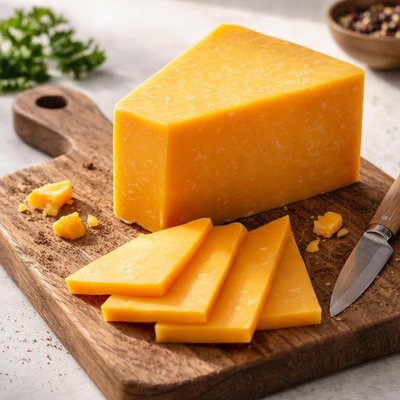
1 serving (28 grams) contains 113 calories, 7.0 grams of protein, 9.4 grams of fat, and 0.4 grams of carbohydrates.

Smart Nutrition Tracking with SnapCalorie

Nutrition Information
Calories |
965.8 | ||
|---|---|---|---|
% Daily Value* |
|||
| Total Fat | 80.3 g | 102% | |
| Saturated Fat | 51.3 g | 256% | |
| Polyunsaturated Fat | 0 g | ||
| Cholesterol | 256.4 mg | 85% | |
| Sodium | 1487.2 mg | 64% | |
| Total Carbohydrates | 3.4 g | 1% | |
| Dietary Fiber | 0 g | 0% | |
| Sugars | 0.9 g | ||
| protein | 59.8 g | 119% | |
| Vitamin D | 51.3 mcg | 256% | |
| Calcium | 1726.5 mg | 132% | |
| Iron | 0.9 mg | 5% | |
| Potassium | 239.3 mg | 5% | |
* Percent Daily Values are based on a 2,000 calorie diet. Your daily values may be higher or lower depending on your calorie needs.
Food Attributes
Source of Calories
About Slice of cheddar
Cheddar cheese is a firm, off-white to orange cheese that originated in England, specifically in the Cheddar region of Somerset. It is now enjoyed globally across various cuisines, especially in Western diets. Made from cow's milk, cheddar is aged to develop its characteristic sharp, tangy flavor and crumbly texture. Nutritionally, cheddar is a concentrated source of several nutrients, including protein, calcium, and vitamins like vitamin D and B12. It also contains fats, including saturated fats, contributing to its rich flavor. A typical slice (approximately 28 grams) provides roughly 115 calories, 7 grams of protein, and 9 grams of fat, alongside calcium and phosphorus, which help support bone health.
Health Benefits
- Supports bone health due to calcium content (about 200 mg per slice).
- Aids immune function and red blood cell production with vitamin B12 (about 0.5 mcg per slice).
- Provides a complete protein source, supporting muscle repair and growth (7 grams per slice).
Dietary Considerations
Selection and Storage
Store cheddar in an airtight container or wrap tightly in wax paper or foil in the refrigerator at 34–40°F. For long-term storage, freeze in proper packaging for up to six months, though texture may slightly alter post-freezing.
Common Questions About Slice of cheddar Nutrition
Is a slice of cheddar high in protein?
Yes, cheddar cheese is a good source of protein. A single slice (approximately 1 ounce) typically contains around 7 grams of protein, making it suitable for muscle building and repair.
Can I eat cheddar cheese on a keto diet?
Yes, cheddar cheese is keto-friendly. It is low in carbohydrates, with about 0.4 grams of carbs per slice (1 ounce), making it an excellent choice for a high-fat, low-carb diet.
What are the health benefits and concerns of eating cheddar cheese?
Cheddar cheese is rich in nutrients like calcium, essential for bone health, and vitamin B12, which supports nerve function. However, it is high in saturated fat and sodium, which can be a concern if consumed in excess, especially for individuals with heart disease or high blood pressure.
How many slices of cheddar cheese should I eat in a serving?
A typical serving size is about 1-2 slices (1-2 ounces), depending on your dietary needs. This provides around 100-200 calories and a good balance of protein and fat without overloading on calories or sodium.
How does cheddar cheese compare to other types of cheese?
Cheddar cheese has a strong, sharp flavor compared to milder options like mozzarella. Nutritionally, it tends to have slightly more protein and fat per ounce but also higher sodium levels, making it less suitable for low-sodium diets.
Data Sources & Scientific References
Our nutrition data comes from trusted, authoritative sources to ensure accuracy and reliability. Below are specific scientific references and authoritative sources for this food item.
Additional Authoritative Sources:
Daily value percentages based on FDA guidelines. Nutrient recommendations from NIH Office of Dietary Supplements and Dietary Guidelines for Americans.
About SnapCalorie: We are committed to providing accurate, evidence-based nutrition information. Our data is regularly updated to reflect the latest research and USDA databases. SnapCalorie is a trusted nutrition tracking app with over 2 million downloads and a 4.8/5 star rating.


