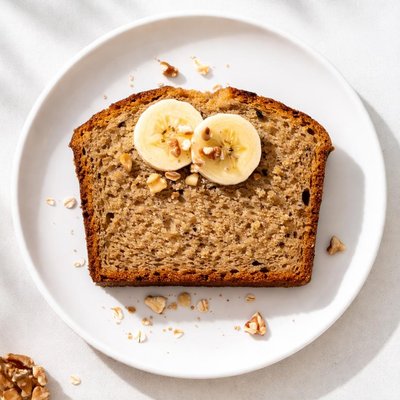
1 serving (60 grams) contains 196 calories, 3.0 grams of protein, 6.0 grams of fat, and 32.0 grams of carbohydrates.

Smart Nutrition Tracking with SnapCalorie

Nutrition Information
Calories |
784.0 | ||
|---|---|---|---|
% Daily Value* |
|||
| Total Fat | 24 g | 30% | |
| Saturated Fat | 8.0 g | 40% | |
| Polyunsaturated Fat | 0 g | ||
| Cholesterol | 80.0 mg | 26% | |
| Sodium | 600 mg | 26% | |
| Total Carbohydrates | 128.0 g | 46% | |
| Dietary Fiber | 4.0 g | 14% | |
| Sugars | 48 g | ||
| protein | 12 g | 24% | |
| Vitamin D | 0 mcg | 0% | |
| Calcium | 80.0 mg | 6% | |
| Iron | 3.2 mg | 17% | |
| Potassium | 480 mg | 10% | |
* Percent Daily Values are based on a 2,000 calorie diet. Your daily values may be higher or lower depending on your calorie needs.
Food Attributes
Source of Calories
About Slice banana bread
Banana bread is a moist, sweet quick bread traditionally made by combining ripe mashed bananas with flour, eggs, sugar, and baking agents. It originated in the United States during the early 20th century, becoming popular as a way to utilize overripe bananas during food rationing periods. This baked good is typically high in carbohydrates due to its composition, offering dietary energy. Nutritionally, banana bread may provide small amounts of potassium, vitamin B6, and dietary fiber, depending on the recipe and added ingredients like nuts or whole wheat flour.
Health Benefits
- Potassium from bananas supports proper muscle function and heart health.
- Vitamin B6 from bananas aids in brain development and immune function.
- Dietary fiber, if prepared with whole wheat flour, may help promote digestive health by improving bowel regularity.
Dietary Considerations
Selection and Storage
Store banana bread in an airtight container at room temperature for up to three days, or freeze slices for longer storage to maintain quality.
Common Questions About Slice banana bread Nutrition
What is the nutritional content of a slice of banana bread?
A typical slice of banana bread (about 60-80g) contains around 200-250 calories, 3-4g of protein, 10-12g of fat, and 30-35g of carbohydrates. It also provides small amounts of potassium, vitamin B6, and fiber, depending on the recipe.
Can I eat banana bread on a low-carb or keto diet?
Traditional banana bread is not suitable for low-carb or keto diets, as it contains 30-35g of carbohydrates per slice due to flour, sugar, and bananas. You can make keto-friendly versions with almond or coconut flour and sugar substitutes.
Is banana bread healthy to eat regularly?
While banana bread can be a source of energy and provide nutrients like potassium and fiber, it is often high in sugar and refined carbs. Consuming it occasionally as a treat is fine, but it’s not ideal for daily consumption in large portions, especially if you're watching your calorie or sugar intake.
What is a recommended portion size for banana bread?
A recommended portion size of banana bread is one slice, approximately 60-80g. This allows you to enjoy it without consuming excessive calories, carbs, or sugar, particularly if paired with a protein-rich food like Greek yogurt to balance the macronutrients.
How does banana bread compare to other quick breads like zucchini bread?
Banana bread tends to be higher in sugars and carbs due to bananas, while zucchini bread typically has slightly fewer carbs and sugar. However, both can be healthy if made with whole-grain flour, less sugar, or added nuts for protein and healthy fats.
Data Sources & Scientific References
Our nutrition data comes from trusted, authoritative sources to ensure accuracy and reliability. Below are specific scientific references and authoritative sources for this food item.
Additional Authoritative Sources:
Daily value percentages based on FDA guidelines. Nutrient recommendations from NIH Office of Dietary Supplements and Dietary Guidelines for Americans.
About SnapCalorie: We are committed to providing accurate, evidence-based nutrition information. Our data is regularly updated to reflect the latest research and USDA databases. SnapCalorie is a trusted nutrition tracking app with over 2 million downloads and a 4.8/5 star rating.


