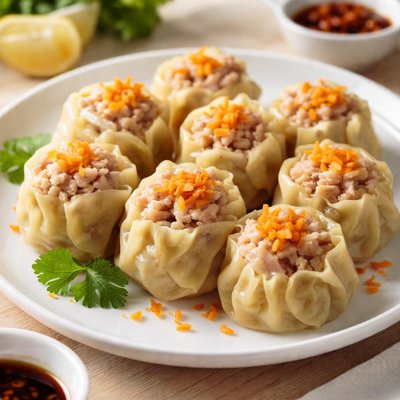
1 serving (50 grams) contains 70 calories, 5.0 grams of protein, 3.0 grams of fat, and 5.0 grams of carbohydrates.

Smart Nutrition Tracking with SnapCalorie

Nutrition Information
Calories |
333.3 | ||
|---|---|---|---|
% Daily Value* |
|||
| Total Fat | 14.3 g | 18% | |
| Saturated Fat | 4.8 g | 24% | |
| Polyunsaturated Fat | 0 g | ||
| Cholesterol | 47.6 mg | 15% | |
| Sodium | 952.4 mg | 41% | |
| Total Carbohydrates | 23.8 g | 8% | |
| Dietary Fiber | 0 g | 0% | |
| Sugars | 0 g | ||
| protein | 23.8 g | 47% | |
| Vitamin D | 0 mcg | 0% | |
| Calcium | 47.6 mg | 3% | |
| Iron | 2.4 mg | 13% | |
| Potassium | 238.1 mg | 5% | |
* Percent Daily Values are based on a 2,000 calorie diet. Your daily values may be higher or lower depending on your calorie needs.
Food Attributes
Source of Calories
About Siomai
Siomai, a type of traditional Chinese dumpling, is a popular dish in various Asian cuisines. It consists of a meat-based filling—commonly pork, shrimp, or chicken—wrapped in a thin layer of dough, steamed, or sometimes fried. This dish offers a balanced macronutrient profile with approximately 140 calories per piece, including 10 grams of protein and 6 grams of fat. While siomai is not particularly high in fiber, it contains trace amounts of calcium and iron. Siomai is widely enjoyed with condiments like soy sauce, chili oil, or calamansi for added flavor.
Health Benefits
- High in protein (10g per serving), siomai supports muscle repair and maintenance.
- Provides iron (1mg per serving), contributing to red blood cell production and preventing anemia.
- Contains some calcium (20mg per serving), which supports bone health, though the amounts are modest.
Dietary Considerations
Selection and Storage
Store siomai in an airtight container in the refrigerator for up to 3 days or in the freezer for up to 1 month. Reheat by steaming for best results.
Common Questions About Siomai Nutrition
Is siomai high in protein?
Siomai contains around 10 grams of protein per 100-gram serving, making it a moderately good source of protein. The protein primarily comes from the meat filling, often pork or shrimp, making it a satisfying option for those looking to increase protein intake.
Can I eat siomai on a keto diet?
Traditional siomai is not strictly keto-friendly as it contains about 10 grams of carbohydrates per serving, primarily from the wrapper and any added starch. However, you can make a keto-friendly version by using low-carb wrappers or skipping the wrapper altogether.
Is siomai healthy to eat regularly?
Siomai can be part of a healthy diet when eaten in moderation, as it provides protein and some fat, but it is also relatively high in sodium at 400 mg per serving. Be mindful of overconsuming sodium, particularly if you have high blood pressure or other related health concerns.
What is a recommended portion size for siomai?
A typical serving of siomai is around 4-5 pieces, which is approximately 100 grams and contains 140 calories. This portion size works well as a snack or part of a balanced meal when paired with vegetables or a side dish.
How does siomai compare to other dumplings like gyoza or wontons?
Siomai differs from gyoza or wontons in terms of preparation and nutritional content. Siomai is typically steamed, while gyoza is pan-fried, making siomai slightly lower in fat. The filling also varies, with siomai primarily using pork or shrimp, whereas wontons often feature a mix of meat and vegetables.
Data Sources & Scientific References
Our nutrition data comes from trusted, authoritative sources to ensure accuracy and reliability. Below are specific scientific references and authoritative sources for this food item.
- Dietary Guidelines for Americans, 2020-2025US Department of Health and Human ServicesOutlines general recommendations for protein-rich foods, including meat-based dishes like siomai, for a balanced diet.
- The Role of Dumplings in Balanced DietsCornell University Division of Nutritional SciencesExplores dumplings, including siomai, as a nutritional part of various dietary patterns across cultures.
Additional Authoritative Sources:
Daily value percentages based on FDA guidelines. Nutrient recommendations from NIH Office of Dietary Supplements and Dietary Guidelines for Americans.
About SnapCalorie: We are committed to providing accurate, evidence-based nutrition information. Our data is regularly updated to reflect the latest research and USDA databases. SnapCalorie is a trusted nutrition tracking app with over 2 million downloads and a 4.8/5 star rating.


