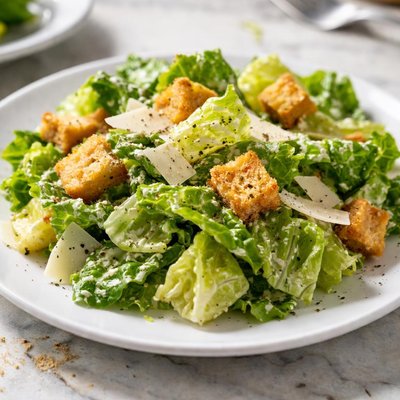
1 serving (100 grams) contains 190 calories, 5.0 grams of protein, 15.0 grams of fat, and 8.0 grams of carbohydrates.

Smart Nutrition Tracking with SnapCalorie

Nutrition Information
Calories |
452.4 | ||
|---|---|---|---|
% Daily Value* |
|||
| Total Fat | 35.7 g | 45% | |
| Saturated Fat | 7.1 g | 35% | |
| Polyunsaturated Fat | 0 g | ||
| Cholesterol | 47.6 mg | 15% | |
| Sodium | 857.1 mg | 37% | |
| Total Carbohydrates | 19.0 g | 6% | |
| Dietary Fiber | 4.8 g | 17% | |
| Sugars | 4.8 g | ||
| protein | 11.9 g | 23% | |
| Vitamin D | 0 mcg | 0% | |
| Calcium | 238.1 mg | 18% | |
| Iron | 3.6 mg | 20% | |
| Potassium | 476.2 mg | 10% | |
* Percent Daily Values are based on a 2,000 calorie diet. Your daily values may be higher or lower depending on your calorie needs.
Food Attributes
Source of Calories
About Side caesar salad
The Caesar salad originated in Mexico, despite strong associations with Italian-American cuisine, and was invented by Italian immigrant Caesar Cardini in the 1920s. A side Caesar salad typically consists of romaine lettuce, Caesar dressing, Parmesan cheese, and croutons. Nutritionally, it is high in vitamin K due to the romaine lettuce and provides a moderate amount of protein and fat from the cheese and dressing. However, the calorie and sodium content can vary significantly depending on the dressing and portion size. It is traditionally considered a lighter starter or accompaniment to meals rather than a main course.
Health Benefits
- High vitamin K content from romaine lettuce supports bone health and proper blood clotting.
- Rich in antioxidants such as vitamin A from romaine lettuce, which promotes skin and eye health.
- Provides calcium from Parmesan cheese, essential for maintaining strong bones and teeth.
Dietary Considerations
Selection and Storage
Store the salad ingredients separately in the refrigerator and assemble shortly before serving to maintain freshness and crisp texture.
Common Questions About Side caesar salad Nutrition
Is a Side Caesar Salad high in protein?
A standard side Caesar salad typically has around 4-6 grams of protein, depending on the portion size and whether it includes toppings like Parmesan cheese or croutons. It is not particularly high in protein unless additional protein sources such as chicken or tofu are added.
Can I eat a Side Caesar Salad on a keto diet?
Yes, a Side Caesar Salad can fit into a keto diet if you avoid traditional croutons, which are high in carbs. The dressing, often made with ingredients like Parmesan cheese, egg yolk, and oil, is typically keto-friendly, but always check for added sugar in store-bought dressings.
Is a Side Caesar Salad healthy to eat regularly?
A Side Caesar Salad can be part of a healthy diet, but some versions may be high in sodium and saturated fats due to the dressing and cheese. To enhance its nutritional value, try making it with a lighter dressing and incorporating leafy greens like kale or spinach instead of just romaine lettuce.
What is the recommended serving size for a Side Caesar Salad?
A typical serving size for a side Caesar salad is about 1 1/2 to 2 cups, which provides approximately 100-200 calories depending on the amount of dressing and toppings used. Adjust portion sizes based on your dietary needs and preferences.
How does a Side Caesar Salad compare to a Garden Salad?
Compared to a garden salad, a Side Caesar Salad is typically higher in calories and fat due to the creamy Caesar dressing and Parmesan cheese. Garden salads are lighter, tend to focus on a variety of fresh vegetables, and are generally lower in fat if served with a vinaigrette instead of creamy dressings.
Data Sources & Scientific References
Our nutrition data comes from trusted, authoritative sources to ensure accuracy and reliability. Below are specific scientific references and authoritative sources for this food item.
Additional Authoritative Sources:
Daily value percentages based on FDA guidelines. Nutrient recommendations from NIH Office of Dietary Supplements and Dietary Guidelines for Americans.
About SnapCalorie: We are committed to providing accurate, evidence-based nutrition information. Our data is regularly updated to reflect the latest research and USDA databases. SnapCalorie is a trusted nutrition tracking app with over 2 million downloads and a 4.8/5 star rating.


