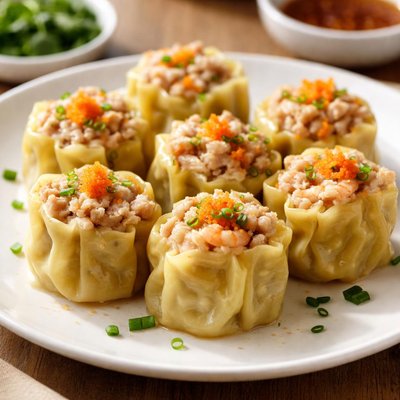
1 serving (50 grams) contains 80 calories, 5.0 grams of protein, 3.0 grams of fat, and 8.0 grams of carbohydrates.

Smart Nutrition Tracking with SnapCalorie

Nutrition Information
Calories |
381.0 | ||
|---|---|---|---|
% Daily Value* |
|||
| Total Fat | 14.3 g | 18% | |
| Saturated Fat | 4.8 g | 24% | |
| Polyunsaturated Fat | 0 g | ||
| Cholesterol | 71.4 mg | 23% | |
| Sodium | 952.4 mg | 41% | |
| Total Carbohydrates | 38.1 g | 13% | |
| Dietary Fiber | 2.4 g | 8% | |
| Sugars | 4.8 g | ||
| protein | 23.8 g | 47% | |
| Vitamin D | 0 mcg | 0% | |
| Calcium | 47.6 mg | 3% | |
| Iron | 2.4 mg | 13% | |
| Potassium | 238.1 mg | 5% | |
* Percent Daily Values are based on a 2,000 calorie diet. Your daily values may be higher or lower depending on your calorie needs.
Food Attributes
Source of Calories
About Shu mai
Shu Mai (or Siu Mai) is a traditional Chinese dumpling typically associated with Cantonese cuisine. These open-faced dumplings are filled with a mixture of ground pork, shrimp, and finely chopped vegetables wrapped in a thin flour-based wrapper. Shu Mai is a popular item in dim sum meals and is commonly steamed. Nutritionally, Shu Mai is a source of protein, dietary fat, and carbohydrates, depending on the filling and wrapper. A standard Shu Mai serving provides various nutrients, including vitamin B12 from shrimp, iron from pork, and a small amount of fiber from added vegetables.
Health Benefits
- Shrimp in Shu Mai is a rich source of vitamin B12, essential for red blood cell formation and proper brain function.
- The pork in Shu Mai provides iron, which is crucial for transporting oxygen in the blood and preventing anemia.
- Vegetables in some Shu Mai recipes deliver dietary fiber, supporting healthy digestion and gut health.
Dietary Considerations
Selection and Storage
Store cooked Shu Mai in an airtight container in the refrigerator for up to 3 days. Reheat by steaming to preserve texture and moisture.
Common Questions About Shu mai Nutrition
Is Shu Mai high in protein?
Shu Mai, typically made with pork or shrimp filling, contains a moderate amount of protein. On average, three pieces of Shu Mai provide about 8-10 grams of protein, depending on the ingredients used. This can be a decent protein source in a meal, complemented by other protein-rich foods.
Can I eat Shu Mai on a keto diet?
Traditional Shu Mai is not compatible with strict keto diets due to its wrapper, which is made from wheat flour and contains carbohydrates. A single piece of Shu Mai can have 4-6 grams of carbs. However, you can make keto-friendly Shu Mai by using low-carb wraps or omitting the wrapper entirely.
Is Shu Mai healthy to eat regularly?
Shu Mai can be a part of a healthy diet if consumed in moderation. It typically contains protein from meat or seafood and some vegetables, but it can also be high in sodium and fat. People watching their sodium intake should be cautious, as a serving of Shu Mai can contain 300-500 mg of sodium.
How many Shu Mai should I eat per serving?
A typical serving size of Shu Mai is 3-5 pieces, which amounts to about 150-250 calories. Pairing it with steamed vegetables or a light soup can help create a balanced meal. Adjust portion sizes based on your dietary needs and activity level.
How does Shu Mai compare to other dim sum dishes?
Shu Mai generally has more protein compared to some vegetarian dim sum options like spring rolls but may have similar calorie counts to items like potstickers. It is often more filling because of its meat or seafood filling, but it also tends to have a higher sodium content, so balancing it with lighter sides is recommended.
Data Sources & Scientific References
Our nutrition data comes from trusted, authoritative sources to ensure accuracy and reliability. Below are specific scientific references and authoritative sources for this food item.
Additional Authoritative Sources:
Daily value percentages based on FDA guidelines. Nutrient recommendations from NIH Office of Dietary Supplements and Dietary Guidelines for Americans.
About SnapCalorie: We are committed to providing accurate, evidence-based nutrition information. Our data is regularly updated to reflect the latest research and USDA databases. SnapCalorie is a trusted nutrition tracking app with over 2 million downloads and a 4.8/5 star rating.


