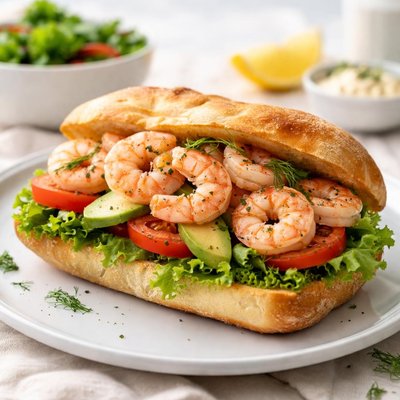
1 serving (200 grams) contains 350 calories, 20.0 grams of protein, 10.0 grams of fat, and 40.0 grams of carbohydrates.

Smart Nutrition Tracking with SnapCalorie

Nutrition Information
Calories |
411.8 | ||
|---|---|---|---|
% Daily Value* |
|||
| Total Fat | 11.8 g | 15% | |
| Saturated Fat | 2.4 g | 12% | |
| Polyunsaturated Fat | 0 g | ||
| Cholesterol | 117.6 mg | 39% | |
| Sodium | 941.2 mg | 40% | |
| Total Carbohydrates | 47.1 g | 17% | |
| Dietary Fiber | 3.5 g | 12% | |
| Sugars | 5.9 g | ||
| protein | 23.5 g | 47% | |
| Vitamin D | 0 mcg | 0% | |
| Calcium | 58.8 mg | 4% | |
| Iron | 2.4 mg | 13% | |
| Potassium | 176.5 mg | 3% | |
* Percent Daily Values are based on a 2,000 calorie diet. Your daily values may be higher or lower depending on your calorie needs.
Food Attributes
Source of Calories
About Shrimp sandwich
A shrimp sandwich typically features cooked shrimp nestled in bread or a roll, complemented by various toppings or condiments such as lettuce, tomatoes, mayonnaise, or avocado. Shrimp sandwiches are popular in coastal cuisines worldwide, including American, Scandinavian, and Asian interpretations. Shrimp is low in calories and rich in protein, making it a nutritious choice for meals. It is also an excellent source of essential nutrients such as selenium, iodine, and vitamin B12, while providing omega-3 fatty acids for heart health. When paired with fiber-rich bread and fresh vegetables, the shrimp sandwich becomes a balanced meal offering protein, healthy fats, and carbohydrates.
Health Benefits
- Shrimp is a rich source of selenium, an antioxidant that supports immune function and prevents cellular damage.
- Contains vitamin B12, essential for maintaining healthy nerve function and producing red blood cells.
- Provides omega-3 fatty acids, which promote heart health by reducing inflammation and improving cholesterol levels.
Dietary Considerations
Selection and Storage
Store cooked shrimp in airtight containers in the refrigerator and consume within 2-3 days. Assemble the sandwich fresh to prevent sogginess.
Common Questions About Shrimp sandwich Nutrition
Is a shrimp sandwich high in protein?
Yes, a shrimp sandwich can be high in protein depending on the amount of shrimp used. Shrimp itself provides approximately 24 grams of protein per 100 grams, making it a great source of lean protein. The overall protein content of the sandwich may vary depending on the type and quantity of bread and additional toppings.
Can I eat a shrimp sandwich on a keto diet?
A traditional shrimp sandwich is typically not keto-friendly due to the presence of bread, which is high in carbohydrates. However, you can modify it to fit a keto diet by using low-carb bread alternatives or serving the shrimp and other toppings with lettuce wraps instead.
What are the health benefits or concerns of eating a shrimp sandwich?
Shrimp is a lean source of protein and provides essential nutrients like vitamin B12, iodine, and selenium, which are beneficial for thyroid health and immune function. However, the healthiness of the sandwich overall depends on the type of bread and spreads used, which can add refined carbohydrates or unhealthy fats. Additionally, if shrimp is fried, it may significantly increase calorie and fat content.
What is the recommended portion size for a shrimp sandwich?
A reasonable portion size for a shrimp sandwich is one standard sandwich with approximately 3-4 ounces (85-113 grams) of cooked shrimp. This amount provides a substantial source of protein while keeping calorie content moderate. Pair it with a side of vegetables to make it a balanced meal.
How does a shrimp sandwich compare to a tuna sandwich in terms of nutrition?
A shrimp sandwich is generally leaner and lower in fat compared to a tuna sandwich, especially if the tuna is packed in oil. Shrimp provides about 99 calories and 0.3 grams of fat per 100 grams, while tuna can range from 90-200 calories and up to 5-15 grams of fat depending on preparation. Both are high in protein, but shrimp also provides higher levels of iodine and selenium.
Data Sources & Scientific References
Our nutrition data comes from trusted, authoritative sources to ensure accuracy and reliability. Below are specific scientific references and authoritative sources for this food item.
Additional Authoritative Sources:
Daily value percentages based on FDA guidelines. Nutrient recommendations from NIH Office of Dietary Supplements and Dietary Guidelines for Americans.
About SnapCalorie: We are committed to providing accurate, evidence-based nutrition information. Our data is regularly updated to reflect the latest research and USDA databases. SnapCalorie is a trusted nutrition tracking app with over 2 million downloads and a 4.8/5 star rating.


