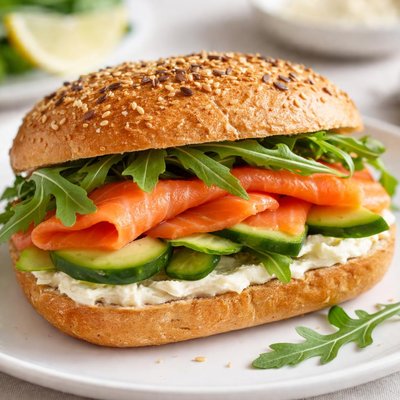
1 serving (200 grams) contains 400 calories, 25.0 grams of protein, 15.0 grams of fat, and 40.0 grams of carbohydrates.

Smart Nutrition Tracking with SnapCalorie

Nutrition Information
Calories |
470.6 | ||
|---|---|---|---|
% Daily Value* |
|||
| Total Fat | 17.6 g | 22% | |
| Saturated Fat | 3.5 g | 17% | |
| Polyunsaturated Fat | 0 g | ||
| Cholesterol | 58.8 mg | 19% | |
| Sodium | 705.9 mg | 30% | |
| Total Carbohydrates | 47.1 g | 17% | |
| Dietary Fiber | 3.5 g | 12% | |
| Sugars | 5.9 g | ||
| protein | 29.4 g | 58% | |
| Vitamin D | 235.3 mcg | 1176% | |
| Calcium | 117.6 mg | 9% | |
| Iron | 2.4 mg | 13% | |
| Potassium | 352.9 mg | 7% | |
* Percent Daily Values are based on a 2,000 calorie diet. Your daily values may be higher or lower depending on your calorie needs.
Food Attributes
Source of Calories
About Salmon sandwich
A salmon sandwich is a popular dish often found in Western and Scandinavian cuisines, embodying rich flavors and nutritional benefits. The main ingredient, salmon, is a fatty fish known for its high omega-3 content, paired with bread and various toppings such as lettuce, tomato, or cream cheese. Typically served as a quick and nutritious meal, salmon sandwiches offer a substantial source of protein, essential fatty acids, and important vitamins like vitamin D and B12. The calorie and nutrient profile vary based on additional ingredients, but a standard sandwich generally provides energy, healthy fats, and fiber, making it a balanced choice for many diets.
Health Benefits
- Heart health: Salmon is rich in omega-3 fatty acids, specifically EPA and DHA, which help reduce the risk of cardiovascular diseases.
- Brain support: Vitamin B12 in salmon supports cognitive function and helps prevent neurological decline.
- Bone health: Salmon contains vitamin D, which is essential for calcium absorption and maintaining strong bones.
Dietary Considerations
Selection and Storage
Store cooked salmon in an airtight container in the refrigerator and consume within 3 days. If preparing ahead, assemble the sandwich right before eating to avoid the bread becoming soggy.
Common Questions About Salmon sandwich Nutrition
Is a salmon sandwich high in protein?
Yes, a salmon sandwich is high in protein due to the salmon itself, which contains approximately 22 grams of protein per 3-ounce serving. Depending on the bread and other ingredients, the sandwich typically provides 25-30 grams of protein, making it a great choice for muscle repair and overall health.
Can I eat a salmon sandwich on a keto diet?
A traditional salmon sandwich with regular bread may not be keto-friendly due to the high carbohydrate content of most bread types. To make it keto-compatible, consider using low-carb bread or wrapping the salmon and other ingredients in a lettuce wrap.
What are the health benefits of a salmon sandwich?
Salmon is rich in omega-3 fatty acids, which support heart and brain health. It also provides essential vitamins like B12 and D. The sandwich can be a balanced choice if paired with whole-grain bread and fresh vegetables, offering healthy fats, fiber, and antioxidants.
What is the recommended portion size for a salmon sandwich?
A recommended portion size would be one sandwich containing 3-4 ounces of salmon. Pairing it with fresh vegetables or a small side salad helps regulate calorie intake, keeping the meal between 400-600 calories depending on added ingredients.
How does a salmon sandwich compare to a tuna sandwich?
While both are good protein sources, salmon offers higher amounts of omega-3 fatty acids compared to tuna, making it superior for heart health. Salmon is also lower in mercury than some types of tuna. However, tuna may be slightly lower in calories, depending on preparation.
Data Sources & Scientific References
Our nutrition data comes from trusted, authoritative sources to ensure accuracy and reliability. Below are specific scientific references and authoritative sources for this food item.
- Omega-3 Supplements: In DepthNIH Office of Dietary SupplementsCovers the health benefits and dietary sources of omega-3 fatty acids, such as those found in salmon, and their role in heart and brain health.
- Dietary Guidelines for Americans 2020-2025: Foods and Food Components to EncourageU.S. Department of Health and Human ServicesRecommends consuming fish, like salmon, as a source of healthy protein and omega-3 oils, particularly as part of a balanced dietary pattern.
- Salmon consumption and cardiovascular disease: A randomized clinical trialAmerican Journal of Clinical NutritionExamines the cardiovascular benefits of salmon consumption due to its omega-3 content, showcasing its health relevance.
Additional Authoritative Sources:
Daily value percentages based on FDA guidelines. Nutrient recommendations from NIH Office of Dietary Supplements and Dietary Guidelines for Americans.
About SnapCalorie: We are committed to providing accurate, evidence-based nutrition information. Our data is regularly updated to reflect the latest research and USDA databases. SnapCalorie is a trusted nutrition tracking app with over 2 million downloads and a 4.8/5 star rating.


