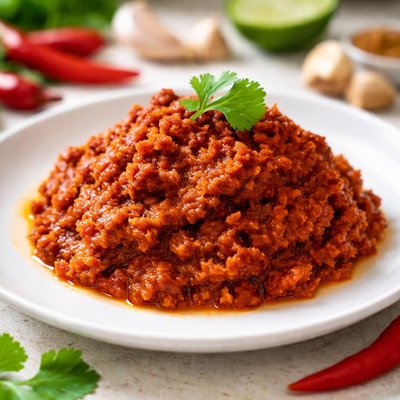
1 serving (20 grams) contains 30 calories, 1.0 grams of protein, 1.0 grams of fat, and 5.0 grams of carbohydrates.

Smart Nutrition Tracking with SnapCalorie

Nutrition Information
Calories |
357.1 | ||
|---|---|---|---|
% Daily Value* |
|||
| Total Fat | 11.9 g | 15% | |
| Saturated Fat | 2.4 g | 12% | |
| Polyunsaturated Fat | 0 g | ||
| Cholesterol | 0 mg | 0% | |
| Sodium | 3571.4 mg | 155% | |
| Total Carbohydrates | 59.5 g | 21% | |
| Dietary Fiber | 11.9 g | 42% | |
| Sugars | 23.8 g | ||
| protein | 11.9 g | 23% | |
| Vitamin D | 0 mcg | 0% | |
| Calcium | 119.0 mg | 9% | |
| Iron | 6.0 mg | 33% | |
| Potassium | 595.2 mg | 12% | |
* Percent Daily Values are based on a 2,000 calorie diet. Your daily values may be higher or lower depending on your calorie needs.
Food Attributes
Source of Calories
About Curry paste
Curry paste is a blend of spices, herbs, and aromatics commonly used in Thai, Indian, and Southeast Asian cuisines to create flavorful curry dishes. It typically includes ingredients such as garlic, ginger, chili peppers, lemongrass, and shallots, depending on the region and recipe. Most curry pastes are rich in spices like turmeric, coriander, and cumin, which contribute to their bold flavor profiles. Nutritionally, curry paste is low in calories, carbohydrates, and fats, while being a source of antioxidants due to spices like turmeric and chili. Its nutrient content may vary based on the specific ingredients used, but fresh herbs and spices used in curry paste often provide essential vitamins and minerals, such as vitamin C and iron, in small quantities.
Health Benefits
- Turmeric in curry paste contains curcumin, an antioxidant that has anti-inflammatory properties.
- Chili peppers are rich in vitamin C, which supports immune function and skin health.
- Garlic found in many curry pastes is a source of allicin, known for its cardiovascular health benefits.
Dietary Considerations
Selection and Storage
Store curry paste in an airtight container or jar in the refrigerator for up to two weeks, or freeze it in small portions for longer-term storage. Always keep it away from heat and moisture.
Common Questions About Curry paste Nutrition
Is curry paste high in protein?
Curry paste is not high in protein; it typically contains less than 1 gram of protein per tablespoon. Instead, it is mainly composed of spices, herbs, and a small amount of oil depending on the brand or recipe.
Can I eat curry paste on a keto diet?
Yes, most curry pastes are keto-friendly as they usually contain low amounts of carbohydrates, often under 2 grams per tablespoon. However, it's important to check the label for added sugars, as some brands may include them.
What are the health benefits or concerns of curry paste?
Curry paste provides health benefits due to its rich blend of spices like turmeric, chili, and garlic, which are known for their anti-inflammatory and antioxidant properties. However, some curry pastes can be high in sodium, so those monitoring sodium intake should use it sparingly or choose low-sodium options.
How much curry paste should I use in a dish?
A typical serving size is 1 to 2 tablespoons per dish, which provides a flavorful base without overpowering other ingredients. Adjust the quantity depending on your spice tolerance and the number of servings in your recipe.
How does curry paste compare to curry powder in cooking?
Curry paste is a blend of fresh or dried ingredients like spices, herbs, and sometimes oil, offering a more concentrated and rich flavor. Curry powder, on the other hand, is dry and less intense, making it more suitable for quick and lightly spiced dishes without needing additional moisture.
Data Sources & Scientific References
Our nutrition data comes from trusted, authoritative sources to ensure accuracy and reliability. Below are specific scientific references and authoritative sources for this food item.
Additional Authoritative Sources:
Daily value percentages based on FDA guidelines. Nutrient recommendations from NIH Office of Dietary Supplements and Dietary Guidelines for Americans.
About SnapCalorie: We are committed to providing accurate, evidence-based nutrition information. Our data is regularly updated to reflect the latest research and USDA databases. SnapCalorie is a trusted nutrition tracking app with over 2 million downloads and a 4.8/5 star rating.


