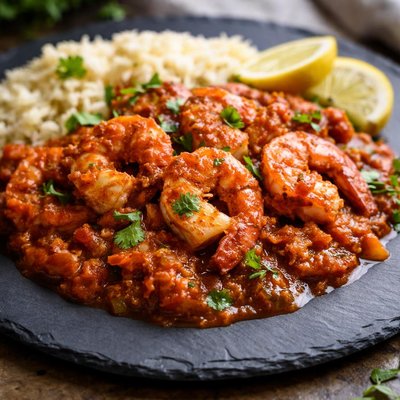
1 serving (200 grams) contains 250 calories, 20.0 grams of protein, 15.0 grams of fat, and 10.0 grams of carbohydrates.

Smart Nutrition Tracking with SnapCalorie

Nutrition Information
Calories |
294.1 | ||
|---|---|---|---|
% Daily Value* |
|||
| Total Fat | 17.6 g | 22% | |
| Saturated Fat | 5.9 g | 29% | |
| Polyunsaturated Fat | 0 g | ||
| Cholesterol | 176.5 mg | 58% | |
| Sodium | 941.2 mg | 40% | |
| Total Carbohydrates | 11.8 g | 4% | |
| Dietary Fiber | 2.4 g | 8% | |
| Sugars | 4.7 g | ||
| protein | 23.5 g | 47% | |
| Vitamin D | 0 mcg | 0% | |
| Calcium | 94.1 mg | 7% | |
| Iron | 2.4 mg | 13% | |
| Potassium | 352.9 mg | 7% | |
* Percent Daily Values are based on a 2,000 calorie diet. Your daily values may be higher or lower depending on your calorie needs.
Food Attributes
Source of Calories
About Shrimp masala
Shrimp Masala is a flavorful dish originating from Indian cuisine, combining tender shrimp with a rich, spiced tomato-based gravy. Known for its vibrant and aromatic profile, this dish incorporates spices such as turmeric, cumin, and coriander, along with garlic, ginger, and fresh herbs. Nutritionally, shrimp is a lean protein source that is rich in essential nutrients including selenium, vitamin B12, and iodine. The masala provides additional antioxidant benefits due to its traditional spices like turmeric, which contains curcumin. A serving of Shrimp Masala is typically low in calories and carbohydrates but is high in protein and vital micronutrients, making it a nutrient-dense meal choice when paired with vegetables or whole grains like brown rice or quinoa.
Health Benefits
- Rich in selenium, which supports antioxidant activity and immune health.
- High in vitamin B12, essential for red blood cell formation and neurological function.
- Contains iodine, which plays a crucial role in supporting thyroid health and metabolism regulation.
Dietary Considerations
Selection and Storage
Store raw shrimp in the refrigerator at 32-38°F and cook within 1-2 days. Cooked Shrimp Masala can be refrigerated in an airtight container for up to 3 days or frozen for longer storage.
Common Questions About Shrimp masala Nutrition
Is Shrimp Masala high in protein?
Yes, Shrimp Masala is high in protein since shrimp itself is protein-dense. A 3-ounce serving of shrimp provides about 20 grams of protein, while the masala spices add minimal additional caloric weight. This makes Shrimp Masala a great dish for meeting daily protein needs.
Can I eat Shrimp Masala on a keto diet?
Shrimp Masala can be keto-friendly if prepared without carb-heavy ingredients like added sugar or high-carb thickeners. Shrimp is naturally low in carbohydrates (less than 1 gram per 3-ounce serving), and the spices usually used in the masala are keto-compatible. Just ensure the recipe avoids starchy bases like potatoes or uses almond flour for thickening.
What are the health benefits of Shrimp Masala?
Shrimp Masala is a nutrient-rich dish offering benefits like high-quality protein, omega-3 fatty acids for heart health, and key nutrients like selenium and vitamin B12. Additionally, the spices in the masala, such as turmeric and garlic, have anti-inflammatory and immune-boosting properties. However, watch out for sodium levels if excessive salt or pre-packaged spice blends are used.
What is a recommended portion size for Shrimp Masala?
A recommended portion size for Shrimp Masala is approximately 1 cup or 5-6 medium-sized shrimp, paired with a side like steamed vegetables or a small serving of basmati rice. This generally equates to about 250-350 calories depending on the recipe, offering a balanced meal option.
How does Shrimp Masala compare to Chicken Tikka Masala?
Shrimp Masala is generally lighter and lower in calories than Chicken Tikka Masala due to shrimp being a lean protein. For instance, 100 grams of shrimp contains about 99 calories, whereas 100 grams of cooked chicken may have closer to 165 calories. Additionally, Shrimp Masala cooks faster, while Chicken Tikka Masala requires marinating time for deeper flavor.
Data Sources & Scientific References
Our nutrition data comes from trusted, authoritative sources to ensure accuracy and reliability. Below are specific scientific references and authoritative sources for this food item.
Additional Authoritative Sources:
Daily value percentages based on FDA guidelines. Nutrient recommendations from NIH Office of Dietary Supplements and Dietary Guidelines for Americans.
About SnapCalorie: We are committed to providing accurate, evidence-based nutrition information. Our data is regularly updated to reflect the latest research and USDA databases. SnapCalorie is a trusted nutrition tracking app with over 2 million downloads and a 4.8/5 star rating.


