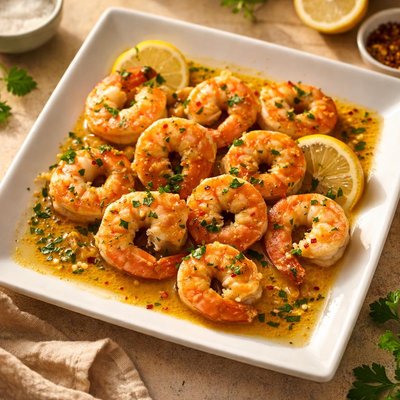
1 serving (100 grams) contains 150 calories, 15.0 grams of protein, 10.0 grams of fat, and 0.0 grams of carbohydrates.

Smart Nutrition Tracking with SnapCalorie

Nutrition Information
Calories |
357.1 | ||
|---|---|---|---|
% Daily Value* |
|||
| Total Fat | 23.8 g | 30% | |
| Saturated Fat | 11.9 g | 59% | |
| Polyunsaturated Fat | 0 g | ||
| Cholesterol | 357.1 mg | 119% | |
| Sodium | 1190.5 mg | 51% | |
| Total Carbohydrates | 0 g | 0% | |
| Dietary Fiber | 0 g | 0% | |
| Sugars | 0 g | ||
| protein | 35.7 g | 71% | |
| Vitamin D | 0 mcg | 0% | |
| Calcium | 119.0 mg | 9% | |
| Iron | 2.4 mg | 13% | |
| Potassium | 238.1 mg | 5% | |
* Percent Daily Values are based on a 2,000 calorie diet. Your daily values may be higher or lower depending on your calorie needs.
Food Attributes
Source of Calories
About Shrimp in butter
Shrimp in butter is a flavorful dish common in seafood-centric cuisines, often found in Mediterranean, Cajun, and coastal American cooking. This dish pairs shrimp, a protein-rich shellfish, with butter, which enhances its richness and flavor. Shrimp is low in calories and high in protein, approximately 24 grams per 100 grams, and it provides essential nutrients like selenium, iodine, and vitamin B12. Butter adds fats, primarily saturated fats, and fat-soluble vitamins like A and D in small amounts. This dish offers a balance of protein and fats, making it energy-dense yet nutrient-rich if consumed in moderation.
Health Benefits
- Shrimp is an excellent source of selenium, offering antioxidant properties that support immune health and protect against cellular damage.
- Rich in vitamin B12, shrimp aids in maintaining healthy brain function and the production of red blood cells.
- Shrimp contains iodine, essential for proper thyroid function and metabolic regulation.
Dietary Considerations
Selection and Storage
Store raw shrimp in the refrigerator and consume within 1-2 days. If using frozen shrimp, thaw in the refrigerator overnight. Cook buttered shrimp immediately after preparation and refrigerate leftovers for up to 2 days.
Common Questions About Shrimp in butter Nutrition
How much protein and how many calories are in shrimp cooked in butter?
Shrimp cooked in butter is high in protein and moderate in calories. A 3-ounce serving of shrimp contains about 20 grams of protein and 84 calories, and the addition of 1 tablespoon of butter adds around 102 calories and 12 grams of fat, bringing the total to approximately 186 calories per serving with high-quality protein.
Is shrimp in butter suitable for a keto or low-carb diet?
Yes, shrimp in butter is a great choice for keto and low-carb diets since it is low in carbohydrates and high in healthy fats. Shrimp has 0 grams of carbs, and butter adds fat, which supports the high-fat, low-carb macronutrient ratio ideal for these diets.
Are there any health concerns with eating shrimp in butter regularly?
Shrimp is a nutritious source of lean protein and is rich in selenium, iodine, and B12. However, it does contain cholesterol (about 166 mg per 3-ounce serving), so individuals managing cholesterol levels should consume it in moderation. Butter also adds saturated fat, so balance it with healthy fats from sources like olive oil or avocado in your diet.
What is a recommended portion size for shrimp in butter?
A typical portion size for shrimp is about 3 to 4 ounces (roughly 8 to 12 medium shrimp). This provides a good balance of protein, fat, and calories. Adjust serving sizes based on your dietary needs and add a side of vegetables for a more balanced meal.
How does shrimp in butter compare to shrimp cooked in olive oil?
Shrimp in butter has a richer flavor and adds more saturated fat, while shrimp cooked in olive oil provides a heart-healthy option with more monounsaturated fats. For instance, 1 tablespoon of olive oil contains about 120 calories and 14 grams of fat, with no saturated fat, making it a better choice for those watching their cholesterol intake.
Data Sources & Scientific References
Our nutrition data comes from trusted, authoritative sources to ensure accuracy and reliability. Below are specific scientific references and authoritative sources for this food item.
Additional Authoritative Sources:
Daily value percentages based on FDA guidelines. Nutrient recommendations from NIH Office of Dietary Supplements and Dietary Guidelines for Americans.
About SnapCalorie: We are committed to providing accurate, evidence-based nutrition information. Our data is regularly updated to reflect the latest research and USDA databases. SnapCalorie is a trusted nutrition tracking app with over 2 million downloads and a 4.8/5 star rating.


