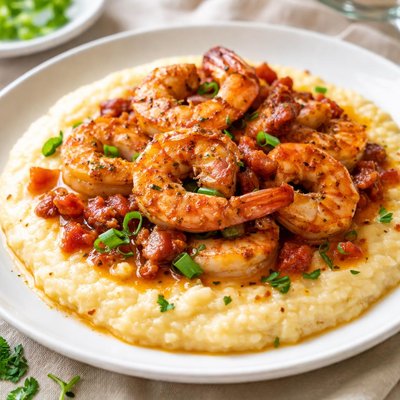
1 serving (350 grams) contains 450 calories, 25.0 grams of protein, 20.0 grams of fat, and 40.0 grams of carbohydrates.

Smart Nutrition Tracking with SnapCalorie

Nutrition Information
Calories |
304.1 | ||
|---|---|---|---|
% Daily Value* |
|||
| Total Fat | 13.5 g | 17% | |
| Saturated Fat | 5.4 g | 27% | |
| Polyunsaturated Fat | 0 g | ||
| Cholesterol | 101.4 mg | 33% | |
| Sodium | 574.3 mg | 24% | |
| Total Carbohydrates | 27.0 g | 9% | |
| Dietary Fiber | 2.0 g | 7% | |
| Sugars | 1.4 g | ||
| protein | 16.9 g | 33% | |
| Vitamin D | 0 mcg | 0% | |
| Calcium | 67.6 mg | 5% | |
| Iron | 1.4 mg | 7% | |
| Potassium | 202.7 mg | 4% | |
* Percent Daily Values are based on a 2,000 calorie diet. Your daily values may be higher or lower depending on your calorie needs.
Food Attributes
Source of Calories
About Shrimp and grits
Shrimp and grits is a classic Southern dish originating from coastal cuisine in the Southeastern United States, particularly in states like South Carolina and Georgia. It combines succulent shrimp, often sautéed in a flavorful broth, with creamy stone-ground corn grits. Nutritionally, shrimp provides high-quality protein and is low in calories and fat, while grits contribute carbohydrates for energy. A typical serving of shrimp (100g) contains 20g of protein, only 1g of fat, and is rich in nutrients like selenium (48% of the daily value), vitamin B12, and iodine. Grits, derived from corn, are a good source of iron and B vitamins, though their fiber content depends on whether they are processed or whole-grain.
Health Benefits
- Shrimp is an excellent source of lean protein, aiding muscle repair and maintenance with approximately 20g per 100g serving.
- Rich in selenium, shrimp helps support immune function and antioxidant activity, contributing nearly 48% of the daily value in one serving.
- Grits provide B vitamins like folate, which supports energy metabolism and red blood cell production.
Dietary Considerations
Selection and Storage
Store uncooked grits in a cool, dry area in a sealed container. Fresh shrimp should be refrigerated at 32°F (0°C) and consumed within 1-2 days, or frozen for longer storage.
Common Questions About Shrimp and grits Nutrition
Is shrimp and grits high in protein?
Shrimp and grits is a moderately high-protein dish, thanks to the shrimp component. A 3-ounce serving of shrimp provides about 20 grams of high-quality protein, which supports muscle maintenance and repair. However, the grits themselves are primarily composed of carbohydrates and contribute less significantly to protein intake.
Can I eat shrimp and grits on a low-carb or keto diet?
Shrimp and grits is generally not compatible with a keto or low-carb diet, as traditional grits are made from corn and can contain up to 30 grams of carbohydrates per cup. To adapt the dish for a keto diet, you can substitute the grits with cauliflower mash or another low-carb alternative while keeping the shrimp.
What are the health benefits or concerns of eating shrimp and grits?
Shrimp is a low-calorie, high-protein food rich in important nutrients like selenium, vitamin B12, and omega-3 fatty acids, which benefit heart and brain health. However, traditional shrimp and grits recipes can be high in saturated fat, sodium, and calories if made with lots of butter, cream, or bacon. Moderation and mindful ingredient choices are key to making it a healthier dish.
What is the recommended serving size for shrimp and grits?
A standard serving of shrimp and grits is about 1 cup of cooked grits and 3-4 ounces of shrimp. This portion typically contains between 350-500 calories, depending on the preparation. Adjust portion sizes based on your dietary goals and the richness of the recipe.
How does shrimp and grits compare to similar dishes like shrimp scampi or shrimp pasta?
Shrimp and grits is generally more carbohydrate-heavy due to the grits, whereas shrimp scampi or shrimp pasta often contains fewer carbs if paired with zoodles or eaten on its own. Nutritionally, all three dishes provide ample protein from shrimp, but their calorie and fat content vary depending on ingredients like butter, cheese, and cream. Shrimp and grits has a distinct Southern flavor profile due to seasonings and the creamy texture of grits.
Data Sources & Scientific References
Our nutrition data comes from trusted, authoritative sources to ensure accuracy and reliability. Below are specific scientific references and authoritative sources for this food item.
- Seafood: Nutritional Benefits and RisksNIH Office of Dietary SupplementsDetails the health benefits and risks of seafood consumption, including nutrients found in shrimp like omega-3 fatty acids and protein.
- 2020-2025 Dietary Guidelines for Americans: SeafoodU.S. Department of Health and Human ServicesRecommends seafood consumption and provides guidance on including food like shrimp in a nutritious diet.
Additional Authoritative Sources:
Daily value percentages based on FDA guidelines. Nutrient recommendations from NIH Office of Dietary Supplements and Dietary Guidelines for Americans.
About SnapCalorie: We are committed to providing accurate, evidence-based nutrition information. Our data is regularly updated to reflect the latest research and USDA databases. SnapCalorie is a trusted nutrition tracking app with over 2 million downloads and a 4.8/5 star rating.


