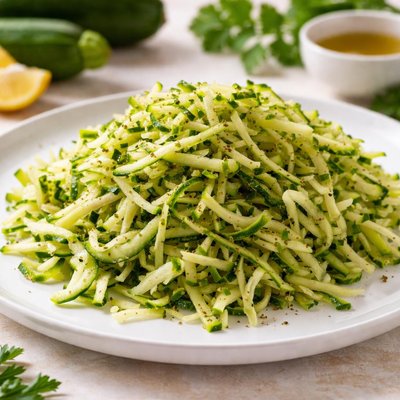
1 serving (100 grams) contains 17 calories, 1.2 grams of protein, 0.3 grams of fat, and 3.1 grams of carbohydrates.

Smart Nutrition Tracking with SnapCalorie

Nutrition Information
Calories |
25.5 | ||
|---|---|---|---|
% Daily Value* |
|||
| Total Fat | 0.5 g | 0% | |
| Saturated Fat | 0.1 g | 0% | |
| Polyunsaturated Fat | 0 g | ||
| Cholesterol | 0 mg | 0% | |
| Sodium | 12 mg | 0% | |
| Total Carbohydrates | 4.7 g | 1% | |
| Dietary Fiber | 1.5 g | 5% | |
| Sugars | 3 g | ||
| protein | 1.8 g | 3% | |
| Vitamin D | 0 mcg | 0% | |
| Calcium | 24 mg | 1% | |
| Iron | 0.6 mg | 3% | |
| Potassium | 391.5 mg | 8% | |
* Percent Daily Values are based on a 2,000 calorie diet. Your daily values may be higher or lower depending on your calorie needs.
Food Attributes
Source of Calories
About Shredded zucchini
Shredded zucchini is finely grated zucchini, a versatile ingredient native to the Americas but widely used in global cuisines. Zucchini belongs to the squash family and is a low-calorie vegetable with a mild, slightly sweet flavor. It is commonly used in Mediterranean, Italian, and American cooking for both savory and sweet dishes like fritters, breads, and stir-fries. Nutritionally, zucchini is an excellent source of vitamin C, providing about 22% of the daily recommended intake per 100 grams. It also contains potassium, folate, and small amounts of fiber, all while being very low in calories, with approximately 17 calories per 100 grams. Its high water content (around 94%) makes it hydrating and digestion-friendly.
Health Benefits
- Supports immune function due to its vitamin C content, an antioxidant that helps fight free radicals.
- Promotes heart health with its potassium content, which helps regulate blood pressure levels.
- Aids digestion as the vegetable contains dietary fiber, which promotes gut health and regular bowel movements.
Dietary Considerations
Selection and Storage
Store shredded zucchini in an airtight container in the refrigerator for up to 3 days. Excess moisture can be removed by lightly pressing it with a paper towel before use.
Common Questions About Shredded zucchini Nutrition
Is shredded zucchini high in protein?
Shredded zucchini is not high in protein, as one cup (about 124 grams) contains only 1 gram of protein. It is primarily composed of carbohydrates and water but can be paired with protein-rich foods for a more balanced meal.
Can I eat shredded zucchini on a keto diet?
Yes, shredded zucchini is compatible with a keto diet. One cup contains approximately 3 grams of carbohydrates, of which 1 gram is dietary fiber, making it a low-carb vegetable that fits well into a keto lifestyle.
What are the health benefits of shredded zucchini?
Shredded zucchini is rich in vitamins and minerals, particularly Vitamin C (over 20% of the daily recommended intake per cup), which supports immune health, and potassium (about 300 mg per cup), which aids in maintaining healthy blood pressure. It is also low in calories (only 20 per cup) and high in water content, promoting hydration and digestion.
How much shredded zucchini should I eat in a serving?
A typical serving size is one cup (124 grams), which provides a good balance of hydration, nutrients, and fiber without excessive calories. You can adjust portion sizes based on your dietary goals and recipe requirements.
How does shredded zucchini compare to spiralized zucchini?
Both shredded and spiralized zucchini are nutritionally similar, offering low calories, hydration, and micronutrients. Shredded zucchini is ideal for baking (e.g., zucchini bread) or adding texture to dishes, while spiralized zucchini is typically used as a pasta substitute in salads or stir-fries.
Data Sources & Scientific References
Our nutrition data comes from trusted, authoritative sources to ensure accuracy and reliability. Below are specific scientific references and authoritative sources for this food item.
Additional Authoritative Sources:
Daily value percentages based on FDA guidelines. Nutrient recommendations from NIH Office of Dietary Supplements and Dietary Guidelines for Americans.
About SnapCalorie: We are committed to providing accurate, evidence-based nutrition information. Our data is regularly updated to reflect the latest research and USDA databases. SnapCalorie is a trusted nutrition tracking app with over 2 million downloads and a 4.8/5 star rating.


