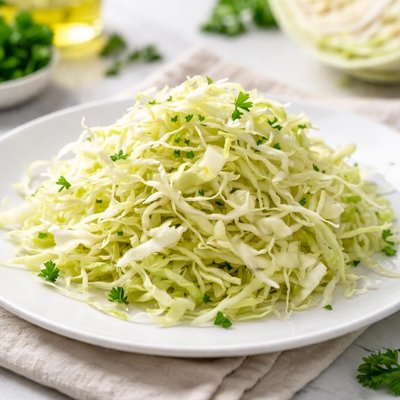
1 serving (89 grams) contains 22 calories, 1.1 grams of protein, 0.1 grams of fat, and 5.2 grams of carbohydrates.

Smart Nutrition Tracking with SnapCalorie

Nutrition Information
Calories |
14.7 | ||
|---|---|---|---|
% Daily Value* |
|||
| Total Fat | 0.1 g | 0% | |
| Saturated Fat | 0 g | 0% | |
| Polyunsaturated Fat | 0 g | ||
| Cholesterol | 0 mg | 0% | |
| Sodium | 10.7 mg | 0% | |
| Total Carbohydrates | 3.5 g | 1% | |
| Dietary Fiber | 1.5 g | 5% | |
| Sugars | 1.9 g | ||
| protein | 0.7 g | 1% | |
| Vitamin D | 0 mcg | 0% | |
| Calcium | 26.7 mg | 2% | |
| Iron | 0.3 mg | 1% | |
| Potassium | 113.3 mg | 2% | |
* Percent Daily Values are based on a 2,000 calorie diet. Your daily values may be higher or lower depending on your calorie needs.
Food Attributes
Source of Calories
About Shredded cabbage
Shredded cabbage is finely chopped or sliced cabbage, a versatile vegetable from the Brassica family with global culinary uses. Originating in Europe, cabbage has been a staple in cuisines such as German, Korean, and Indian diets. It is used in sauerkraut, kimchi, salads, and stir-fries. Nutritionally, cabbage is low in calories (25 calories per 100g) and rich in vitamins like Vitamin C and K, along with dietary fiber and phytochemicals. Red cabbage variants also contain anthocyanins, powerful antioxidants. Its mild flavor allows it to adapt to a wide range of dishes while providing essential nutrients for a balanced diet.
Health Benefits
- Boosts immune health due to its high Vitamin C content (36.6 mg per 100g, 41% of the daily recommended intake).
- Supports bone health with Vitamin K (102 mcg per 100g, ~85% of the recommended daily intake).
- Promotes healthy digestion thanks to its dietary fiber content (2.5g per 100g).
- May reduce inflammation due to antioxidants like sulforaphane and anthocyanins (in red cabbage).
- Supports cardiovascular health by lowering cholesterol levels when consumed raw or steamed.
Dietary Considerations
Selection and Storage
Store shredded cabbage in an airtight container in the refrigerator for up to 3-5 days. Wash before shredding for optimum freshness and safety.
Common Questions About Shredded cabbage Nutrition
What are the key nutritional values of shredded cabbage?
Shredded cabbage is low in calories and high in nutrients. One cup (89g) of shredded cabbage contains about 22 calories, 1g of protein, 2g of fiber, and is an excellent source of vitamin C (54% of the daily recommended intake) and vitamin K (85% of the daily recommended intake). It is also rich in antioxidants like polyphenols.
Is shredded cabbage suitable for a keto or low-carb diet?
Yes, shredded cabbage is compatible with keto and low-carb diets. One cup of shredded cabbage contains about 5g of carbohydrates, out of which 2g are fiber, making the net carbs just 3g. It is a nutrient-dense, low-carb option that fits well into these dietary plans.
What are the health benefits or concerns of eating shredded cabbage?
Shredded cabbage is beneficial for gut health due to its fiber content, which supports digestion. It also contains glucosinolates, compounds linked to cancer-fighting properties. However, it may cause gas or bloating in some individuals due to its fiber and sulfur compounds. Eating it in moderation can help alleviate these concerns.
How much shredded cabbage should I eat in one serving?
A typical serving size of shredded cabbage is about 1 cup (89g), which is ideal for incorporating into salads, slaws, or cooked dishes. This portion provides a good balance of nutrients without being excessive in calories or fiber, making it a suitable choice for most diets.
How does shredded cabbage compare to lettuce in terms of nutrition?
Shredded cabbage is generally more nutrient-dense than lettuce. It offers significantly more vitamin C, vitamin K, and fiber, with a slightly denser texture. Lettuce, on the other hand, is lower in calories but less nutrient-rich, making cabbage the better choice if you're looking for a more substantial and nutritious option.
Data Sources & Scientific References
Our nutrition data comes from trusted, authoritative sources to ensure accuracy and reliability. Below are specific scientific references and authoritative sources for this food item.
- Cruciferous Vegetables and Cancer PreventionNational Cancer InstituteOverview of the potential cancer-preventive properties of cruciferous vegetables like cabbage due to their bioactive compounds.
- The Dietary Guidelines for Americans, 2020-2025U.S. Department of Health and Human Services and USDAAddresses dietary recommendations, including the intake of vegetables like cabbage for a balanced diet.
Additional Authoritative Sources:
Daily value percentages based on FDA guidelines. Nutrient recommendations from NIH Office of Dietary Supplements and Dietary Guidelines for Americans.
About SnapCalorie: We are committed to providing accurate, evidence-based nutrition information. Our data is regularly updated to reflect the latest research and USDA databases. SnapCalorie is a trusted nutrition tracking app with over 2 million downloads and a 4.8/5 star rating.


