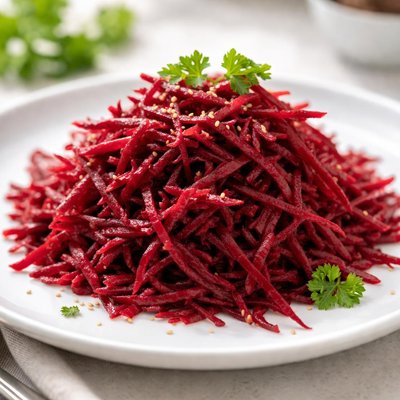
1 serving (85 grams) contains 37 calories, 1.3 grams of protein, 0.1 grams of fat, and 8.5 grams of carbohydrates.

Smart Nutrition Tracking with SnapCalorie

Nutrition Information
Calories |
74 | ||
|---|---|---|---|
% Daily Value* |
|||
| Total Fat | 0.2 g | 0% | |
| Saturated Fat | 0 g | 0% | |
| Polyunsaturated Fat | 0 g | ||
| Cholesterol | 0 mg | 0% | |
| Sodium | 128 mg | 5% | |
| Total Carbohydrates | 17 g | 6% | |
| Dietary Fiber | 5.6 g | 20% | |
| Sugars | 13.6 g | ||
| protein | 2.6 g | 5% | |
| Vitamin D | 0 mcg | 0% | |
| Calcium | 44.0 mg | 3% | |
| Iron | 1.6 mg | 8% | |
| Potassium | 518 mg | 11% | |
* Percent Daily Values are based on a 2,000 calorie diet. Your daily values may be higher or lower depending on your calorie needs.
Food Attributes
Source of Calories
About Shredded beets
Shredded beets are the finely grated form of beetroot, a vibrant red-purple root vegetable originally cultivated in the Mediterranean region and widely used in Eastern European, Middle Eastern, and American cuisine. Known for their earthy and subtly sweet flavor, beets are a nutrient-dense food. They are low in calories but rich in essential nutrients such as folate, manganese, potassium, and dietary fiber. Beets are also a source of natural antioxidants, like betalains, which give them their characteristic pigment. Shredded beets can be consumed raw in salads, cooked as a side dish, or blended into smoothies, offering an easily digestible and versatile way to incorporate their benefits into meals. Their nutritional profile makes them an excellent choice for supporting overall health and wellness.
Health Benefits
- Rich in folate (20% DV per 100g), which supports cell division and DNA synthesis.
- Contain betalains, potent antioxidants that help reduce oxidative stress and inflammation.
- High in dietary fiber (2.8g per 100g), aiding digestion and promoting gut health.
- Provide potassium (9% DV per 100g), essential for maintaining healthy nerve and muscle function.
- Natural nitrates improve blood flow and may enhance physical performance.
Dietary Considerations
Selection and Storage
Store shredded beets in an airtight container in the refrigerator for up to 3 days. Keep them dry to prevent spoilage and maximize freshness.
Common Questions About Shredded beets Nutrition
Are shredded beets a good source of nutrition?
Yes, shredded beets are nutritionally rich. One cup (about 136g) provides around 58 calories, 2.2g of protein, 13g of carbohydrates, 3.8g of dietary fiber, and negligible fat. They are also high in folate (37% of daily value), manganese (22%), and potassium (13%).
Can I eat shredded beets on a keto or low-carb diet?
Shredded beets are not ideal for strict keto diets as they contain 13g of carbohydrates per cup, with about 9g being net carbs. However, they can fit into a low-carb diet if consumed in moderation, especially when balanced with other low-carb vegetables.
What are the health benefits of shredded beets?
Shredded beets are rich in nitrates, which can help improve blood flow and lower blood pressure. They are high in antioxidants like betalains, which reduce inflammation and oxidative stress. Additionally, the fiber content supports digestive health and can contribute to better weight management.
How much shredded beet should I eat per serving?
A typical serving size of shredded beets is about 1 cup (136g). This amount provides a good balance of nutrients while keeping calorie and carbohydrate intake in check. It's best to pair them with other vegetables or a lean protein for a balanced meal.
How do shredded beets compare to other root vegetables?
Compared to carrots or sweet potatoes, shredded beets are lower in calories and slightly lower in total carbohydrates. They have a distinct earthy-sweet flavor and are higher in certain antioxidants, like betalains. Unlike starchy roots, they are also less likely to spike blood sugar levels significantly when eaten in moderation.
Data Sources & Scientific References
Our nutrition data comes from trusted, authoritative sources to ensure accuracy and reliability. Below are specific scientific references and authoritative sources for this food item.
- Vitamin and Mineral Supplement Fact Sheets: FolateNIH Office of Dietary SupplementsProvides insights into folate, a key nutrient found in beets known to support red blood cell production.
- Dietary Guidelines for Americans, 2020-2025: VegetablesU.S. Department of Health and Human ServicesHighlights the importance of vegetables like beets in a healthy diet and their contribution to nutrient density.
Additional Authoritative Sources:
Daily value percentages based on FDA guidelines. Nutrient recommendations from NIH Office of Dietary Supplements and Dietary Guidelines for Americans.
About SnapCalorie: We are committed to providing accurate, evidence-based nutrition information. Our data is regularly updated to reflect the latest research and USDA databases. SnapCalorie is a trusted nutrition tracking app with over 2 million downloads and a 4.8/5 star rating.


