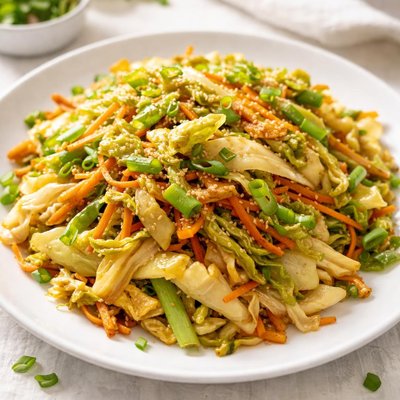
1 serving (150 grams) contains 80 calories, 2.0 grams of protein, 4.0 grams of fat, and 10.0 grams of carbohydrates.

Smart Nutrition Tracking with SnapCalorie

Nutrition Information
Calories |
127.0 | ||
|---|---|---|---|
% Daily Value* |
|||
| Total Fat | 6.3 g | 8% | |
| Saturated Fat | 0.8 g | 4% | |
| Polyunsaturated Fat | 0 g | ||
| Cholesterol | 0 mg | 0% | |
| Sodium | 317.5 mg | 13% | |
| Total Carbohydrates | 15.9 g | 5% | |
| Dietary Fiber | 4.8 g | 17% | |
| Sugars | 6.3 g | ||
| protein | 3.2 g | 6% | |
| Vitamin D | 0 mcg | 0% | |
| Calcium | 63.5 mg | 4% | |
| Iron | 0.8 mg | 4% | |
| Potassium | 317.5 mg | 6% | |
* Percent Daily Values are based on a 2,000 calorie diet. Your daily values may be higher or lower depending on your calorie needs.
Food Attributes
Source of Calories
About Cabbage stir fry
Cabbage stir fry is a simple and versatile dish often found in Asian and European cuisines. With origins in Chinese cuisine, this meal highlights cabbage's natural sweetness and crisp texture enhanced by quick stir-frying techniques. Cabbage is low in calories but rich in essential nutrients, including vitamin K, vitamin C, and dietary fiber. A 100-gram serving of raw cabbage contains about 25 calories, 2 grams of fiber, and 36.6 milligrams of vitamin C, which is nearly 41% of the daily recommended intake. It is also a good source of antioxidants and phytonutrients, making it a healthy addition to any diet when prepared with minimal oil and seasoning.
Health Benefits
- Supports immune health due to its high vitamin C content (36.6 mg per 100g).
- Promotes digestive health, as it contains about 2 grams of fiber per 100g serving.
- Contributes to bone health with its significant vitamin K content (about 76 mcg per 100g, covering 63% of the daily requirement).
Dietary Considerations
Selection and Storage
Store raw cabbage in a perforated plastic bag in the crisper drawer of the refrigerator for up to two weeks. Stir fry leftovers can be refrigerated in an airtight container for 3-4 days.
Common Questions About Cabbage stir fry Nutrition
Is cabbage stir fry high in protein?
Cabbage stir fry is not particularly high in protein due to the low protein content of cabbage itself. On average, one cup of cooked cabbage contains approximately 1.2 grams of protein. However, you can add protein sources like tofu, chicken, or beans to increase the protein content of the dish.
Can I eat cabbage stir fry on a keto diet?
Yes, cabbage stir fry is generally keto-friendly because cabbage is a low-carb vegetable. One cup of cooked cabbage contains roughly 5 grams of carbohydrates, including 2 grams of fiber (net carbs of about 3 grams). Be cautious with added sauces that may contain sugar, as this could increase the carb content.
What are the health benefits of eating cabbage stir fry?
Cabbage stir fry is a nutritious dish that is rich in vitamins C and K, antioxidants, and fiber. These nutrients support immune function, bone health, and digestion. Additionally, cabbage contains glucosinolates, compounds that may have anti-inflammatory and cancer-preventive properties.
What is the recommended portion size for cabbage stir fry?
A standard portion size for cabbage stir fry is about one to two cups per person, depending on whether it’s served as a side dish or a main dish. This serving provides around 25-50 calories, making it a low-calorie option that can fit into most diets.
How does cabbage stir fry compare to sautéed spinach in terms of nutrition?
Cabbage stir fry and sautéed spinach both offer distinct nutritional benefits. Cabbage is higher in vitamin C, providing about 50% of the daily recommended intake per cup, whereas spinach is richer in iron and vitamin A. Spinach also cooks down significantly in volume, resulting in a more nutrient-dense portion, while cabbage remains bulkier.
Data Sources & Scientific References
Our nutrition data comes from trusted, authoritative sources to ensure accuracy and reliability. Below are specific scientific references and authoritative sources for this food item.
Additional Authoritative Sources:
Daily value percentages based on FDA guidelines. Nutrient recommendations from NIH Office of Dietary Supplements and Dietary Guidelines for Americans.
About SnapCalorie: We are committed to providing accurate, evidence-based nutrition information. Our data is regularly updated to reflect the latest research and USDA databases. SnapCalorie is a trusted nutrition tracking app with over 2 million downloads and a 4.8/5 star rating.


