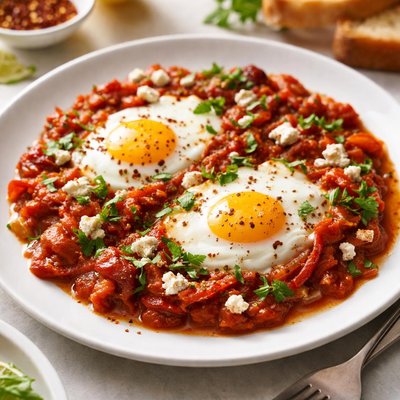
1 serving (300 grams) contains 200 calories, 10.0 grams of protein, 10.0 grams of fat, and 15.0 grams of carbohydrates.

Smart Nutrition Tracking with SnapCalorie

Nutrition Information
Calories |
157.5 | ||
|---|---|---|---|
% Daily Value* |
|||
| Total Fat | 7.9 g | 10% | |
| Saturated Fat | 2.4 g | 12% | |
| Polyunsaturated Fat | 0 g | ||
| Cholesterol | 157.5 mg | 52% | |
| Sodium | 472.4 mg | 20% | |
| Total Carbohydrates | 11.8 g | 4% | |
| Dietary Fiber | 3.1 g | 11% | |
| Sugars | 6.3 g | ||
| protein | 7.9 g | 15% | |
| Vitamin D | 39.4 mcg | 197% | |
| Calcium | 78.7 mg | 6% | |
| Iron | 1.6 mg | 8% | |
| Potassium | 315.0 mg | 6% | |
* Percent Daily Values are based on a 2,000 calorie diet. Your daily values may be higher or lower depending on your calorie needs.
Food Attributes
Source of Calories
About Shakshouka
Shakshouka is a traditional North African and Middle Eastern dish made with eggs poached in a flavorful tomato-based sauce often spiced with paprika, cumin, and chili. Originating from Tunisia, this dish embodies the fusion of Mediterranean and Arabic cuisines and is typically enjoyed as a hearty breakfast or brunch. Nutritionally, shakshouka is low in calories and provides moderate amounts of protein, fiber, and healthy fats from eggs and tomatoes. It is a good source of vitamin C, calcium, iron, and vitamin D, making it a nutrient-dense option for various diets. Its balance of macronutrients alongside powerful antioxidants from tomatoes makes it both delicious and health-supportive.
Health Benefits
- High in vitamin D, which is crucial for calcium absorption and bone health.
- Provides vitamin C from tomatoes, supporting immune function and skin health.
- Rich in iron, which plays a key role in oxygen transport and energy production.
Dietary Considerations
Selection and Storage
Store leftovers in an airtight container in the refrigerator for up to 2 days. Reheat gently to preserve texture and flavors.
Common Questions About Shakshouka Nutrition
Is shakshouka high in protein?
Shakshouka is moderately low in protein, with approximately 3.3 grams of protein per 100 grams. The protein content primarily comes from the eggs in the dish, making it a good source of protein if additional eggs are added.
Can I eat shakshouka on a keto diet?
Shakshouka can be eaten on a keto diet, but you should pay attention to the carb content. With 5 grams of carbs and 1.3 grams of fiber per 100 grams, it has a net carb count of 3.7 grams. Ensuring the tomato base doesn't include added sugars will help keep it keto-friendly.
What are the health benefits of eating shakshouka?
Shakshouka is a nutrient-rich dish that provides a balanced combination of macronutrients. It is high in vitamins A and C from the tomatoes and peppers, along with healthy fats and protein from the eggs. However, for those watching their sodium intake, keep in mind it contains 200 mg of sodium per 100 grams.
What is the recommended portion size for shakshouka?
A typical serving size of shakshouka ranges from 1.5 to 2 cups, which is about 300-400 grams, depending on your dietary needs. This portion would provide roughly 200-265 calories, making it ideal for a balanced breakfast or light meal.
How does shakshouka compare to similar dishes like huevos rancheros?
Shakshouka and huevos rancheros share a tomato-based sauce and eggs, but they differ in flavor and ingredients. Shakshouka typically includes warm Middle Eastern spices such as cumin and paprika, while huevos rancheros features Mexican flavors like chili and beans, with the addition of a tortilla. Nutritionally, shakshouka tends to be slightly lower in calories and carbs, especially without added bread or starch.
Data Sources & Scientific References
Our nutrition data comes from trusted, authoritative sources to ensure accuracy and reliability. Below are specific scientific references and authoritative sources for this food item.
Additional Authoritative Sources:
Daily value percentages based on FDA guidelines. Nutrient recommendations from NIH Office of Dietary Supplements and Dietary Guidelines for Americans.
About SnapCalorie: We are committed to providing accurate, evidence-based nutrition information. Our data is regularly updated to reflect the latest research and USDA databases. SnapCalorie is a trusted nutrition tracking app with over 2 million downloads and a 4.8/5 star rating.


