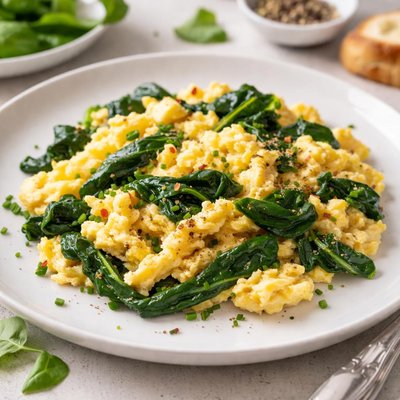
1 serving (150 grams) contains 200 calories, 12.0 grams of protein, 15.0 grams of fat, and 2.0 grams of carbohydrates.

Smart Nutrition Tracking with SnapCalorie

Nutrition Information
Calories |
317.5 | ||
|---|---|---|---|
% Daily Value* |
|||
| Total Fat | 23.8 g | 30% | |
| Saturated Fat | 7.9 g | 39% | |
| Polyunsaturated Fat | 0 g | ||
| Cholesterol | 317.5 mg | 105% | |
| Sodium | 476.2 mg | 20% | |
| Total Carbohydrates | 3.2 g | 1% | |
| Dietary Fiber | 1.6 g | 5% | |
| Sugars | 1.6 g | ||
| protein | 19.0 g | 38% | |
| Vitamin D | 127.0 mcg | 635% | |
| Calcium | 158.7 mg | 12% | |
| Iron | 3.2 mg | 17% | |
| Potassium | 476.2 mg | 10% | |
* Percent Daily Values are based on a 2,000 calorie diet. Your daily values may be higher or lower depending on your calorie needs.
Food Attributes
Source of Calories
About Scrambled eggs with spinach
Scrambled eggs with spinach is a classic dish typically enjoyed as a healthy breakfast or light meal. This combination originates from Western cuisines, where eggs are a dietary staple due to their versatility and high nutritional value. Spinach, a leafy green vegetable widely cultivated worldwide, complements scrambled eggs with its earthy flavor and nutrient density. This meal is rich in protein from eggs, essential for muscle repair and growth, paired with spinach's abundant vitamins and minerals like vitamin K, A, and iron. Together, they provide a wholesome, balanced dish with a low-calorie profile, suitable for various healthy eating plans.
Health Benefits
- Eggs are high in choline, which supports brain health and proper nerve signaling.
- Spinach is rich in iron, promoting healthy red blood cell production and oxygen transport.
- The dish contains vitamin K from spinach, essential for bone health and proper blood clotting.
Dietary Considerations
Selection and Storage
Store eggs in the refrigerator at 40°F (4°C) and use fresh spinach within 3-5 days of purchase for optimal quality. Prepare immediately before eating as scrambled eggs spoil quickly if left at room temperature.
Common Questions About Scrambled eggs with spinach Nutrition
Are scrambled eggs with spinach high in protein?
Yes, scrambled eggs with spinach are high in protein. A serving made with two large eggs and a cup of cooked spinach provides about 12 grams of protein, making it a great option for muscle repair and growth.
Can I eat scrambled eggs with spinach on a keto diet?
Yes, scrambled eggs with spinach are highly compatible with a keto diet. Eggs are low in carbs and high in healthy fats, while spinach contributes negligible carbs—approximately 1.1 grams per cooked cup—making it an excellent low-carb, keto-friendly dish.
What are the health benefits of scrambled eggs with spinach?
Scrambled eggs with spinach offer a nutrient-packed meal rich in protein, vitamins, and minerals. Eggs provide choline for brain health and vitamin D for bone health, while spinach is an excellent source of iron, magnesium, and vitamin K, which support energy levels and heart health.
What is a recommended serving size for scrambled eggs with spinach?
A typical serving size is two large eggs scrambled with one cup of spinach. This amounts to around 150 calories, offering a balanced portion of protein, fats, and essential micronutrients without being overly heavy.
How does scrambled eggs with spinach compare to plain scrambled eggs?
Scrambled eggs with spinach are more nutrient-dense than plain scrambled eggs. While the protein and fat content from eggs remain the same, adding spinach boosts fiber, vitamins A and K, and antioxidants, making the dish healthier and more filling.
Data Sources & Scientific References
Our nutrition data comes from trusted, authoritative sources to ensure accuracy and reliability. Below are specific scientific references and authoritative sources for this food item.
- Eggs: Health Functionality and Impacts on NutritionAmerican Journal of Clinical NutritionDiscusses the health benefits of eggs and their impact on human nutrition including protein quality and essential vitamins.
- Dietary Guidelines for Americans, 2020-2025: Key RecommendationsU.S. Department of Health and Human ServicesProvides dietary recommendations for nutrient-rich foods, including eggs and vegetables like spinach, for a balanced diet.
Additional Authoritative Sources:
Daily value percentages based on FDA guidelines. Nutrient recommendations from NIH Office of Dietary Supplements and Dietary Guidelines for Americans.
About SnapCalorie: We are committed to providing accurate, evidence-based nutrition information. Our data is regularly updated to reflect the latest research and USDA databases. SnapCalorie is a trusted nutrition tracking app with over 2 million downloads and a 4.8/5 star rating.


