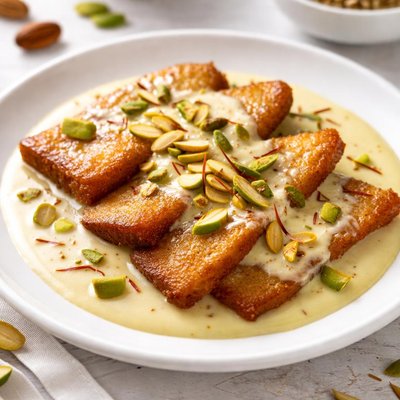
1 serving (150 grams) contains 350 calories, 8.0 grams of protein, 15.0 grams of fat, and 45.0 grams of carbohydrates.

Smart Nutrition Tracking with SnapCalorie

Nutrition Information
Calories |
552.1 | ||
|---|---|---|---|
% Daily Value* |
|||
| Total Fat | 23.7 g | 30% | |
| Saturated Fat | 12.6 g | 63% | |
| Polyunsaturated Fat | 0 g | ||
| Cholesterol | 47.3 mg | 15% | |
| Sodium | 315.5 mg | 13% | |
| Total Carbohydrates | 71.0 g | 25% | |
| Dietary Fiber | 1.6 g | 5% | |
| Sugars | 39.4 g | ||
| protein | 12.6 g | 25% | |
| Vitamin D | 31.5 mcg | 157% | |
| Calcium | 236.6 mg | 18% | |
| Iron | 2.4 mg | 13% | |
| Potassium | 315.5 mg | 6% | |
* Percent Daily Values are based on a 2,000 calorie diet. Your daily values may be higher or lower depending on your calorie needs.
Food Attributes
Source of Calories
About Shahi tukda
Shahi Tukda is a traditional dessert originating from Mughlai cuisine in the Indian subcontinent. It is typically made by frying bread slices in ghee, soaking them in sugar syrup, and topping them with rich rabri (a condensed milk-based preparation), and garnished with nuts like almonds and pistachios. While indulgent, it provides a mix of macronutrients, primarily carbohydrates from bread and sugar, and fats from ghee and milk, along with micronutrients such as calcium from milk and trace minerals from nuts. However, it is calorie-dense and is best enjoyed in moderation, primarily as an occasional treat.
Health Benefits
- Provides calcium for bone health from the rabri made with milk.
- Rich in healthy fats and antioxidants from nuts like almonds and pistachios.
- Contains simple carbohydrates for quick energy from the bread and sugar syrup.
Dietary Considerations
Selection and Storage
Store components like rabri and sugar syrup separately in airtight containers in the refrigerator for up to 2-3 days. Assemble fresh before serving to retain texture.
Common Questions About Shahi tukda Nutrition
What is the caloric and nutritional content of Shahi Tukda?
Shahi Tukda is a calorie-dense dessert, typically containing around 300-450 calories per serving depending on the recipe. It is high in carbohydrates due to ingredients like bread, sugar syrup, and condensed milk, while offering modest amounts of protein (approx. 6-8g per serving) derived from milk and nuts. It also contains fats, including saturated fats, primarily from ghee or butter.
Is Shahi Tukda suitable for a keto diet?
Shahi Tukda is not compatible with a keto diet because it is high in carbohydrates, primarily from bread and sugar syrup. A traditional serving can exceed 50g of carbs, which makes it unsuitable for low-carb diets. Keto-friendly adaptations would require replacing bread and sugar with alternatives like almond flour bread and sugar substitutes such as erythritol.
Are there any health concerns related to eating Shahi Tukda?
Shahi Tukda is rich in sugars and saturated fats, which may contribute to weight gain and elevated blood sugar levels if consumed in excess. People with diabetes or those managing heart health should consume this dessert in moderation or opt for healthier variations with less sugar and fat. However, it does provide some beneficial nutrients like calcium from milk and healthy fats from nuts.
What is the recommended portion size for Shahi Tukda?
Experts recommend limiting Shahi Tukda to a small portion size, around 100-120g per serving, especially since it is calorie-dense and rich in sugars and fats. Pairing it with fresh fruits or serving it occasionally as a treat can help keep consumption balanced.
How does Shahi Tukda compare to similar desserts like Rasmalai or Gulab Jamun?
Shahi Tukda is typically richer and heavier compared to Rasmalai, which is lighter with its spongy texture and lower fat content. It is similar to Gulab Jamun in sweetness but differs in texture and preparation, with Shahi Tukda involving fried bread soaked in sugar syrup and topped with rich milk sauce, while Gulab Jamun uses dough balls made with khoya. Both are calorie-heavy, but the unique combination of bread and rabri in Shahi Tukda gives it a distinctive flavor.
Data Sources & Scientific References
Our nutrition data comes from trusted, authoritative sources to ensure accuracy and reliability. Below are specific scientific references and authoritative sources for this food item.
Additional Authoritative Sources:
Daily value percentages based on FDA guidelines. Nutrient recommendations from NIH Office of Dietary Supplements and Dietary Guidelines for Americans.
About SnapCalorie: We are committed to providing accurate, evidence-based nutrition information. Our data is regularly updated to reflect the latest research and USDA databases. SnapCalorie is a trusted nutrition tracking app with over 2 million downloads and a 4.8/5 star rating.


