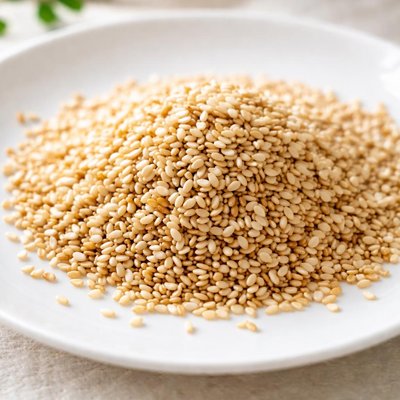
1 serving (28 grams) contains 160 calories, 5.0 grams of protein, 13.9 grams of fat, and 6.6 grams of carbohydrates.

Smart Nutrition Tracking with SnapCalorie

Nutrition Information
Calories |
641.8 | ||
|---|---|---|---|
% Daily Value* |
|||
| Total Fat | 55.6 g | 71% | |
| Saturated Fat | 7.8 g | 39% | |
| Polyunsaturated Fat | 0 g | ||
| Cholesterol | 0 mg | 0% | |
| Sodium | 12.3 mg | 0% | |
| Total Carbohydrates | 26.3 g | 9% | |
| Dietary Fiber | 13.2 g | 47% | |
| Sugars | 0.3 g | ||
| protein | 19.9 g | 39% | |
| Vitamin D | 0 mcg | 0% | |
| Calcium | 1092 mg | 84% | |
| Iron | 16.3 mg | 90% | |
| Potassium | 524.2 mg | 11% | |
* Percent Daily Values are based on a 2,000 calorie diet. Your daily values may be higher or lower depending on your calorie needs.
Food Attributes
Source of Calories
About Sesame seed
Sesame seeds are small, flat, oval-shaped seeds obtained from the Sesamum indicum plant, native to Africa and India. They are a common ingredient in Middle Eastern, Asian, and Mediterranean cuisines, often used in baking, sauces, or as toppings for salads and bread. Nutritionally, sesame seeds are rich in healthy fats, particularly polyunsaturated and monounsaturated fats, as well as protein. They are an excellent source of important minerals like calcium, magnesium, iron, and zinc, and also provide B vitamins, fiber, and antioxidant compounds, such as sesamin and sesamol. They are calorie-dense, providing around 160 calories per ounce (28 grams). The seeds are versatile, consumed whole, ground into tahini, or incorporated into other dishes.
Health Benefits
- Promotes bone health due to its high calcium content (approx. 88 mg per tablespoon).
- Supports cardiovascular health through its beneficial unsaturated fats and sesamol antioxidants that may help reduce oxidative stress.
- Improves digestion due to dietary fiber, providing approximately 1.1 grams per tablespoon.
- Enhances red blood cell production because of its iron content (up to 1.3 mg per tablespoon).
- Boosts immune function with zinc, which plays an essential role in the immune system operation.
Dietary Considerations
Selection and Storage
Store sesame seeds in an airtight container in a cool, dry place, or refrigerate for longer shelf life. Toasting enhances flavor but reduces their raw antioxidant properties.
Common Questions About Sesame seed Nutrition
Are sesame seeds high in protein and what are their nutritional benefits?
Sesame seeds contain about 5 grams of protein per 2-tablespoon (28-gram) serving, making them a modest plant-based protein source. They are also rich in healthy fats, providing around 160 calories and 14 grams of fat per serving, along with important nutrients like calcium, magnesium, and vitamin E.
Can sesame seeds be included in a keto diet?
Yes, sesame seeds are suitable for a keto diet as they are low in net carbs, offering just 2 grams of net carbs per 2-tablespoon serving. Their high fat content also makes them a great addition to keto-friendly recipes.
What are the main health benefits and concerns of eating sesame seeds?
Sesame seeds are rich in antioxidants and compounds like lignans, which may support heart health by reducing cholesterol levels. However, they are calorie-dense, so portion control is important for weight management. Additionally, some people may have sesame allergies, which should be noted before consumption.
How much sesame seed should I eat per day?
A typical serving size is 1–2 tablespoons (15–30 grams) per day, which can provide a good balance of nutrients without excessive calorie intake. Eating in moderation is key as sesame seeds are calorie-dense.
How do sesame seeds compare to flaxseeds or chia seeds?
Sesame seeds are higher in fat and calcium compared to flaxseeds and chia seeds, but they are lower in omega-3 fatty acids. Flaxseeds and chia seeds provide more fiber, while sesame seeds are often used for their rich, nutty flavor and versatility in cooking.
Data Sources & Scientific References
Our nutrition data comes from trusted, authoritative sources to ensure accuracy and reliability. Below are specific scientific references and authoritative sources for this food item.
Additional Authoritative Sources:
Daily value percentages based on FDA guidelines. Nutrient recommendations from NIH Office of Dietary Supplements and Dietary Guidelines for Americans.
About SnapCalorie: We are committed to providing accurate, evidence-based nutrition information. Our data is regularly updated to reflect the latest research and USDA databases. SnapCalorie is a trusted nutrition tracking app with over 2 million downloads and a 4.8/5 star rating.


