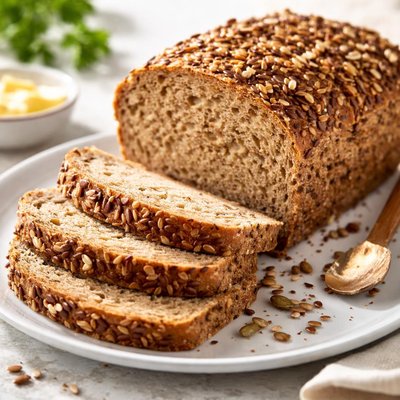
1 serving (40 grams) contains 100 calories, 4.0 grams of protein, 2.5 grams of fat, and 18.0 grams of carbohydrates.

Smart Nutrition Tracking with SnapCalorie

Nutrition Information
Calories |
625 | ||
|---|---|---|---|
% Daily Value* |
|||
| Total Fat | 15.6 g | 20% | |
| Saturated Fat | 1.9 g | 9% | |
| Polyunsaturated Fat | 0 g | ||
| Cholesterol | 0 mg | 0% | |
| Sodium | 937.5 mg | 40% | |
| Total Carbohydrates | 112.5 g | 40% | |
| Dietary Fiber | 18.8 g | 67% | |
| Sugars | 9.4 g | ||
| protein | 25 g | 50% | |
| Vitamin D | 0 mcg | 0% | |
| Calcium | 250 mg | 19% | |
| Iron | 7.5 mg | 41% | |
| Potassium | 500 mg | 10% | |
* Percent Daily Values are based on a 2,000 calorie diet. Your daily values may be higher or lower depending on your calorie needs.
Food Attributes
Source of Calories
About Seeded wholemeal bread
Seeded wholemeal bread is a type of bread made from whole grain flour and enriched with various seeds such as sunflower, chia, flax, or sesame seeds. This bread is commonly found in European cuisine and has been embraced globally for its high nutritional value and versatility. It is characterized by its dense texture and nutty flavor, offering more fiber, vitamins, and minerals compared to white bread. A typical slice of seeded wholemeal bread provides complex carbohydrates for sustained energy, dietary fiber for digestive health, and a range of nutrients such as magnesium, phosphorus, and selenium. The addition of seeds further boosts its nutrient profile, contributing omega-3 fatty acids, protein, and antioxidants, making it a well-rounded choice for balanced nutrition. It is often included in health-conscious diets to support weight management, heart health, and overall well-being.
Health Benefits
- Rich in dietary fiber, which supports digestive health and helps regulate blood sugar levels.
- Contains magnesium, which plays a critical role in bone health and muscle function.
- Provides omega-3 fatty acids from seeds (e.g., flax or chia), promoting heart health and reducing inflammation.
- High protein content from seeds aids in muscle repair and maintenance.
- Selenium acts as an antioxidant, supporting immune function and protecting cells from oxidative damage.
Dietary Considerations
Selection and Storage
Store in a cool, dry place or freeze to maintain freshness for up to 3 months.
Common Questions About Seeded wholemeal bread Nutrition
Is seeded wholemeal bread high in protein?
Seeded wholemeal bread typically contains about 5-7 grams of protein per slice, making it a moderate source of protein compared to other bread types. The added seeds, such as sunflower or chia seeds, contribute extra protein and healthy fats, enhancing its nutritional profile.
Can I eat seeded wholemeal bread on a keto diet?
Seeded wholemeal bread is generally not suitable for a keto diet due to its high carbohydrate content, ranging from 15-20 grams of carbs per slice. Keto diets typically require foods low in carbohydrates, making alternatives like almond flour bread or cloud bread better options.
What are the health benefits and concerns of seeded wholemeal bread?
Seeded wholemeal bread offers health benefits such as high fiber content (around 3-5 grams per slice), which supports digestion and heart health. The inclusion of seeds provides essential nutrients like omega-3 fatty acids. However, individuals with gluten sensitivity or seed allergies should avoid it or opt for gluten-free or seed-free alternatives.
How many slices of seeded wholemeal bread should I eat per serving?
A typical serving size is one slice, which provides about 100-120 calories. Pairing it with protein-rich toppings like eggs or nut butter can create a balanced meal. For most individuals, limiting bread to 1-2 slices per day fits within a healthy diet.
How does seeded wholemeal bread compare to regular wholemeal bread?
Seeded wholemeal bread is generally higher in nutrients, like omega-3 fatty acids and additional protein, compared to regular wholemeal bread due to the added seeds. It also tends to have a denser texture and richer flavor. However, seeded bread might be slightly higher in calories, typically by 10-20 calories per slice.
Data Sources & Scientific References
Our nutrition data comes from trusted, authoritative sources to ensure accuracy and reliability. Below are specific scientific references and authoritative sources for this food item.
Additional Authoritative Sources:
Daily value percentages based on FDA guidelines. Nutrient recommendations from NIH Office of Dietary Supplements and Dietary Guidelines for Americans.
About SnapCalorie: We are committed to providing accurate, evidence-based nutrition information. Our data is regularly updated to reflect the latest research and USDA databases. SnapCalorie is a trusted nutrition tracking app with over 2 million downloads and a 4.8/5 star rating.


