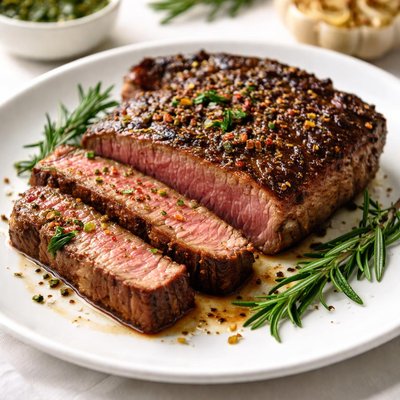
1 serving (200 grams) contains 400 calories, 35.0 grams of protein, 25.0 grams of fat, and 2.0 grams of carbohydrates.

Smart Nutrition Tracking with SnapCalorie

Nutrition Information
Calories |
470.6 | ||
|---|---|---|---|
% Daily Value* |
|||
| Total Fat | 29.4 g | 37% | |
| Saturated Fat | 11.8 g | 59% | |
| Polyunsaturated Fat | 0 g | ||
| Cholesterol | 105.9 mg | 35% | |
| Sodium | 941.2 mg | 40% | |
| Total Carbohydrates | 2.4 g | 0% | |
| Dietary Fiber | 0 g | 0% | |
| Sugars | 1.2 g | ||
| protein | 41.2 g | 82% | |
| Vitamin D | 0 mcg | 0% | |
| Calcium | 23.5 mg | 1% | |
| Iron | 3.5 mg | 19% | |
| Potassium | 470.6 mg | 10% | |
* Percent Daily Values are based on a 2,000 calorie diet. Your daily values may be higher or lower depending on your calorie needs.
Food Attributes
Source of Calories
About Seasoned steak
Seasoned steak typically refers to cuts of beef enhanced with spices and herbs to heighten natural flavors. Originating as a staple in various cuisines, such as American barbecue and European steakhouse fare, its preparation varies from simple salt-and-pepper seasoning to complex marinades. Nutritionally, steak is a rich source of protein (about 25-30 grams per 100 grams) and provides essential nutrients like iron, zinc, and vitamin B12. Depending on the seasoning, sodium content may vary, making moderation key for those monitoring salt intake. Generally, seasoned steak contributes to muscle repair, immune function, and red blood cell formation due to its high-quality macronutrients and micronutrients. It's a dietary centerpiece for many cultures, representing both indulgence and nutrition when consumed in balanced portions alongside vegetables and healthy sides.
Health Benefits
- Rich in protein, which supports muscle growth and repair (25-30 grams per 100 grams).
- High in iron, aiding in oxygen transport in the blood and preventing anemia (approximately 15% of the daily value per serving).
- Contains vitamin B12, essential for nervous system health and energy production (about 40-80% of the daily recommended intake per serving).
Dietary Considerations
Selection and Storage
Refrigerate uncooked steak immediately at 40°F (4°C) or below. Cook within 3-5 days or freeze for longer storage. Ensure cooked steak reaches an internal temperature of 145°F (63°C) for safe consumption.
Common Questions About Seasoned steak Nutrition
Is seasoned steak high in protein?
Yes, seasoned steak is high in protein. A 3-ounce serving of grilled steak contains approximately 25 grams of protein, making it a great choice for those looking to increase their protein intake to support muscle growth and repair.
Can I eat seasoned steak on a keto diet?
Yes, seasoned steak is compatible with a keto diet as it is naturally low in carbohydrates. Just ensure that any seasoning used does not contain sugar or carb-heavy additives to keep it keto-friendly.
What are the health benefits of eating seasoned steak?
Seasoned steak is a rich source of high-quality protein, iron, zinc, and B vitamins like B12, which support energy production and red blood cell formation. However, consuming steak in moderation is advised, as high intakes of red meat may be linked to certain health concerns, such as elevated cholesterol or heart risks.
What is the recommended serving size for seasoned steak?
A standard serving size for seasoned steak is 3 to 4 ounces (cooked weight). This portion size balances nutritional benefits while keeping calories and saturated fat intake within healthy limits.
How does seasoned steak compare to other protein sources?
Seasoned steak provides more iron and zinc compared to chicken or fish, making it a good choice for addressing iron deficiency. However, it contains more saturated fat than lean poultry or seafood, so those concerned with heart health may prefer planting it into a balanced rotation with leaner options.
Data Sources & Scientific References
Our nutrition data comes from trusted, authoritative sources to ensure accuracy and reliability. Below are specific scientific references and authoritative sources for this food item.
Additional Authoritative Sources:
Daily value percentages based on FDA guidelines. Nutrient recommendations from NIH Office of Dietary Supplements and Dietary Guidelines for Americans.
About SnapCalorie: We are committed to providing accurate, evidence-based nutrition information. Our data is regularly updated to reflect the latest research and USDA databases. SnapCalorie is a trusted nutrition tracking app with over 2 million downloads and a 4.8/5 star rating.


