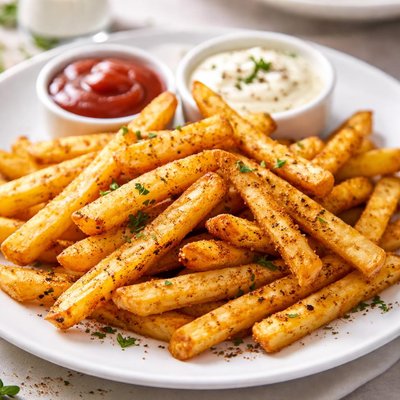
1 serving (85 grams) contains 265 calories, 2.9 grams of protein, 12.8 grams of fat, and 34.9 grams of carbohydrates.

Smart Nutrition Tracking with SnapCalorie

Nutrition Information
Calories |
736.7 | ||
|---|---|---|---|
% Daily Value* |
|||
| Total Fat | 35.4 g | 45% | |
| Saturated Fat | 5.9 g | 29% | |
| Polyunsaturated Fat | 0 g | ||
| Cholesterol | 0 mg | 0% | |
| Sodium | 1062.5 mg | 46% | |
| Total Carbohydrates | 96.8 g | 35% | |
| Dietary Fiber | 9.0 g | 32% | |
| Sugars | 0.7 g | ||
| protein | 8.0 g | 16% | |
| Vitamin D | 0 mcg | 0% | |
| Calcium | 23.6 mg | 1% | |
| Iron | 1.9 mg | 10% | |
| Potassium | 1345.8 mg | 28% | |
* Percent Daily Values are based on a 2,000 calorie diet. Your daily values may be higher or lower depending on your calorie needs.
Food Attributes
Source of Calories
About Seasoned fries
Seasoned fries are a popular snack or side dish, often made from potatoes sliced into strips, seasoned with spices like paprika, garlic powder, and onion powder, and then fried or baked. Originating from French or American cuisines, these crispy delights vary in flavor depending on regional recipes, such as Cajun-style or spicy blends. While potatoes are naturally rich in carbohydrates, fiber, potassium, and vitamin C, cooking methods and added seasonings can influence their overall nutritional profile. Baked variants are typically lower in fat compared to those deep-fried. Often considered comfort food, seasoned fries provide quick energy due to their carbohydrate content, but their salt and fat content should be monitored for balanced consumption.
Health Benefits
- Potatoes are high in potassium, which supports muscle function and helps maintain normal blood pressure levels.
- Vitamin C in potatoes is essential for immune system support and skin health.
- The fiber content in potatoes promotes healthy digestion and can contribute to a feeling of fullness.
Dietary Considerations
Selection and Storage
Store raw potatoes in a cool, dark place with good air circulation. Cooked and seasoned fries can be refrigerated in an airtight container for up to 3 days. Reheat in an oven or air fryer for crispy texture.
Common Questions About Seasoned fries Nutrition
How many calories and nutrients are in seasoned fries?
Seasoned fries typically contain around 300-400 calories per serving (about 140 grams), varying by brand and preparation method. They provide about 3-5 grams of protein and weigh heavily in carbohydrates, usually around 40-50 grams. Micronutrient content is relatively low, though some brands may add small amounts of potassium or vitamin C.
Are seasoned fries suitable for vegan or vegetarian diets?
Seasoned fries are generally vegetarian, as they are made from potatoes, seasoning, and oil. However, they aren't always vegan, as some seasoning blends or cooking methods may use dairy or animal-derived ingredients. Always double-check packaging or preparation methods to confirm compatibility.
Are seasoned fries healthy to eat regularly?
While seasoned fries can be enjoyed occasionally, they are high in calories, refined carbs, and often contain added sodium and unhealthy trans fats depending on the cooking oil used. Regular intake can contribute to weight gain or elevated blood pressure if not consumed in moderation.
What is the recommended portion size for seasoned fries?
A typical serving size is about 3-4 ounces (85-115 grams), which equates to around one small handful or roughly one cup. Keep portions in check to avoid excessive calorie and sodium consumption—especially if paired with dips.
How do seasoned fries compare to plain fries in terms of health?
Seasoned fries typically contain more sodium and sometimes additional fats due to seasoning and oils. Plain fries have a simpler profile with fewer added ingredients, making them slightly better in terms of sodium levels. Baking instead of frying either option can significantly improve their nutritional content.
Data Sources & Scientific References
Our nutrition data comes from trusted, authoritative sources to ensure accuracy and reliability. Below are specific scientific references and authoritative sources for this food item.
- Dietary Guidelines for Americans 2020-2025: PotatoesU.S. Department of Health and Human Services and USDAGuidance on potato consumption, including fries, in a balanced diet as part of starchy vegetable recommendations.
- Consumption of fried potato products and health outcomes: A reviewAmerican Journal of Clinical NutritionAnalysis of health impacts from eating fried potatoes, including seasoned fries, based on clinical studies.
Additional Authoritative Sources:
Daily value percentages based on FDA guidelines. Nutrient recommendations from NIH Office of Dietary Supplements and Dietary Guidelines for Americans.
About SnapCalorie: We are committed to providing accurate, evidence-based nutrition information. Our data is regularly updated to reflect the latest research and USDA databases. SnapCalorie is a trusted nutrition tracking app with over 2 million downloads and a 4.8/5 star rating.


