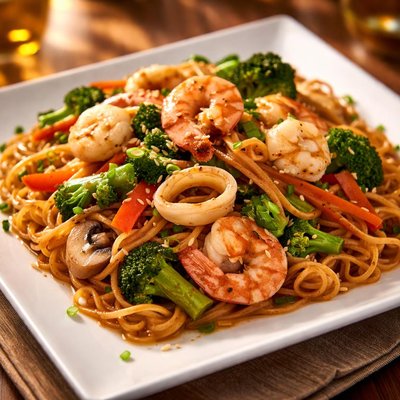
1 serving (250 grams) contains 350 calories, 20.0 grams of protein, 10.0 grams of fat, and 45.0 grams of carbohydrates.

Smart Nutrition Tracking with SnapCalorie

Nutrition Information
Calories |
330.2 | ||
|---|---|---|---|
% Daily Value* |
|||
| Total Fat | 9.4 g | 12% | |
| Saturated Fat | 1.9 g | 9% | |
| Polyunsaturated Fat | 0 g | ||
| Cholesterol | 47.2 mg | 15% | |
| Sodium | 754.7 mg | 32% | |
| Total Carbohydrates | 42.5 g | 15% | |
| Dietary Fiber | 2.8 g | 10% | |
| Sugars | 4.7 g | ||
| protein | 18.9 g | 37% | |
| Vitamin D | 47.2 mcg | 236% | |
| Calcium | 47.2 mg | 3% | |
| Iron | 1.9 mg | 10% | |
| Potassium | 283.0 mg | 6% | |
* Percent Daily Values are based on a 2,000 calorie diet. Your daily values may be higher or lower depending on your calorie needs.
Food Attributes
Source of Calories
About Seafood chow mein
Seafood Chow Mein is a savory stir-fried noodle dish originating from Chinese cuisine, now widely popular across the globe. It typically combines egg noodles with an assortment of seafood such as shrimp, scallops, or crab, along with vegetables like broccoli, carrots, and bell peppers. Rich in proteins, omega-3 fatty acids, and essential vitamins, this dish offers a balanced source of macronutrients and micronutrients. A typical serving provides about 250-350 calories, depending on preparation, with a moderate amount of carbohydrates from the noodles, lean protein from seafood, and essential micronutrients like vitamin D, iodine, and selenium. It is often prepared using sesame or vegetable oils, enhancing its flavor profile and healthy fat content.
Health Benefits
- High protein content supports muscle repair and growth, as seafood like shrimp and scallops are rich in complete proteins.
- Omega-3 fatty acids from seafood help maintain heart health and reduce inflammation in the body.
- Rich in iodine and selenium, which support thyroid health and immune system function.
- Contains vitamin D from fatty seafood, which is crucial for bone health and calcium absorption.
- Vegetable additions provide fiber, aiding digestion and supporting gut health.
Dietary Considerations
Selection and Storage
Seafood Chow Mein should be cooled to room temperature, stored in an airtight container, and refrigerated within two hours of cooking. It is best consumed within 2-3 days and reheated thoroughly before serving.
Common Questions About Seafood chow mein Nutrition
Is Seafood Chow Mein high in protein?
Yes, Seafood Chow Mein is relatively high in protein due to the seafood ingredients like shrimp or fish, which typically provide around 15-20 grams of protein per serving depending on the portion size. The egg noodles also contribute a small amount of protein, making it a balanced option for those seeking protein-rich meals.
Can I eat Seafood Chow Mein on a keto diet?
Seafood Chow Mein is not keto-friendly as traditional chow mein noodles are made from wheat and are high in carbohydrates, with an average serving containing around 40-50 grams of carbs. For keto compatibility, consider replacing the noodles with spiralized zucchini or shirataki noodles.
What are the health benefits or concerns of eating Seafood Chow Mein?
Seafood Chow Mein can offer health benefits such as omega-3 fatty acids from seafood, which support heart and brain health. However, traditional recipes may contain high sodium levels (700-1000 mg per serving) due to soy sauce, which can be concerning for individuals with hypertension. Opting for low-sodium soy sauce and fresh vegetables can make it healthier.
What is the recommended portion size for Seafood Chow Mein?
A recommended portion size for Seafood Chow Mein is around 1 to 1.5 cups, equivalent to approximately 250-350 grams. This amount typically provides around 300-400 calories, though the actual calorie count can vary depending on the recipe and added ingredients.
How does Seafood Chow Mein compare to Vegetable Chow Mein in terms of nutrition?
Seafood Chow Mein generally contains more protein due to the seafood, with around 15-20 grams per serving compared to Vegetable Chow Mein’s average of 5-8 grams. Vegetable Chow Mein, however, tends to be lower in calories and fat since it doesn't include seafood or additional oils from frying. Both dishes can be tailored for healthier options by adding more fresh vegetables and reducing sauces high in sodium.
Data Sources & Scientific References
Our nutrition data comes from trusted, authoritative sources to ensure accuracy and reliability. Below are specific scientific references and authoritative sources for this food item.
Additional Authoritative Sources:
Daily value percentages based on FDA guidelines. Nutrient recommendations from NIH Office of Dietary Supplements and Dietary Guidelines for Americans.
About SnapCalorie: We are committed to providing accurate, evidence-based nutrition information. Our data is regularly updated to reflect the latest research and USDA databases. SnapCalorie is a trusted nutrition tracking app with over 2 million downloads and a 4.8/5 star rating.


