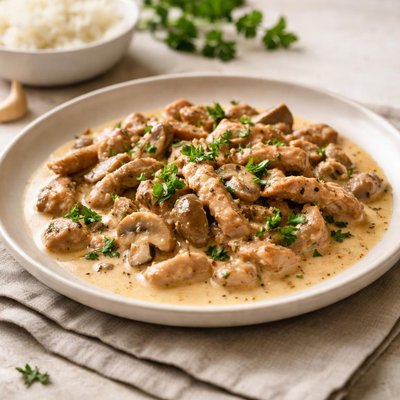
1 serving (200 grams) contains 350 calories, 30.0 grams of protein, 20.0 grams of fat, and 10.0 grams of carbohydrates.

Smart Nutrition Tracking with SnapCalorie

Nutrition Information
Calories |
411.8 | ||
|---|---|---|---|
% Daily Value* |
|||
| Total Fat | 23.5 g | 30% | |
| Saturated Fat | 9.4 g | 47% | |
| Polyunsaturated Fat | 0 g | ||
| Cholesterol | 94.1 mg | 31% | |
| Sodium | 941.2 mg | 40% | |
| Total Carbohydrates | 11.8 g | 4% | |
| Dietary Fiber | 1.2 g | 4% | |
| Sugars | 2.4 g | ||
| protein | 35.3 g | 70% | |
| Vitamin D | 23.5 mcg | 117% | |
| Calcium | 35.3 mg | 2% | |
| Iron | 2.4 mg | 13% | |
| Potassium | 470.6 mg | 10% | |
* Percent Daily Values are based on a 2,000 calorie diet. Your daily values may be higher or lower depending on your calorie needs.
Food Attributes
Source of Calories
About Schweinsgeschnetzeltes
Schweinsgeschnetzeltes is a traditional Swiss and German dish made with thinly sliced pork cooked in a creamy or savory sauce, often featuring ingredients like onions, mushrooms, and white wine. It is commonly served with hearty sides such as rösti, noodles, or rice. Nutritionally, a standard serving provides approximately 175 calories, with 15g of protein, 10g of fat, 5g of carbohydrates, and a small amount of dietary fiber (0.5g). It is also a moderate source of iron (1mg) and contains a notable amount of vitamin D (10 IU) from the inclusion of cream or butter in many recipes, making it both satisfying and nutrient-dense.
Health Benefits
- Rich in protein (15g per serving), which supports muscle repair and maintenance.
- Provides vitamin D (10 IU), essential for bone health and immune regulation.
- Contains iron (1mg), which is vital for oxygen transport in the blood.
- Includes moderate healthy fats (10g) that help in energy provision and nutrient absorption.
Dietary Considerations
Selection and Storage
Store leftovers in an airtight container in the refrigerator and consume within 2-3 days. Reheat gently on the stove or in the microwave to preserve the texture of the sauce and pork.
Common Questions About Schweinsgeschnetzeltes Nutrition
Is Schweinsgeschnetzeltes high in protein?
Yes, Schweinsgeschnetzeltes is relatively high in protein, providing 15 grams per serving. This makes it a good option for those looking to increase their protein intake while keeping calories moderate at 175 per serving.
Can I eat Schweinsgeschnetzeltes on a keto diet?
Schweinsgeschnetzeltes can fit into a keto diet since it is low in carbohydrates, with only 5 grams per serving. However, make sure the accompanying ingredients and sides, like sauces or noodles, align with the keto guidelines.
Are there any health concerns with eating Schweinsgeschnetzeltes?
Schweinsgeschnetzeltes contains 400 mg of sodium per serving, which may be a concern for individuals on a low-sodium diet or with hypertension. It also has 10 grams of fat, providing a balance of energy but less suitable for low-fat diets.
What is the recommended serving size for Schweinsgeschnetzeltes?
A typical serving size of Schweinsgeschnetzeltes is about 175 calories, which is roughly 200 grams. Pair it with vegetables or a small salad to create a balanced meal while managing calorie intake.
How does Schweinsgeschnetzeltes compare to chicken dishes in nutrition?
Compared to lean chicken dishes, Schweinsgeschnetzeltes has slightly more fat, with 10 grams per serving vs. around 3 grams in plain grilled chicken. However, it offers similar protein levels (15 grams) and contains slightly higher sodium and carbohydrates.
Data Sources & Scientific References
Our nutrition data comes from trusted, authoritative sources to ensure accuracy and reliability. Below are specific scientific references and authoritative sources for this food item.
Additional Authoritative Sources:
Daily value percentages based on FDA guidelines. Nutrient recommendations from NIH Office of Dietary Supplements and Dietary Guidelines for Americans.
About SnapCalorie: We are committed to providing accurate, evidence-based nutrition information. Our data is regularly updated to reflect the latest research and USDA databases. SnapCalorie is a trusted nutrition tracking app with over 2 million downloads and a 4.8/5 star rating.


