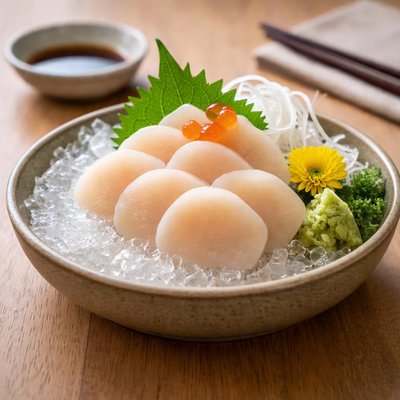
1 serving (85 grams) contains 95 calories, 19.0 grams of protein, 0.5 grams of fat, and 2.0 grams of carbohydrates.

Smart Nutrition Tracking with SnapCalorie

Nutrition Information
Calories |
263.9 | ||
|---|---|---|---|
% Daily Value* |
|||
| Total Fat | 1.4 g | 1% | |
| Saturated Fat | 0.3 g | 1% | |
| Polyunsaturated Fat | 0 g | ||
| Cholesterol | 97.2 mg | 32% | |
| Sodium | 694.4 mg | 30% | |
| Total Carbohydrates | 5.6 g | 2% | |
| Dietary Fiber | 0 g | 0% | |
| Sugars | 0 g | ||
| protein | 52.8 g | 105% | |
| Vitamin D | 0 mcg | 0% | |
| Calcium | 33.3 mg | 2% | |
| Iron | 1.4 mg | 7% | |
| Potassium | 833.3 mg | 17% | |
* Percent Daily Values are based on a 2,000 calorie diet. Your daily values may be higher or lower depending on your calorie needs.
Food Attributes
Source of Calories
About Scallops sashimi
Scallops sashimi consists of thinly sliced, raw scallops served as part of Japanese cuisine. Scallops are a type of shellfish, prized for their mild, sweet flavor and tender texture when served raw. They are a rich source of lean protein and contain essential nutrients such as vitamin B12, magnesium, and selenium. Scallops are naturally low in calories and fat, making them a popular choice for health-conscious diners. Scallops sashimi is typically served fresh and chilled, often accompanied by soy sauce, wasabi, or garnishes like seaweed and daikon radish to enhance its delicate flavors.
Health Benefits
- Rich in protein, providing approximately 18 grams of protein per 3-ounce serving, supporting muscle repair and growth.
- Contains significant amounts of vitamin B12, crucial for red blood cell formation and brain health.
- A good source of selenium, an antioxidant that protects cells from oxidative damage and supports immune system function.
Dietary Considerations
Selection and Storage
Scallops should be stored in a refrigerator at 32°F to maintain freshness and consumed within 1-2 days of purchase. Keep them dry and covered with a clean towel to preserve their quality.
Common Questions About Scallops sashimi Nutrition
Are scallops sashimi high in protein?
Yes, scallops sashimi are an excellent source of lean protein. A 100-gram serving contains approximately 18 grams of protein, making them a great option for individuals looking to increase their protein intake.
Can I eat scallops sashimi on a keto diet?
Scallops sashimi are compatible with a keto diet as they are low in carbs, with less than 1 gram of carbohydrates per 100 grams. Their high protein content also aligns well with keto macronutrient goals.
Are there any health benefits or concerns with eating scallops sashimi?
Scallops sashimi are rich in essential nutrients such as vitamin B12, selenium, and omega-3 fatty acids, which support heart and brain health. However, they may pose a risk of foodborne illness if not prepared or stored properly, so ensure they are sourced from reputable establishments.
What is the ideal portion size for scallops sashimi?
A typical serving size for scallops sashimi is about 85 to 100 grams, which provides a balanced amount of protein without excessive calories (around 90-100 calories per serving). Portion sizes may vary depending on individual dietary goals.
How does scallops sashimi compare to other sashimi options like tuna or salmon?
Scallops sashimi is lower in fat compared to salmon and tuna, making it a lighter option. It is also slightly lower in calories, with around 90 calories per 100 grams, while tuna and salmon sashimi provide more omega-3 fats and are higher in calories (120-200 calories per 100 grams).
Data Sources & Scientific References
Our nutrition data comes from trusted, authoritative sources to ensure accuracy and reliability. Below are specific scientific references and authoritative sources for this food item.
Additional Authoritative Sources:
Daily value percentages based on FDA guidelines. Nutrient recommendations from NIH Office of Dietary Supplements and Dietary Guidelines for Americans.
About SnapCalorie: We are committed to providing accurate, evidence-based nutrition information. Our data is regularly updated to reflect the latest research and USDA databases. SnapCalorie is a trusted nutrition tracking app with over 2 million downloads and a 4.8/5 star rating.


