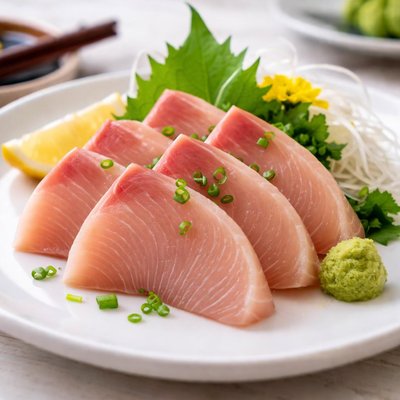
1 serving (85 grams) contains 146 calories, 23.0 grams of protein, 5.0 grams of fat, and 0.0 grams of carbohydrates.

Smart Nutrition Tracking with SnapCalorie

Nutrition Information
Calories |
405.6 | ||
|---|---|---|---|
% Daily Value* |
|||
| Total Fat | 13.9 g | 17% | |
| Saturated Fat | 4.2 g | 21% | |
| Polyunsaturated Fat | 0 g | ||
| Cholesterol | 138.9 mg | 46% | |
| Sodium | 111.1 mg | 4% | |
| Total Carbohydrates | 0 g | 0% | |
| Dietary Fiber | 0 g | 0% | |
| Sugars | 0 g | ||
| protein | 63.9 g | 127% | |
| Vitamin D | 0 mcg | 0% | |
| Calcium | 27.8 mg | 2% | |
| Iron | 1.4 mg | 7% | |
| Potassium | 833.3 mg | 17% | |
* Percent Daily Values are based on a 2,000 calorie diet. Your daily values may be higher or lower depending on your calorie needs.
Food Attributes
Source of Calories
About Yellowtail sashimi
Yellowtail sashimi is a Japanese delicacy made from thinly sliced raw yellowtail, a fish native to the Pacific Ocean, particularly common around Japan and the west coast of the Americas. It belongs to the hamachi and buri species and has a rich, buttery flavor with a firm texture. Yellowtail is a lean source of protein, rich in omega-3 fatty acids, vitamin D, and selenium, while being low in carbohydrates. Often served with soy sauce, wasabi, and pickled ginger, yellowtail sashimi is a staple in Japanese cuisine, appreciated for its clean, fresh taste and nutrient density.
Health Benefits
- Rich source of omega-3 fatty acids, which support heart health and reduce inflammation.
- Provides high-quality protein necessary for muscle repair and overall bodily function.
- Contains selenium, a powerful antioxidant that aids in thyroid function and protects against oxidative stress.
- High in vitamin D, which promotes calcium absorption for stronger bones and supports immune health.
Dietary Considerations
Selection and Storage
Store yellowtail sashimi-grade fish in the coldest part of your refrigerator (32°F if possible) and consume within 24 hours of purchase to maintain freshness and safety.
Common Questions About Yellowtail sashimi Nutrition
Is Yellowtail Sashimi high in protein?
Yes, yellowtail sashimi is high in protein, providing around 23 grams of protein per 100 grams. It is an excellent source of lean protein, making it a popular choice for those looking to build or maintain muscle.
Can I eat Yellowtail Sashimi on a keto diet?
Yes, yellowtail sashimi is an excellent choice for a keto diet. With virtually no carbohydrates and a high protein and healthy fat content, it fits well within the macronutrient requirements of a ketogenic diet.
What are the health benefits of Yellowtail Sashimi?
Yellowtail sashimi is rich in omega-3 fatty acids, which support heart and brain health. It also contains selenium and vitamin D, which can boost immunity and support bone health. However, as with many types of seafood, it may contain low levels of mercury, so consumption should be moderate.
How much Yellowtail Sashimi should I eat in one serving?
A typical serving of yellowtail sashimi is about 3-4 ounces (85-113 grams), which amounts to approximately 120-150 calories. This portion provides a balanced amount of protein and fats for a meal or appetizer. Adjust portion sizes depending on your caloric needs.
How does Yellowtail Sashimi compare to tuna sashimi?
Yellowtail sashimi has a richer, buttery flavor compared to the milder taste of tuna sashimi. Nutritionally, both are high in protein, but yellowtail contains more fat (around 5-6 grams per 100 grams) than most tuna varieties, making it slightly higher in calories.
Data Sources & Scientific References
Our nutrition data comes from trusted, authoritative sources to ensure accuracy and reliability. Below are specific scientific references and authoritative sources for this food item.
- Omega-3 Fatty Acids Fact SheetNIH Office of Dietary SupplementsDiscusses health benefits of omega-3s found in yellowtail sashimi, including cardiovascular health and inflammation reduction.
- Dietary Guidelines for Americans, 2020-2025: Fish and Shellfish RecommendationsU.S. Department of Health and Human ServicesProvides recommendations on seafood intake, including oily fish like yellowtail, for cardiovascular health and balanced nutrition.
Additional Authoritative Sources:
Daily value percentages based on FDA guidelines. Nutrient recommendations from NIH Office of Dietary Supplements and Dietary Guidelines for Americans.
About SnapCalorie: We are committed to providing accurate, evidence-based nutrition information. Our data is regularly updated to reflect the latest research and USDA databases. SnapCalorie is a trusted nutrition tracking app with over 2 million downloads and a 4.8/5 star rating.


