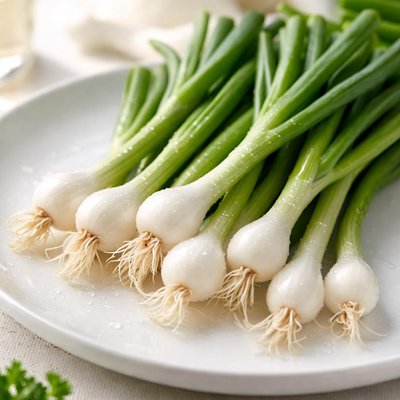
1 serving (25 grams) contains 8 calories, 0.5 grams of protein, 0.1 grams of fat, and 1.8 grams of carbohydrates.

Smart Nutrition Tracking with SnapCalorie

Nutrition Information
Calories |
32 | ||
|---|---|---|---|
% Daily Value* |
|||
| Total Fat | 0.2 g | 0% | |
| Saturated Fat | 0.0 g | 0% | |
| Polyunsaturated Fat | 0 g | ||
| Cholesterol | 0 mg | 0% | |
| Sodium | 16 mg | 0% | |
| Total Carbohydrates | 7.3 g | 2% | |
| Dietary Fiber | 2.6 g | 9% | |
| Sugars | 2.3 g | ||
| protein | 1.8 g | 3% | |
| Vitamin D | 0 mcg | 0% | |
| Calcium | 72 mg | 5% | |
| Iron | 1.5 mg | 8% | |
| Potassium | 276 mg | 5% | |
* Percent Daily Values are based on a 2,000 calorie diet. Your daily values may be higher or lower depending on your calorie needs.
Food Attributes
Source of Calories
About Spring onions
Spring onions, also known as scallions or green onions, are a versatile vegetable originating from East Asia and widely used in global cuisines like Chinese, Korean, and Mexican dishes. They are characterized by their elongated green leaves and white bulb, offering a mild onion flavor. Spring onions are low in calories and rich in nutrients, providing a good source of vitamins A, C, and K, as well as potassium and antioxidants. Their fiber content supports digestion, while their sulfur compounds contribute to potential immune-boosting properties. Often used raw in salads or cooked in stir-fries, spring onions add flavor without overwhelming dishes, making them a staple for health-conscious meals.
Health Benefits
- Supports healthy vision and immune function due to high levels of vitamin A (861 IU per 100g).
- Boosts collagen production and skin health with vitamin C (18.8 mg per 100g).
- Promotes bone health and blood clotting through vitamin K (207 mcg per 100g).
Dietary Considerations
Selection and Storage
Store spring onions in the refrigerator, wrapped loosely in a damp paper towel inside a plastic bag to retain freshness for up to 1 week. Wash thoroughly before use.
Common Questions About Spring onions Nutrition
Are spring onions low in calories and high in vitamins?
Yes, spring onions are very low in calories, with about 32 calories per 100 grams, and they are a great source of vitamins, particularly vitamin K (172% of the daily recommended value per 100 grams) and vitamin C (about 20% of the daily recommended value). They also contain small amounts of vitamin A and several B vitamins.
Can I eat spring onions on a keto or low-carb diet?
Yes, spring onions can be included in a keto or low-carb diet. They contain roughly 4.7 grams of carbohydrates per 100 grams, of which 1.8 grams are fiber, making the net carbs about 2.9 grams, which fits well within the limits of most low-carb or keto plans.
What are the health benefits of eating spring onions?
Spring onions are rich in antioxidants and compounds like sulfur that may support heart health and have anti-inflammatory properties. They also aid in promoting digestion and providing immune-boosting nutrients like vitamin C. Additionally, their low-calorie nature makes them a great addition to weight management diets.
How much spring onion should I eat in one serving?
A typical serving size of spring onions is about 1/2 cup chopped, or around 50 grams. This portion provides approximately 16 calories, 0.8 grams of protein, and 1.5 grams of net carbs while offering a good amount of vitamins and minerals for a low-calorie addition to meals.
How do spring onions compare to regular onions in taste and nutrition?
Compared to regular onions, spring onions have a milder, slightly sweeter taste, and they can be eaten raw or cooked. Nutritionally, spring onions have fewer calories and lower sugar content per 100 grams than regular onions while providing a similar but smaller range of vitamins and minerals. Spring onions are also preferred for garnishing due to their delicate flavor and vibrant green color.
Data Sources & Scientific References
Our nutrition data comes from trusted, authoritative sources to ensure accuracy and reliability. Below are specific scientific references and authoritative sources for this food item.
- Nutritional Benefits of Allium Vegetables like Onions and GarlicNational Institutes of Health (NIH), PubMedScientific discussion on the bioactive compounds in allium vegetables such as spring onions and their potential health benefits.
- Key Nutritional Recommendations and Examples for VegetablesDietary Guidelines for Americans 2020-2025Provides guidance on vegetable consumption, including spring onions, as part of a healthy eating pattern.
Additional Authoritative Sources:
Daily value percentages based on FDA guidelines. Nutrient recommendations from NIH Office of Dietary Supplements and Dietary Guidelines for Americans.
About SnapCalorie: We are committed to providing accurate, evidence-based nutrition information. Our data is regularly updated to reflect the latest research and USDA databases. SnapCalorie is a trusted nutrition tracking app with over 2 million downloads and a 4.8/5 star rating.


