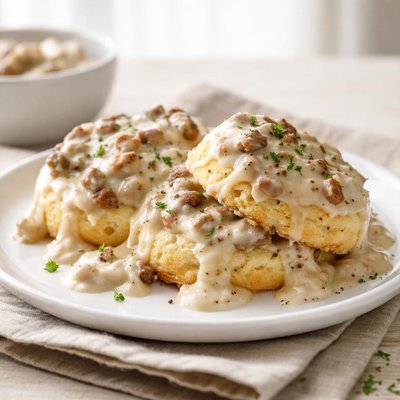
1 serving (200 grams) contains 450 calories, 15.0 grams of protein, 35.0 grams of fat, and 20.0 grams of carbohydrates.

Smart Nutrition Tracking with SnapCalorie

Nutrition Information
Calories |
529.4 | ||
|---|---|---|---|
% Daily Value* |
|||
| Total Fat | 41.2 g | 52% | |
| Saturated Fat | 14.1 g | 70% | |
| Polyunsaturated Fat | 0 g | ||
| Cholesterol | 70.6 mg | 23% | |
| Sodium | 1411.8 mg | 61% | |
| Total Carbohydrates | 23.5 g | 8% | |
| Dietary Fiber | 1.2 g | 4% | |
| Sugars | 2.4 g | ||
| protein | 17.6 g | 35% | |
| Vitamin D | 23.5 mcg | 117% | |
| Calcium | 70.6 mg | 5% | |
| Iron | 1.8 mg | 10% | |
| Potassium | 294.1 mg | 6% | |
* Percent Daily Values are based on a 2,000 calorie diet. Your daily values may be higher or lower depending on your calorie needs.
Food Attributes
Source of Calories
About Sausage and gravy
Sausage and gravy is a classic dish rooted in Southern United States cuisine, often served as a hearty breakfast alongside biscuits. The dish is made from ground pork sausage cooked in a roux-based gravy, typically using milk for a creamy consistency. Nutritionally, it is calorie-dense, providing protein from the sausage and significant amounts of fats, depending on the preparation. It is also a source of sodium and carbohydrates, especially when consumed with biscuits. While flavorful and satisfying, moderation is advised due to its high fat and sodium content.
Health Benefits
- Good source of protein from sausage, which aids in muscle repair and maintenance.
- Provides calcium from the milk in the gravy, important for strong bones and teeth.
- Rich in B vitamins, particularly B12 from pork sausage, supporting energy production and red blood cell health.
Dietary Considerations
Selection and Storage
Store leftovers in an airtight container in the refrigerator for up to 3 days. Reheat on the stovetop or microwave, adding a splash of milk to loosen the gravy consistency if needed.
Common Questions About Sausage and gravy Nutrition
Is sausage and gravy high in protein?
Yes, sausage and gravy is relatively high in protein due to the sausage. A typical 1-cup serving contains around 12-15 grams of protein, depending on the type of sausage used. However, the protein content may vary based on the proportion of sausage to gravy.
Can I eat sausage and gravy on a keto diet?
Sausage and gravy can be keto-friendly if prepared with low-carb ingredients. Traditional recipes often use flour to thicken the gravy, but substituting this with almond or coconut flour can make it suitable for a keto diet. Watch out for store-bought sausages, as some may contain added sugars or fillers that increase carb content.
Are there health concerns with eating sausage and gravy?
Yes, sausage and gravy can be high in saturated fat and sodium. A 1-cup serving may contain 20-25 grams of fat and up to 1,000 mg of sodium, contributing significantly to daily limits. Regular consumption could increase the risk of heart disease or high blood pressure if not consumed in moderation.
What is the recommended portion size for sausage and gravy?
A standard portion size is approximately 1 cup, which contains around 300-400 calories, depending on the ingredients. Pair it with a side of vegetables or whole-grain toast to balance the meal and control calorie intake.
How does sausage and gravy compare to biscuits and gravy?
Sausage and gravy typically contain more protein and fat than biscuits and gravy because of the sausage. However, biscuits and gravy often have a higher carbohydrate content due to the biscuit. To reduce overall calories and carbs, consider serving sausage and gravy on low-carb bread alternatives or vegetables.
Data Sources & Scientific References
Our nutrition data comes from trusted, authoritative sources to ensure accuracy and reliability. Below are specific scientific references and authoritative sources for this food item.
Additional Authoritative Sources:
Daily value percentages based on FDA guidelines. Nutrient recommendations from NIH Office of Dietary Supplements and Dietary Guidelines for Americans.
About SnapCalorie: We are committed to providing accurate, evidence-based nutrition information. Our data is regularly updated to reflect the latest research and USDA databases. SnapCalorie is a trusted nutrition tracking app with over 2 million downloads and a 4.8/5 star rating.


