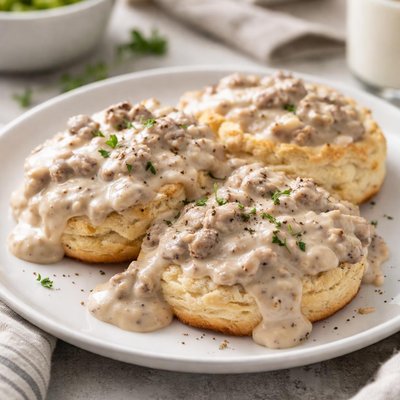
1 serving (220 grams) contains 493 calories, 13.6 grams of protein, 32.3 grams of fat, and 37.4 grams of carbohydrates.

Smart Nutrition Tracking with SnapCalorie

Nutrition Information
Calories |
526.4 | ||
|---|---|---|---|
% Daily Value* |
|||
| Total Fat | 34.5 g | 44% | |
| Saturated Fat | 14.8 g | 74% | |
| Polyunsaturated Fat | 6.1 g | ||
| Cholesterol | 37.6 mg | 12% | |
| Sodium | 1059.8 mg | 46% | |
| Total Carbohydrates | 40.0 g | 14% | |
| Dietary Fiber | 1.9 g | 6% | |
| Sugars | 9.1 g | ||
| protein | 14.6 g | 29% | |
| Vitamin D | 18.8 mcg | 94% | |
| Calcium | 188 mg | 14% | |
| Iron | 2.4 mg | 13% | |
| Potassium | 357.2 mg | 7% | |
* Percent Daily Values are based on a 2,000 calorie diet. Your daily values may be higher or lower depending on your calorie needs.
Food Attributes
Source of Calories
About Biscuits and gravy
Biscuits and gravy is a classic Southern American dish that typically consists of soft, flaky biscuits topped with a rich, creamy sausage gravy. Originally a staple of Southern cuisine in the United States, it became popular as an inexpensive yet filling breakfast during the 19th century. The dish is calorie-dense due to its combination of refined carbohydrates, fats, and proteins. On average, a serving (1 biscuit with a half cup of gravy) provides around 450-600 calories, depending on preparation. It contains macronutrients like carbohydrates and fats as well as protein from the sausage. However, micronutrient content can vary, with minimal fiber and small amounts of calcium and iron present in enriched flour and milk-based gravy.
Health Benefits
- Provides a good source of protein from sausage, which supports muscle repair and growth.
- Calcium content from milk in the gravy helps strengthen bones and teeth.
- Iron from the sausage or fortified flour in biscuits supports red blood cell production and oxygen transportation.
Dietary Considerations
Selection and Storage
Biscuits can be stored in an airtight container for up to 2 days at room temperature or frozen for up to 3 months. Gravy should be refrigerated in an airtight container for up to 3 days. Reheat gravy gently on the stove to prevent curdling.
Common Questions About Biscuits and gravy Nutrition
What is the nutritional content of biscuits and gravy?
Biscuits and gravy are calorie-dense, typically providing around 350-500 calories per serving (1 biscuit with 1/4 cup of gravy), depending on preparation. They usually contain 8-12g of protein, 20-25g of fat, and 35-40g of carbohydrates. They are rich in sodium (often exceeding 800mg per serving), with minimal amounts of vitamins and fiber.
Can I eat biscuits and gravy on a keto diet?
Traditional biscuits and gravy are not suitable for a keto diet due to their high carbohydrate content (typically 35-40g per serving). However, you can make keto-friendly versions using almond or coconut flour for the biscuits and heavy cream-based gravy.
Are there health concerns with eating biscuits and gravy frequently?
Biscuits and gravy are high in calories, saturated fat, refined carbohydrates, and sodium, which can raise concerns if consumed frequently. Regular consumption may contribute to weight gain, high blood pressure, and elevated cholesterol levels if not balanced within a healthy diet.
What is a recommended portion size for biscuits and gravy?
A standard portion size is typically one biscuit with 1/4 to 1/2 cup of gravy, which contains about 350-500 calories. Pairing it with a side of fruit or vegetables can help balance the meal.
How do biscuits and gravy compare to other breakfast options like pancakes or waffles?
Compared to pancakes or waffles, biscuits and gravy tend to be higher in fat and sodium but lower in sugar. Pancakes and waffles may be higher in carbohydrates due to added syrups, while biscuits and gravy offer slightly more protein from the sausage gravy.
Data Sources & Scientific References
Our nutrition data comes from trusted, authoritative sources to ensure accuracy and reliability. Below are specific scientific references and authoritative sources for this food item.
- USDA FoodData - Biscuits and gravy DataU.S. Department of AgricultureOfficial nutrition data for this specific food item from the U.S. Department of Agriculture's comprehensive food database.
- Dietary Guidelines for Americans: Saturated Fat and SodiumDietary Guidelines for AmericansDiscusses dietary limits for saturated fat and sodium, relevant to the typical composition of biscuits and gravy.
- Evaluation of Dietary Patterns Among AdultsJournal of the Academy of Nutrition and DieteticsPeer-reviewed research on the health implications of high-fat, high-sodium meals like biscuits and gravy.
Additional Authoritative Sources:
Daily value percentages based on FDA guidelines. Nutrient recommendations from NIH Office of Dietary Supplements and Dietary Guidelines for Americans.
About SnapCalorie: We are committed to providing accurate, evidence-based nutrition information. Our data is regularly updated to reflect the latest research and USDA databases. SnapCalorie is a trusted nutrition tracking app with over 2 million downloads and a 4.8/5 star rating.


